Advancing land-based investment governance: reflections on a collaborative technical support project
Promoted in the name of economic growth and the energy transition, land-based investments often undermine rights and foster deforestation. In this insight, Lorenzo Cotula reflects on a six-year project that supported change in land-based investment governance.


A community meeting held as part of ALIGN activities in Zambia (Photo: Rose Mosi, IIED)
In many low- and middle-income countries, governments have been promoting land-based investments – from agriculture to ‘critical minerals’ projects – in the name of economic growth and the energy transition.
But the projects often cause deforestation, undermine the rights of Indigenous Peoples, local communities and small-scale producers, and embed extractive economic models.
Confronting these problems requires systemic change in the governance of land and land-based investments, aligning it with international obligations on climate, nature and human rights and with soft-law instruments such as the voluntary guidelines on responsible governance of tenure.
Depending on the context, this may involve:
- Recognising customary tenure rights, particularly in places where commercial pressures are intensifying
- Supporting community organisations and their representative institutions, creating space for their vision of territorial development and ensuring they are listened to in any investment-related decisions
- Enhancing the systems through which proposed investments are assessed, decisions made and terms set, and
- Ensuring compliance and accountability throughout the investment cycle.
Around the world, civil society, social movements, research organisations, grassroots groups and reformist governments have been doing important work to advance these approaches. With investments compounding pressures on land, ecosystems and communities, demand for translating normative instruments into local reality is stronger than ever.
Advancing land-based investment governance
Between August 2020 and March 2026, the Advancing Land-based Investment Governance (ALIGN) project worked to meet this demand, supporting systemic change in the governance of land and land-based investments.
Funded by the UK Foreign, Commonwealth & Development Office, the project was led by a team of IIED, the Columbia Center on Sustainable Investment (CCSI) and Namati, in collaboration with more than 40 organisations across 22 countries in Africa and Asia.
ALIGN rested on three mutually reinforcing workstreams:
- Sustained work in Indonesia, Sierra Leone and Zambia, and additional work in South Africa, to support policy reform and implementation as well as local-level strategies in selected sites
- A technical support facility that provided shorter-term, on-demand support to governments, civil society, local communities and other actors in a total of 22 countries – boosting efforts to strengthen policies, regulations and practices and to implement pilots, advocacy strategies and multi-actor dialogues, and
- Fostering innovation and upscaling impacts through evidence work on recurring challenges and through peer learning and lesson sharing across project countries and beyond.
Adapting to a changing investment landscape
Looking back on its six-year duration, ALIGN provides a snapshot of the changing global investment landscape.
Investments in agriculture were a primary concern during the project’s design phase and remained such throughout implementation. This included work on recognising Indigenous territories in the face of the oil palm expansion in Indonesia and on addressing land rights and gender issues in Togo’s agricultural development zones.
As implementation progressed, the role of ‘critical minerals’ projects in compounding pressures on land became a major focus across all workstreams, reflecting rising global demand for these minerals.
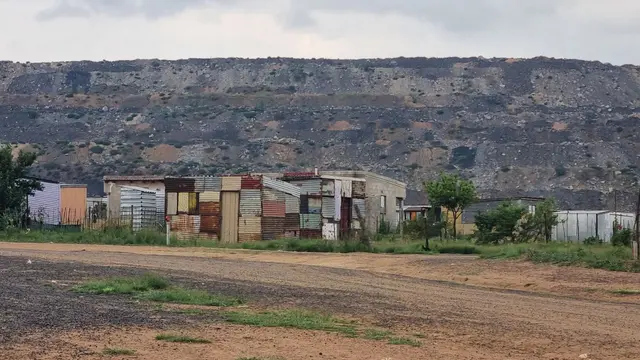
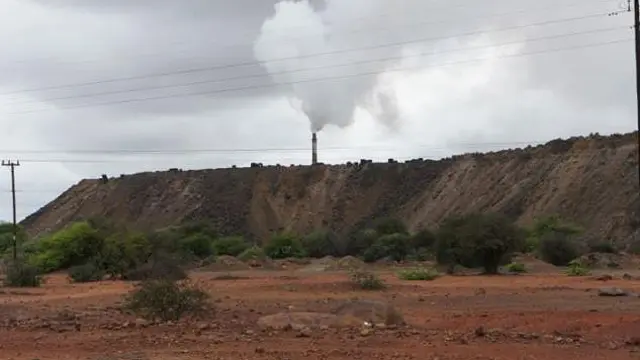
Examples include ALIGN-supported work to address the impacts of the nickel boom in Indonesia, and of copper and manganese extraction in Zambia and Botswana (PDF). ALIGN also worked to improve outcomes for communities impacted by mining in Sierra Leone, Tanzania and Uganda.
Halfway through project implementation, announcements of large carbon deals, including in ALIGN focus countries, made this sector an important concern. ALIGN worked on other forms of land-based investments as well, such as renewables and special economic zones.
Supporting politically savvy and locally-led responses
Facilitating access to technical support was central to ALIGN’s theory of change, whether to inform policy and law reforms or to assist communities impacted by specific land-based investments. At the same time, the project challenged conventional approaches to technical support provision.
For a start, the governance of land-based investments is inherently political. For this reason, since its design phase, ALIGN leveraged political economy insights to guide where and how to act.
In addition, ALIGN eschewed top-down, one-way technical support models, whereby organisations in the global North provide assistance to policymakers in the global South. Instead, it advanced a collaborative, locally-led approach that involved:
- Co-designing and co-implementing technical support with partner organisations in the relevant countries, which had the expertise and legitimacy to lead the action, whether in informing government processes or supporting community groups
- Working flexibly and in different configurations based on context and partner priorities, and
- A strong emphasis on peer-to-peer, reciprocal and multi-directional learning at all levels.
The approach also facilitated cross-fertilisation between grassroots-level and policy work in each country, and between change processes in different countries.
Steps forward
Project activities have informed policy reform or implementation in wide-ranging contexts, through diverse strategies and entry points, and have supported thousands of people impacted by land-based investments.
Illustrative advances include those in:
- Rights: ALIGN-supported activities have enhanced bottom-up, collective advocacy to secure land, forest, territorial and environmental rights, such as through community mobilisation, participatory mapping and tenure rights claiming in Indonesia’s central Kalimantan province and India’s Jharkhand state
- Law reform: policy-oriented actions have helped inform legislative reforms, such as new requirements for community consent or benefit sharing in Sierra Leone and Uganda
- Institutional coordination: advice to governments has helped increase coordination among government agencies, such as in investment assessment processes, for example working with a state-level government in Nigeria
- Community agency: grassroots-level actions have supported mining-impacted communities to claim agency, shift power and secure remediation, compensation and benefit sharing, for example in Zambia and Tanzania
- Spatial planning: activities have boosted bottom-up advocacy, environmental compliance and spatial planning, particularly with regards to the nickel sector in Indonesia’s Southeast Sulawesi province and the decommissioning of coal infrastructure in South Africa, and
- Learning and innovation: a community of practice bringing together all project partners has supported collective innovation, peer learning and policy cross-fertilisation.
Supporting learning to inform implementation
Ongoing lesson learning within and across workstreams informed choices on deepening, adapting or recalibrating approaches to evolving contexts – and the emphasis on partnerships was central not only to achieving impact but also to generating such insights.
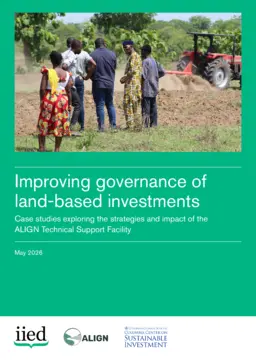
Lessons from this work were shared through a webinar series convened together with Land Portal. As activities came to a close, ALIGN published a collection of case studies on experiences from the technical support facility and a lesson-sharing report on land and just transitions work in Indonesia and Zambia.
In addition, the project released guidance and toolkits, such as on ensuring that women’s participation rights are fulfilled; strengthening environmental impact assessments and investment approval processes; addressing land governance issues in just transition planning; promoting carbon justice; and addressing issues related to investment contracts, laws and treaties. ALIGN also released a set of more concise ‘governance flashes’.
What next? Going beyond ALIGN
ALIGN has now ended. But the approaches, alliances and momentum it has generated live on, setting the stage for more collaborations to come. Many partners that have been central to ALIGN’s impact on policy and practice are grappling with a difficult funding environment and a shrinking civic space – but they are determined to take the work forward.
Navigating these systemic challenges will require an even deeper commitment to equal partnerships and politically savvy approaches. At IIED, responsiveness to partner priorities will continue to guide our work on securing change in the governance of land and land-based investments.
Lorenzo Cotula served as project director for the ALIGN project. This insight reflects the collective work of many colleagues from across the ALIGN team. It benefited from comments from Emily Polack, Lara Fornabaio, Nathaniah Jacobs and Rose Mosi.
Funded by the UK Foreign, Commonwealth & Development Office, ALIGN was implemented by a team of IIED, the Columbia Center on Sustainable Investment (CCSI) and Namati, with IIED acting as overall grant holder, and in collaboration with more than 40 partner organisations from across 22 countries in Africa and Asia. However, the views expressed in this insight do not necessarily reflect the official views or policies of ALIGN partners or the UK government.