Using data to reduce gender-based violence in the energy transition
As demand for energy transition minerals accelerates, concerns persist about human rights abuses in mining. Gender-based violence is widespread yet poorly understood. Current data systems fail to capture lived realities or inform the system-wide change needed. IIED’s new project aims to transform how GBV evidence is generated, used and valued in mining.



Stone quarry in Pune Maharashtra where women work 14-hour shifts breaking boulders into cricket-ball sized chunks of stone (Photo: Akshay Mahajan, via Flickr, CC BY-NC-SA 2.0)
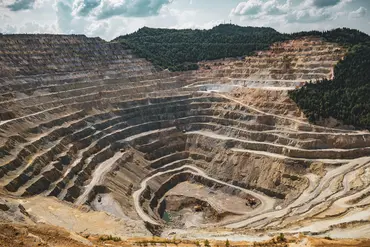
The world is racing to secure the minerals that make the energy transition possible. But the focus on mineral security often overlooks social and human-rights harms – including gender-based violence (GBV), one of the most pervasive violations in mining communities and workforces.
While GBV in the mining sector is not new, it remains widely under-documented. The lack of integrated, ethical and consistent data means GBV is too often denied, overlooked or unintentionally replicated.
Without closing critical evidence gaps, the sector cannot ensure accountability or design policies capable of delivering sustained, effective GBV prevention and response.
With policy and standards frameworks evolving fast and mining expanding to meet growing mineral demand, strengthening the knowledge and community needed to agree what should be measured and guide ethical GBV data collection practices is urgent. Doing so will help support responses that are survivor-centred and capable of tackling structural drivers of harm.
Transforming GBV data ecosystems
IIED has launched a three-year project to map and transform GBV data ecosystems across the mining sector. Working with women’s and gender organisations, Indigenous and community groups, researchers, standard-setters, industry actors and policymakers, we aim to:
- Understand the full range of GBV data types – from formal quantitative reports to informal, qualitative and structural data that reveal context, power dynamics and systemic drivers
- Analyse how GBV data travel within a wider data ecosystem (PDF) of actors and institutions – from mining workplaces and communities to research institutions and global policy arenas
- Identify whose knowledge is elevated or marginalised – and why
- Strengthen local and sector-wide capacity to collect, interpret and use GBV data ethically and effectively, and
- Co-develop guidance and engagement pathways that embed stronger GBV evidence requirements into community action, corporate response, standards and reporting frameworks.
At the heart of this project is a simple but critical question: what data do we need to reduce GBV in the mining sector?
What we know so far
Across both large-scale and artisanal mining, evidence on GBV is fragmented, inconsistent and unevenly valued. Formal quantitative data is often privileged, while qualitative, informal, structural or community-generated knowledge – usually the most reflective of lived realities – remains undervalued or invisible in decision-making.
Our early research and engagement highlights:
1. Incident data tell only a small part of the story
Relying on formal incident reports creates an illusion of certainty. Low reporting rates often reflect lack of trust, fear of retaliation, stigma or the absence of safe reporting channels, not low levels of violence.
2. Structural data are essential for prevention
Gender social norms, workplace cultures, economic dependency, legal protection gaps, racialised dynamics, colonial legacies and community power structures shape the conditions in which GBV occurs.
These systemic drivers are rarely captured in conventional monitoring systems, yet they are the foundation for long-term change.
3. Informal and community-generated knowledge carries deep insight
Rumours, stories, testimonies, community observations or social media conversations can reveal GBV risk factors long before formal mechanisms do. These data are rich, complex and deeply contextual but too often dismissed as ‘anecdotal’.
4. Power determines what counts as evidence
Across the mining sector, different actors trust different types of data. Companies and policymakers often privilege quantitative metrics, while women’s organisations and community actors look to narrative and experiential knowledge. These differences influence whose voices shape decisions.
What we are testing
Over the coming months, we will work with partners to test:
- A GBV data typology that recognises formal, informal, qualitative, quantitative, incident and structural data – and clarifies the value and limitations of each
- A survey across mining actor groups, including women’s organisations and Indigenous Peoples, to map current data practices, barriers, needs and opportunities
- An evidence pathway model that traces how GBV data move from survivors and communities to decision-makers, identifying blockages and marginalised voices
- Approaches for increasing the visibility and influence of women’s, Indigenous and community-generated data, and
- How to support companies, policymakers and donors to adopt GBV evidence practices that are survivor-centred, ethical and fit for purpose.
Building an engaged community
This initiative is not only about generating knowledge, it is also about building a community that can transform how GBV data is gathered, used and valued. We will create spaces for dialogue to surface shared challenges, question assumptions and co-design solutions grounded in lived experience.
We will invite partners to share insights, contribute to a key survey, join learning exchanges and help co-create guidance that reflects the realities of those most affected by GBV in mining.
Moving from policy to practice
Emerging human rights, due diligence and responsible sourcing frameworks are important steps, but understanding how GBV must be conceptualised – and how data can drive accountability – is critical for moving from policy to meaningful practice.
On the final day of the 16 Days of Activism, we call for collective engagement to build data systems that illuminate, protect and drive accountability across the mining sector.
The energy transition will not be just if the evidence guiding it fails to recognise the harms, and the people, at its core.
Using data to reduce gender-based violence in mining and the energy transition
IIED is convening a community of practice to explore how GBV data is:
- Collected, used and valued across companies, governments and communities
- Shaped by operational systems, regulatory frameworks and power dynamics, and
- Strengthened through community-led and rights-based approaches
By signing up via the form below, you can:
- Share your insights, evidence and lived experience
- Contribute to surveys, dialogue and collective learning
- Help shape practical, policy-relevant outputs for the sector, and
- Connect with others working to strengthen GBV data and responsible mining.
All information submitted in the above form is protected by our privacy policy.