Recognising women’s land rights in Togo: a glimmer of hope
Securing women's land rights can help promote sustainable family farming and women’s economic empowerment. In Togo, work in the village of Kpegnon Adja to improve women's access to land could inspire similar action in other regions of Togo, and even in other African countries where women's land rights remain a challenge.



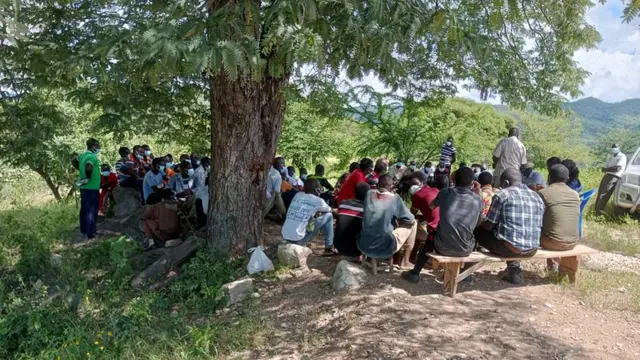
In Kpegnon Adja, access to land is a crucial issue for women (Photo: ADHD)
In Togo, as in many African countries, women's access to land remains a major issue, even though the country’s Land Code and international law require equal access to land for women and men.
Inheritance, often the main means of accessing land, presents a striking reality: very few women inherit land, and those who do end up with small plots, often of inferior quality compared to those owned by men. These inequalities are often reinforced by restrictive practices such as prohibiting women from passing on their plots to their descendants.
The women of the village of Kpegnon Adja, a small village in eastern Togo, share this reality. Agriculture is the main activity, and people mainly grow maize, soybeans, rice and market garden produce, including tomatoes, lettuce and chilli peppers.
The women of the village play a crucial role all along the village value chain. They are involved in the production, processing and marketing of agricultural products. Despite this, they face significant challenges, including a lack of recognition and protection of their legitimate land rights.
Challenges typically faced by women
In Kpegnon Adja, access to land is a crucial issue for women, who account for more than 51% of agricultural jobs. Land enables them not only to grow produce for domestic consumption, but also to generate income from the sale of surpluses. With this income, they can contribute to their children's education and improve their living conditions.
Despite the importance of land in the daily lives of village women, they remain marginalised, as they face many difficulties in gaining access to land, including:
- Customary traditions: land management is often in the hands of family heads or communities. Custom, including inheritance, shapes land acquisition and favours men in the allocation of land
- Lack of secured access to land: the vast majority of women work the land without owning it, which exposes them to the risk of expropriation and limits their ability to invest in modern farming tools
- Land disputes: land-related disputes are frequent, and women often lack the courage and the means to venture into legal proceedings to defend their rights, and
- Lack of access to finance: without secured access, women have difficulty obtaining loans to develop their farming activities.
Analysing strategies for sustainable family farming
The Togo-based NGO Autopromotion rural pour un Développement Humain Durable (rural self-promotion for sustainable human development, or ADHD), works to promote rural development in Togo and supports equal land rights for all. As part of Togo’s National Programme for Agricultural Investment and Food and Nutritional Security (PDF) (content in French), a strategy for the mobilisation of land through the development of Planned Agricultural Zones (ZAAPs) was being implemented across the country.
A key objective of the ZAAPs is to promote sustainable family farming by facilitating access to land for those who don't usually have it. Unfortunately, some challenges were emerging in ZAAP implementation.
ADHD, through the National Land Coalition, therefore sought technical support from the IIED and CCSI co-implemented Advancing Land-Based Investment Governance (ALIGN) technical support facility.
As part of the technical support, we conducted a study (content in French) to analyse the zones and their practical implementation in light of good land-based investment governance practices. It revealed, among other issues, a lack of dialogue between the various groups involved in land management at the village level. The voices of women were largely absent.
Searching for new solutions for women’s access to land
Kpegnon Adja has its own ZAAP. Building on the initial findings, we used participatory dialogue with villagers to search for sustainable solutions that would ensure the national strategy for and practical development of the ZAAPs could benefit all stakeholders.
Adopting an inclusive approach and involving different social components of the village, we organised a series of meetings between the different village stakeholders. All meetings were held in the village's palaver hut to facilitate access for all. Importantly, to mobilise local communities, we relied on the village's ZAAP governing body. This allowed us to harness momentum and processes external to daily village governance to begin discussing women’s land rights.
The meetings followed a carefully planned progression of activities. Firstly, a problem tree analysis was used to take stock of the problems women face in accessing land and securing their land rights. Building on this, the next steps focused on identifying sustainable solutions to the identified land challenges faced by women. Open dialogue was encouraged.
Role-playing exercises, where men played the roles undertaken by women, enabled participants to perceive problems as they arise in the daily lives of village women. Each group was able to express their concerns and propose solutions, and the men were better able to understand the difficulties and frustrations encountered by women in relation to land.
The meetings were lively and dynamic and, above all, allowed each stakeholder group to express themselves freely. The often-overlooked views and experiences of women, as well as young people, were highlighted and could be discussed in light of the common challenges faced by the community, including unregulated large-scale land sales, foreign land ownership, and investments.
This strategy encouraged a collaborative, forward-looking approach and leveraged the changes brought about through the ZAAP establishment to begin shifting long-held views around women’s land rights.
As the discussions progressed, a consensus emerged around several concrete actions. These included giving secured access to land for more women and youth in the village ZAAP.
A significant step forward
The ZAAP governing body is now allocating more land to women in the village. Although these allocations are currently only being made within the village ZAAP, this is a significant step forward. Young people are also seeing the benefits of increased inclusion.
While more work is needed, this progress suggests that, through further inclusive dialogues like those initiated by ADHD, the legitimate tenure rights of women and young people in the village can become fully recognised. This would set a historic precedent across Togo.
With thanks to Eric Bisil and Nathaniah Jacobs for contributing to the development of this insight.