ALIGN responsive support facility
The Advancing Land-based Investment Governance (ALIGN) project is providing demand-led, responsive technical support to governments, civil society, local communities and other actors. Over five years the Technical Support Facility has supported more than 40 demand driven technical support requests, across 23 countries.

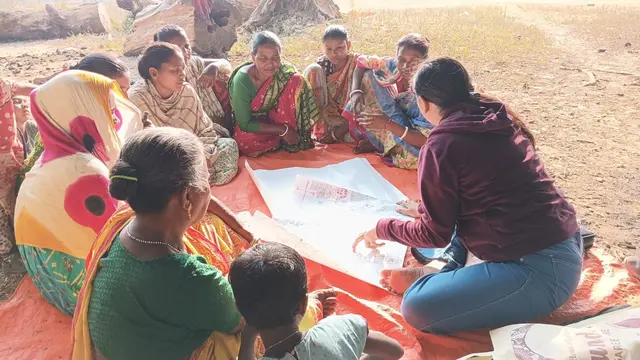
Visit of AKAWILOU Planned Agricultural Development Zone (PADZ) located in the Eastern Mono Prefecture, Eastern Plateaux, Togo (Photo: Auto-promotion rurale pour un Développement Humain Durable (ADHD))
Land-based investment in low- and middle-income countries can be a key factor to advancing economic development and achieving the Sustainable Development Goals (SDGs). But risks of land dispossession, environmental degradation and conflict caused by these investments have raised widespread concerns.
Increasing demand for investments in both established sectors, as well as emerging transition-linked developments such as renewables, carbon-offset and critical mineral extraction are putting pressure on land and the resilience of livelihoods linked to it.
Improving the governance of land-based investment requires systemic change to strengthen local rights, foster public participation and increase accountability in investment processes. Increasing pressures also require more coordinated and strategic decision-making.
Strengthening the policies, institutions and practices that underpin land-based investments can also foster local legitimacy and encourage investment stability and predictability.
What is IIED doing?
Through its Technical Support Facility, ALIGN provides support to governments, civil society, local communities and other relevant actors to strengthen the governance of land-based investments. This support is provided by IIED and the Columbia Center on Sustainable Investment (CCSI), with complementary expertise from additional partners where needed.
To strengthen land-based investment governance, the facility provides a wide range of support, such as working in partnership to provide inputs and recommendations for more robust regulatory frameworks and responsible practices (through for example technical drafting, institutional mandate mapping for strengthened coordination, or legislative gap analysis), as well as supporting policy development and implementation strategies through action research, community legal empowerment and multi-actor dialogue.
The technical support provided responds to demand. It takes a political economy approach to tailor contextually relevant interventions that boost ongoing initiatives or enhance capabilities at strategic moments.
The facility works closely with requesting organisations to identify openings within land-based investment governance frameworks, co-develop strategies to achieve change, and bolster ongoing partner efforts through technical inputs.
An individual instance of technical support, once defined and codeveloped, typically lasts six months and can be accompanied by a small grant to support activities. The facility has also served as an incubator for thematic issues and approaches used across the ALIGN project.
The map and detailed information below shows where and how the Technical Support Facility has supported organisations and outlines the impact made.

Countries where the Technical Support Facility has provided support
To see detailed information of how ALIGN's Technical Support Facility has helped support organisations in a wide range of countries click on each of the countries below.
BOCONGO (Botswana Council of Non-Governmental Organisations)
Approaches adopted: Action research | Advocacy | Comparative research | Key stakeholder engagement
Key issues: Indigenous Peoples, mining host communities and the impact of transition mineral extraction.
The Botswana Council for NGOs requested technical support to respond to emerging challenges around the opening of new copper mines in the Ghanzi and North West Districts.
Together with BOCONGO, Botswana Watch and Ditshwanelo – The Botswana Centre for Human Rights, ALIGN supported the development and publication of a situational analysis (also available as a PDF) on the impacts of new mines in Botswana. In addition, ALIGN supported the coalition of NGOs to make submissions on these challenges to the Botswana constitutional review process.
Listen to a podcast where the organisations involved discuss the work, and a recording of a radio panel discussion.
Botswana Watch
Approaches adopted: Action research | Advocacy | Awareness raising and sensitisation | Community legal empowerment | Comparative research | Multi-stakeholder dialogues
Key issues: Indigenous Peoples, mining host communities, and the impact of transition mineral extraction.
Building on the impact of the collaborative work with BOCONGO and Ditshwanelo – The Botswana Centre for Human Rights, Botswana Watch requested support to host a multi-stakeholder convening in the Ghanzi district. The convening brought together impacted community members, customary authorities, local and national government representatives, and the private sector. It provided a platform for stakeholders to discuss the situational analysis report (also available as a PDF) and agree on key actions.
ALIGN provided inputs on international good practice for responsible mining and assisted Botswana Watch to prepare a policy brief based on the discussions for key national level officials.
Botswana Watch also participated in a podcast and radio panel discussion on the results of the situational analysis.
DITSHWANELO - The Botswana Centre for Human Rights
Approaches adopted: Action research | Conflict mediation | Community by-law development | Comparative research
Key issues: Indigenous Peoples, mining host communities, and the impact of transition mineral extraction.
Following the initial instance of technical support to develop a situational analysis report (also available as a PDF) in collaboration with Bocongo and Botswana Watch, Ditshwanelo – Centre for Human Rights requested ALIGN support for the development and updating of a community constitution (by-laws) for the administration of their land and internal governance.
In addition, ALIGN supported a process of community reconciliation and mediation to address conflicts and strengthen the position of the community ahead of expanding mining activities.
Oxfam Novib/ Oxfam Chad and Ngaoubourandi
Approaches adopted: Advocacy | Awareness raising and sensitisation | Multistakeholder dialogues | Technical analysis
Key issues: Land governance reform, incorporating good international practice including legitimate tenure rights and women’s land rights, development of community bylaws.
Oxfam Novib requested ALIGN to join an informal taskforce consisting of the FAO (French only), Oxfam Novib/Oxfam Chad, the Dutch Embassy and other national and international experts to provide technical support around the development of Chad’s National Land Policy (NLP).
In addition to supporting the informal task force on land reform, ALIGN helped civil society groups and the coalition shape clear advocacy messages. Its contributions brought together local priorities and international experience, resulting in stronger, more well-rounded messages for key policy discussions.
On 27 February 2025, the NLP was submitted to Chad’s Council of Ministers for formal adoption, which is still pending. In addition, ALIGN provided inputs on the development of a policy brief drafted by a national NGO Ngaoubourandi analysing land governance frameworks and providing recommendations for community by-laws for natural resource management in Burkina Faso, Mali and Chad. The recommendations are relevant to the ongoing land governance reform process in Chad.
Impacts: Most of the ALIGN-supported provisions on the recognition and protection of individual and collective customary rights, recognition of pastoral rights and strengthening of women’s rights were incorporated into the draft NLP.
This video (French only, Facebook account required) shows a civil society representative for women and youth reading out recommendations for the NLP. The recommendations took on board ALIGN’s suggestions.
Open Development Cambodia
Approaches adopted: Multi-stakeholder dialogue | Awareness raising and sensitisation | Technical analysis | Key stakeholder engagement
Key issues: Inclusion of land-based investment good practice in Cambodia’s investment laws, strengthened Strategic Environmental Assessment (SEA) processes, adoption of a comprehensive national land law.
Open Development Cambodia (ODC) initially sought ALIGN technical support for work focused on incorporating international good practice considerations into Cambodia’s draft Investment law. When the law was unexpectedly adopted, the work pivoted toward providing support for the law’s implementing sub-decrees and focused on sensitising Cambodian government actors and civil society about the importance of land rights and the environmental implications of the investment regime.
This work evolved into providing technical inputs for a strengthened Strategic Environmental Assessment (SEA) process, as well as coordinating Cambodian civil society inputs on the Cambodian draft land law. See information on the first and second letters to the Ministry of Land Management, Urban Planning and Construction.
The work led to a partnership with LANDESA which is continuing to support the land reform process in the country.
Impacts: The inputs and recommendations to the land law have been formally accepted by the government and have been incorporated into an updated draft, particularly proposals regarding the land rights of Indigenous Peoples. ODC wrote an article setting out the approach and steps taken for the ALIGN insight series.
Social media: LinkedIn (Khmer only) | X
Centre for Environment and Development (CED)
Approaches adopted: Comparative research | Technical analysis | Multi-stakeholder dialogue | Institutional coordination | Technical training
Key issues: Integrated land use planning and land-based investment decision making with a focus on forest land conversion, concession and land-use overlap.
Centre for Environment and Development sought technical support from ALIGN to conduct a comparative legal analysis of regulatory gaps facilitating the conversion of forest land in the absence of adequate safeguards or protections. This memo was used to inform policy dialogue with government.
In addition, the facility supported ongoing CED efforts to map investment land use. This information, together with focused awareness raising among media outlets, was used to increase visibility of increasing land pressures, as well as inform CED positions in the parliamentary dialogue on land law reform.
An ALIGN training session on responsible land-based investments, attended by civil society and government representatives, was also organised. In a short subsequent follow-up request, ALIGN conducted an investment contact analysis against international good practice standards.
Impacts: Ongoing land reform efforts have entered a final stage. One of the issues yet to be determined is reforming the regime on large land concessions. The ALIGN supported work has continued to inform this processes and the information generated is being used to engage policy and decision-makers.
Oxfam CAR/Food and Agricultural Organisation (FAO)
Approaches adopted: Key stakeholder engagement | Multi-stakeholder dialogue | Technical analysis
Key issues: Land governance reform, incorporation of good international practice.
The ALIGN technical support facility was asked by Oxfam CAR and FAO to provide technical backstopping (French only) for the established multi-stakeholder platform responsible for facilitating the development of a National Land Policy in the country. ALIGN undertook an initial review and set of technical inputs on an updated assessment for the harmonisation of land tenure legal instruments in CAR.
The process is ongoing and the short-term technical support has been concluded.
Sustainable Land and Environment Development for Ethiopia (SULED)
Approaches adopted: Institutional coordination | Multi-stakeholder engagement | Stakeholder mapping | Technical analysis
Key issues: Industrial Park establishment, sub-national government engagement and integration of environmental and land considerations in the decision-making and implementation process.
Sustainable Land and Environment Development for Ethiopia (SULED) and researchers associated with the Environmental Resources Centre at Hawassa University requested ALIGN technical support to backstop ongoing efforts to support regional government engagement with industrial parks established within their jurisdictions.
The work focused on strengthening collaboration and cooperation between the federal government institutions, the Industrial Parks Development Corporation of Ethiopia, and the regional government by conducting regulatory assessments of institutional bottlenecks, regulatory misalignments and institutional mandate underlaps and overlaps. This was followed by targeted stakeholder dialogues.
Impacts: By providing a neutral research based platform for stakeholders to critically engage around the social and environmental difficulties communities, local, regional and federal government, and investment actors are grappling with, communication gaps and weak regulatory compliance could be addressed.
Promoting Economic Transition to Circular Options (PETCO Ethiopia)
Approaches adopted: Advocacy and sensitisation | Multi-stakeholder dialogue | Key stakeholder engagement | Technical training | Technical inputs
Key issues: Environmental and climate change rule of law, environmental adjudication, and environmental compliance.
Promoting Economic Transition to Circular Options (PETCO Ethiopia) requested ALIGN technical support for work supporting the establishment of a specialised tribunal for environmental disputes. PETCO sought ALIGN technical inputs on existing draft legislation, as well as sharing international comparative experiences with key stakeholders during a technical drafting workshop.
ALIGN prepared a review of best practices for environmental courts and tribunals based on comparative country examples and provided recommendations for approaches relevant to the Ethiopian context. In addition, PETCO has been working to secure support for the proposed legislation and increasing awareness around the need for a specialised environmental adjudicatory body.
Impacts: A significant increase in commitment from key stakeholders, who now recognise the critical need for a specialised environmental and climate change tribunal, has been generated. PETCO is continuing to work on this important step towards effective environmental and climate change rule of law.
COLANDEF
Approaches adopted: Advocacy | Awareness raising and sensitisation | Institutional coordination | Multi-stakeholder dialogue | Technical inputs | Technical backstopping
Key issues: Strengthened tenure security through implementation of Ghana’s 2020 Lands Act, multi-stakeholder dialogues, and gender rights.
COLANDEF, a Ghanaian non-governmental organisation requested technical support to improve implementation of the 2020 Lands Act. COLANDEF worked to develop a comprehensive analysis of key regulatory provisions, draft the Land Act implementation strategy, and establish a multi-stakeholder dialogue forum.
In addition, COLANDEF and ALIGN worked to facilitate stakeholder inclusion in the development of regulations for the new Land Act, as well as improve women’s land rights. Inputs for the National Land Policy Review were also provided.
Impacts: Key impacts include the Ministry of Lands’ adoption of the Land Act implementation strategy, the co-hosting of Ghana’s first national land conference, and the establishment of a Land Sector Multi-Stakeholder Platform (MSP). COLANDEF continues to provide comprehensive support and backstopping for the MSP steering committee and its five technical working groups.
The draft regulations engaged customary land actors and made progress towards strengthening the role of female leaders in customary land governance, as well as advancing the issues of free, prior and informed consent and social safeguarding. In addition, the work has supported greater awareness around women’s land rights and the development of concrete indicators for tracking progress on women’s land rights.
Action Mines (AMINES)
Approaches adopted: Technical analysis and inputs
Key issues: Mining governance, engagement with private sector, incorporation of good international practice.
Local NGO Action Mines (AMINES) (French only) requested ALIGN technical support for a contract analysis of a significant investment within Guinea.
Issues such as the adequacy of free, prior and informed consent, compliance with environmental standards, recognition of local community rights, and fiscal contractual arrangements were assessed against international good practice and AMINES was provided with a short technical brief, with the objective of proving an advocacy foundation for improved investment project design and implementation, as well as the inclusion of preventative measures in future projects.
Swadhina
Approaches adopted: Advocacy | Awareness and sensitisation | Community legal empowerment | Knowledge sharing | Participatory resource mapping | Technical training
Key issues: Indigenous Peoples land rights, Forest Rights Act, and women’s rights.
Swadhina, a Kolkata-based non-governmental organisation working in the East Singhbhum district of Jharkhand state, requested ALIGN technical support for their ongoing work around the Forest Rights Act (FRA). The work focused on strengthening the role of women in land governance.
It included legal empowerment approaches for women’s groups within communities entitled to benefit through the FRA, as well as strengthening awareness and engagements between both local and state-level government and potential beneficiary communities to improve the FRA's implementation.
In addition, Swadhina provided practical strategies to support sustainable farming activities within these communities.
Impacts: Swadhina's advocacy efforts have empowered Indigenous women to consider themselves stewards of the forest land. This engagement has resulted in increased awareness among tribal women regarding their rights under the FRA and has led to an increase in applications to access those benefits. Swadhina’s outreach to local and state-level governments, as well as other organisations working on this issue, has resulted in valuable knowledge exchange and a stronger implementation of the FRA.
Swadhina reflected on the work and published some of the challenges encountered as part of the ALIGN insight series.
Aliansi Masyarakat Adat Nusantara (AMAN), Central Kalimantan
Approaches adopted: Action research | Advocacy | Community legal empowerment
Key issues: Land-use planning and recognition of customary land-use planning practices, and Indigenous Peoples land rights.
The Central Kalimantan branch of Aliansi Masyarakat Adat Nusantara (AMAN), requested ALIGN technical facility support for ongoing work for the recognition of Indigenous Peoples’ land. AMAN requested support to document customary land-use practices in the Katingan watershed of Central Kalimantan and conduct a comparative analysis with government spatial plans. Areas of alignment, overlap and inconsistency were then identified and used to inform engagements and advocacy for improved recognition and inclusion of customary approaches.
AMAN conducted research trips to three villages to gain insights into changing local land use and customary land use planning law and practices. This information was used to inform a draft AMAN policy memorandum on spatial planning and the recognition of customary practices within the formal statutory processes. ALIGN provided technical research support and comparative good practice examples.
Following the end of this instance of technical support, AMAN continued to engage on the issue within the context of ALIGN’s in-depth work in Indonesia. AMAN has produced a paper based on this work.
Sustainable Development Institute, Liberia (SDI)
Approaches adopted: Advocacy | Awareness raising and sensitisation | Multi-stakeholder dialogues | Technical training
Key issues: Improve implementation of the Liberian National Oil Palm Strategy and Action Plan (NOPSAP) through increased awareness and strengthened community capacity.
The Sustainable Development Institute (SDI) of Liberia requested ALIGN technical support to backstop efforts to advance implementation of the NOPSAP and reduce adverse impacts of oil palm cultivation.
Through raised awareness and strengthened community capacity to monitor and advocate for the effective implementation of the NOPSAP, SDI worked with different stakeholders to create pathways for community concerns to be addressed. In addition, ALIGN backstopped SDI training on responsible land-based investment practices around community participation, free, prior and informed consent, contract negotiations, and grievance mechanisms.
This training also provided an opportunity for SDI to collate initial community concerns and challenges and bring them to national level multi-stakeholder dialogue platforms.
Impacts: Following the national level dialogues, the Liberian Environmental Protection Authority (EPA) assigned environmental monitors to Bomi, Grand Cape Mount and Gbarpolu counties. Pollution from one oil palm estate has already been identified and escalated for further action.
Publish What You Pay – Mali
Approaches adopted: Coalition building and mobilisation | Multi-stakeholder dialogues | Technical analysis
Key issues: Mining regulatory frameworks and implementation of requirements for local development funds.
Publish What You Pay (PWYP) – Mali requested ALIGN technical support to bolster ongoing civil society efforts to operationalise requirements in the 2019 Mining Code and implementing sub-decrees for local development in mining-impacted areas. The Malian PWYP coalition advocated for better community and CSO representation in the management of funds set aside for this purpose.
With ALIGN technical support, PWYP brought together relevant stakeholders to identify priorities, prepared an analysis of comparative country experiences, provided technical inputs on relevant draft decrees and implementing ministerial orders, and convened a multi-stakeholder forum to discuss outstanding issues.
PWYP Mali also shared its experiences as part of the advancing land-based investment insight series.
Centro Terra Viva (CTV)
Approaches adopted: Advocacy | Awareness raising and sensitisation | Coalition building and mobilisation | Public participation facilitation | Technical analysis
Key issues: Revision of the national land law and policy, land-based investment safeguards, and civil society engagement.
Maputo based CTV requested ALIGN technical support in the government review of the National Land Policy and Land Law. Investment promotion was an important consideration in the process. Civil society experts were included in the review commission membership and CTV played a pivotal role in ensuring that.
Align supported CTV with initial engagements and the establishment of a civil society organisation expert working group, as well as land governance assessment reports and policy reviews. In addition, CTV facilitated greater public engagement and participation opportunities, and awareness raising around the process and its impacts.
Ekiti State Development and Investment Promotion Agency (EKDIPA)
Approaches adopted: Institutional coordination | Mandate mapping | Multi-stakeholder dialogue | Stakeholder mapping | Key stakeholder engagement | Technical analysis | Technical inputs
Key issues: Institutional coordination and collaboration, integrated investment approval process, and land identification processes.
Ekiti State Development and Investment Promotion Agency (EKDIPA), a sub-regional investment promotion agency in Nigeria, requested ALIGN technical support to strengthen coordination, collaboration and efficiency across existing policies and processes for identifying land for investments.
As part of the work, EKDIPA and ALIGN completed an institutional mandate mapping that provided the basis for the development of an integrated Investment Approval Process (IAP). Relevant sub-national ministries, departments and agencies were brought together, for the first time, to discuss and agree on the IAP. EKDIPA reflected on the process and work as part of the ALIGN land-based investment governance insight series.
Impacts: The ALIGN-supported work has resulted in the adoption and implementation of an IAP for Ekiti State, Nigeria. It has also encouraged more integrated decision-making and land acquisition process that align with international good practice. The work has also provided a solid foundation for the World Bank-sponsored Framework for Responsible and Inclusive Land-Intensive Agriculture (FRILIA) process.
Initiative Prospective Agricole et Rurale (IPAR)
Approaches adopted: Advocacy | Action research | Multi-stakeholder dialogue | Technical analysis | Technical inputs
Key issues: Mining and energy sectors, land governance reform, responsible investment practices, participatory frameworks, community bylaws,
Initiative Prospective Agricole et Rurale (IPAR) (French only), facilitated by the International Land Coalition (Africa), requested ALIGN technical support for ongoing efforts by the national platform for dialogue on land governance in Senegal (the national platform).
The ALIGN support reinforced efforts, started in 2020 by the national platform and supported by FAO and ILC, and provided technical inputs to ongoing civil society efforts to operationalise a stakeholder participation framework, as well as community by-laws intended to strengthen responsible investment practices around land-based investment projects in the Méouane district located in the Niayes area, northwestern Senegal.
A preliminary field study (French only) of the investment projects taking place in the area was prepared to inform local stakeholders about the project and to gain an initial overview of the situation regarding land-based investments in the area.
In addition, the technical committee of the national platform, coordinated by the IPAR secretariat, hosted a multi-stakeholder gathering (French only) to finalise the process to establish the stakeholder engagement framework and to launch the process to update the bylaws. The event enjoyed significant national media coverage (see footage in videos one, two and three (all French only)).
Impacts: The support coincided with Senegal resuming its previously stalled land reform process. The findings of the ALIGN supported work will feed into this process. An assessment report (in French) on land-based investments in the Méouane district and the implementation of community bylaws was published. This report makes recommendations for improved land and natural resource governance.
Namati
Approaches adopted: Legal analysis | Comparative research | Technical analysis | Technical inputs | Technical training
Key issues: Implementation of the Sierra Leone Customary Land Rights Act 2022, and statutory alignment.
Namati, a core ALIGN partner, requested technical backstopping from the support facility to consolidate and safeguard the success of Sierra Leone’s adoption of the Customary Land Rights Act.
Key activities included the provision of training on the new law to both private and public sector lawyers within Sierra Leone, as well as an analysis and policy briefings for members of parliament on potential misalignments between the newly adopted Customary Land Rights Act and proposed draft laws for mining. In addition, the facility’s work supported comparative research on approaches to engaging traditional authorities during land reform processes.
Fossil Free South Africa and Living Limpopo
Approaches adopted: | Comparative research | Technical analysis
Key issues: Special economic zones, constitutional and international commitments, and good practice.
Living Limpopo requested technical support from ALIGN to review South Africa’s Special Economic Zone (SEZ) Act considering the country’s constitutional and international commitments.
ALIGN provided recommendations on areas that could be improved in South Africa’s SEZ legal regime to align it with South Africa’s constitution, broader legislative framework and international commitments.
Lawyers for Human Rights
Approaches adopted: Action research | Awareness raising and sensitisation | Community legal empowerment | Comparative research | Technical inputs
Key issues: Local economic development, community benefit sharing, and mining procurement practice.
Lawyers for Human Rights, a public interest legal NGO, requested ALIGN technical support for its ongoing work around community legal empowerment. Specifically, LHR sought technical inputs on models for preferential host community procurement contracts.
LHR worked to gather host community insights, concerns and priorities from mining-affected communities in Mokopane, Limpopo Province. This informed the development of a model mining procurement policy, which also drew on existing industry practice and international good practice.
The model policy document will be used for advocacy and awareness raising efforts around community identified challenges such as transparency, hidden access barriers and a need for grievance mechanisms. In addition, LHR will use the document for mining community legal empowerment and capabilities training, as well as a resource in its ongoing work to improve mining industry practice on host community benefits and local economic development.
LHR also contributed towards the ALIGN insight series with an article on the impact of the South African Constitutional Court’s Maledu judgement, which dealt with collective land rights, consent and mining.
Land Network National Engagement Strategy (LandNNES)
Approaches adopted: Action research | Key stakeholder engagement | Multi-stakeholder engagement | Technical analysis | Technical inputs
Key issues: communal land rights, customary law, and land tenure security.
Land Network National Engagement Strategy (LandNNES), facilitated by ILC Africa, requested technical support from ALIGN to address critical challenges surrounding communal land rights in South Africa. The focus on the work was to highlight the experiences of rural people living on communal land where their land rights have been adjusted or taken away without compliance with the Interim Protection of Informal Land Rights Act (IPILRA) and where customary law processes in each community have not been followed.
Feeding into broader ongoing work, LandNNES, with ALIGN support, mobilised the network to conduct a series of case studies on the lived experiences from different areas in South Africa. This research, which highlighted the complexity of customary law and the application of IPILRA, was used to convene stakeholders from both government and civil society to engage on existing challenges and objectives for an integrated land governance system.
LandNNES has since completed a legal analysis of the implementation directives for IPILRA, highlighting areas in need of additional clarification. This process will feed into the broader engagements with South Africa on the development of a communal land rights act.
Impacts: LandNNES and associated peoples organisations have developed a much deeper understanding of IPILRA, particularly about the contextual nature of customary law. This has prompted stakeholders to conduct information programmes on these issues in rural areas that have been experienced dispossession.
The response of the state actors has been positive in light of the collaborative approach and timing of the work, which coincides with the preparation of new legislation on communal land rights. Work is ongoing and it is anticipated that there will be further engagement with the state on improving regulatory frameworks.
Himiza
Approaches adopted: Action research | Stakeholder mapping | Political economy analysis | Multi-stakeholder dialogue (sub-national level)
Key issues: Mining host communities, community consultation, compensation, resettlement processes, and grievance mechanisms.
Himiza social justice, a NGO operating in Tanzania’s Sengerema District, requested ALIGN technical support to address challenges linked to gold mining. ALIGN and Himiza worked closely to identify governance gaps around mining investments in the area, collectively (with community members and local government) map solutions to the gaps identified, and build the capacity of stakeholders on good practice around investment land acquisition.
Following the initial instance of technical support, ALIGN provided renewed support for community-government dialogues to advance jointly developed approaches to governance challenges identified and deepen local government collaboration.
Impacts: Key impacts have been strengthened stakeholder engagement and dialogue, increased community awareness and process participation, and improved land-based investment governance with increased accountability to impacted communities.
Social media: LinkedIn | Instagram
Tanzania Land Alliance & Tanzania Natural Resource Forum
Approaches adopted: Advocacy | Community legal empowerment | Multi-stakeholder dialogue | Technical backstopping
Key issues: Community legal empowerment and engagement in land-based investment decision-making processes.
The Tanzanian Land Alliance (TALA) and Tanzanian Natural Resource Forum (TNRF) requested ALIGN technical support for ongoing efforts to support four agricultural investment impacted communities. Work focused on community preparedness and facilitating inclusion in decision-making processes, with activities to facilitate informed community decision-making and engagement at the village to district-level.
In addition, TALA and TNRF collated common community challenges, backstopped by a regulatory and practice analysis against recognised good practice principles, which were used to further engagements with relevant national level government institutions. This was complemented by a local level multi-stakeholder symposium.
Impacts: TALA and TNRF were able to leverage the work started to develop a civil society action plan for private sector engagement on land tenure. Community engagement and capacity to engage in decision-making processes improved.
An article outlining the context of the ALIGN supported work, and another on aspects of the approach adopted through the work, were published as part of the ALIGN insight series.
Government agency
Approaches adopted: Action research | Comparative research and international good practice examples | Technical inputs
Key issues: Pro-active land acquisition and consolidation for agricultural investments.
The Gambian agency requested ALIGN technical support to strengthen existing processes and capacity for access to information, legal recognition of community land and natural resource governance practices within the context of government efforts to advance pre-investment land consolidation.
ALIGN provided technical inputs on the proposed government policy for the pre-emptive acquisition of community land for investment, highlighting key challenges that may emerge, as well as alternative approaches.
In addition, ALIGN prepared an analysis and practical recommendations on how to improve consultation of women around land issues and supported efforts to prepare a consultation framework for implementation of the policy.
Impacts: Many of the ALIGN recommendations were adopted and incorporated into the implementation practices of the policy. In addition, the ALIGN insights developed through this instance of support were developed into two ALIGN knowledge sharing products on land banking for large-scale land-based investments (PDF) and a governance flash on women's meaningful participation in community engagements for land-based investments toolkit.
Auto-promotion rurale pour un Développement Humain Durable
Approaches adopted: Action research | Advocacy | Multi-stakeholder dialogue | Participatory resource mapping | Technical backstopping
Key issues: Agricultural land consolidation, tenure rights recognition, participatory land-use mapping, and women’s land rights.
Auto-promotion rurale pour un Développement Humain Durable/Rural self-promotion for sustainable human development (ADHD) (French only), a civil society organisation in Togo, with support from the International Land Coalition (Africa), requested ALIGN technical support to engage with Togo’s strategy for Planned Agricultural Development Zones (PADZ). ADHD developed a critical analysis report (French only) of the strategy to secure PADZ in the light of international good practice.
ADHD used the report to inform engagements with the Ministry of Agriculture and to develop a guide for participatory mapping of PADZ to avoid property boundary conflicts within the zones. This guide (French only), to assist future work on PADZ, was adopted by the ministry. It is expected to inform implementation of the PADZ strategy going forward.
In addition, ADHD contributed to the ALIGN insight series by setting out how its work to strengthen land-based investment practices within the PADZ contributed to improved outcomes for women.
Social media: LinkedIn | Facebook (French only, Facebook account required) | YouTube | X
Advocates for Natural Resources and Development (ANARDE)
Approaches adopted: Action research | Advocacy | Awareness raising and sensitisation | Multi-stakeholder engagement | Technical analysis | Technical drafting
Key issues: Local community engagement and benefit sharing, and Community Development Agreements (CDA)
Advocates for Natural Resources and Development (ANARDE), a national civil society organisation in Uganda, initially requested ALIGN technical support for work on the review and adoption of Uganda’s then mining bill. ANARDE, together with ALIGN, supported mobilised communities in three mining affected areas (the Karamoja region and Mubende and Bulisa in the Eastern region) to collect community views, recommendations and identified challenges.
This research informed a position paper used to engage the government on the provisions of the bill. A key recommendation was to include a requirement for Community Development Agreements (CDAs), which was adopted when the Mining and Minerals Act was amended in early 2022.
ALIGN and ANARDE have since worked to develop ‘shadow regulations’ to support the implementation and operationalisation of CDAs. A practical toolkit, which has the full support of the Ministry of Energy and Mineral Development, has also been developed and launched. ANARDE wrote about its work as part of the ALIGN insight series.
Impacts: A CDA requirement has been included in the Ugandan Mining and Minerals Act, 2022; a comprehensive toolkit for CDA implementation within mining communities has been developed; a draft set of CDA implementation regulations has been developed; awareness around the issue has been strengthened; and there is stronger collaboration with the government.
Social media: X
Buganda Land Board
Approaches adopted: Process mapping | Multi-stakeholder engagement | Technical training | Technical analysis | Technical backstopping
Key issues: Investment approval process, customary institutions, and collective land.
The Buganda Land Board (BLB), which manages the land returned to the Buganda Kingdom in 1993, requested support from ALIGN for its ongoing work to clarify and streamline processes for the assessment and approval of land-based investments within the kingdom.
BLB, with ALIGN assistance, undertook a process to develop policy and internal guidelines for the assessment and allocation of land for investment. Following online training on international good practice for land-based investments, the business development committee and senior management teams developed three internal documents outlining key principles to guide land allocation decisions, an investment approval process to ensure consistency and transparency in practice, and an implementation framework to guide internal practice.
ALIGN supported the drafting process and facilitated a multi-stakeholder workshop that brought multiple government and civil society actors together. The workshop allowed BLB to present the work undertaken and obtain feedback, raise awareness and seek synergies with broader national processes.
Impacts: The collaboration has enabled BLB to adopt a more structured and transparent approach to working with investors. By fostering synergies and collaboration across sectors, especially in the context of land release for investment, the process has strengthened internal governance and positioned BLB to better align with national land management priorities and international best practices.
Uganda (national government)
Approaches adopted: Mandate mapping | Institutional coordination | Key stakeholder engagement | Political economy analysis | Technical backstopping
Key issues: improved coordination across investment approval processes and processes strengthening efforts.
This request came from a government employee seeking technical backstopping to support ongoing efforts to strengthen intra-governmental coordination and collaboration across the investment approval process. A strong focus on ensuring legislative safeguards are fully implemented and integrated across land-based investment life cycles was adopted.
Informed by identified opportunities and shifting conditions, ALIGN and the government counterpart worked to map the investment approval process, both from a formal legislative and an implementation practice perspective. In addition, informal relationship building across different institutions involved in the processes was pursued and a regional meeting with government representatives from Ghana, Kenya, Liberia, Sierra Leone,and Uganda to share experiences and practices was convened.
Summary briefs to facilitate intra-institutional coordination strengthening were also produced, and the facilitation of strategic network contacts were used as strategies to advance the work.
Centre for Environmental Justice
Approaches adopted: Advocacy | Key stakeholder engagement | Multi-stakeholder convening | Technical analysis | Technical input
Key issues: Environmental rule of law and the role of customary authorities, and operationalisation of the Zambian Environmental Protection Fund.
The Centre for Environmental Justice (CEJ) requested technical support for two distinct but interlinked areas of ALIGN technical support. Firstly, an inaugural traditional leaders caucus brought together a group of 15 traditional leaders (Facebook account required) to identify implementation gaps and barriers for environmental and social protections within the context of land-based investments. This caucus took place ahead of the annual CEJ Environmental Protection Dialogue (EPD) and provided a platform to raise awareness, as well as for customary authorities to surface concerns.
A key output was a summary action paper (PDF) outlining key issues of concern for traditional leaders in the context of land-based investment governance.
A second component of the technical support was conducting a legal and policy analysis of the Zambian Environmental Protection Fund (EPF) and subsequent publication of a policy brief (PDF) on strengthening the EPF. ALIGN backstopped CEJ’s analysis aimed at surfacing gaps preventing full implementation and suggesting solutions.
Social media: Facebook | LinkedIn | YouTube
Zambia Land Alliance
Approaches adopted: Action research | Advocacy | Awareness raising and sensitisation | Key stakeholder engagement | Multi-stakeholder dialogue | Technical analysis | Technical inputs
Key issues: Inputs into the Zambian National Lands Policy (NLP), awareness and sensitization of adopted NLP, traditional authority engagement and recognition of customary land rights.
The Zambia Land Alliance (ZLA) requested support for inputs to the Zambian National Lands Policy (NLP). ZLA and ALIGN worked to analyse the existing Lands Act of 1995 and the land governance situation in the country to develop civil society recommendations as well as policy positions.
Following the adoption of the NLP, ZLA continued to work on awareness raising and mainstreaming of the NLP, as well as stakeholder engagement and feedback. A simplified version of the NLP was produced, translated into accessible language, several engagement events organised, and traditional leaders were convened to discuss continuing concerns and gaps. In addition, a general civil society organisation position paper for further engagement with government was prepared.
ZLA contributed two articles to the ALIGN insight series, reflecting on the work, approaches adopted, and role of traditional authorities in land-based investments. In addition, the work started under the ALIGN technical support facility has deepened into the longer-term in-depth work ALIGN has continued to engage in within Zambia.
Impacts: Adoption of CSO recommendations in the NLP; increased knowledge on the NLP by community members and traditional leaders.
Social media: Facebook
International Bar Association and Food and Agriculture Organisations
Approaches adopted: Technical training
Key issues: Responsible Land Based Investment governance
ALIGN was asked by the agricultural law section of the International Bar Association, in collaboration with the Food and Agriculture Organisation, to provide online training for public and private sector lawyers to improve understanding of topics relevant to responsible land-based investments.
ALIGN co-organised two regional webinars for lawyers in the Asia-Pacific region, as well as Africa, and covered topics such as the role of lawyers in facilitating investments that are responsible, the importance of soft-law instruments such as the Voluntary Guidelines on the Responsible Governance of Tenure, and facilitating free, prior and informed consent, among others.
As the ALIGN project enters its final year of implementation, the facility is no longer accepting additional requests.
News and updates

Additional resources
Insight: How are civil society and impacted communities working to change the governance of land-based investments?, Nathaniah Jacobs, Amaelle Seigneret (July 2024)
Insight: Recognising women’s land rights in Togo: a glimmer of hope, Abdou-Rachidou Matcheri, Adiavou Mawuvi (June 2025)
Insight: Towards a secured future: an ongoing journey for the right to land, Saswati Roy Patnaik (June 2025)
Insight: How Ekiti State is advancing transition-ready investment decision making, Kayode Adeniyi (May 2025)
Insight: Traditional authorities need a clearer role in land governance, Jesinta Kunda (April 2024)
Insight: Mining contract transparency improves local planning in Mali, Nouhoum Diakite (April 2024)
Insight: Civil society organisations are key to creating better land policies: lessons from Zambia, Jesinta Kunda (April 2023)
Insight: Mining and Community Development Agreements: a panacea for community justice in Uganda?, Kevin Bakulumpagi (November 2022)
Blog: Land rights on air: how Land Voice supports Indigenous communities in Cameroon, Sandrine Kouba (July 2022), Land Portal
Insight: Navigating the challenges of land-based investment governance, Amaelle Seigneret, Nathaniah Jacobs (June 2022
Article: Investment governance in Cambodia: a window of opportunity, Thy Try, Anna Bulman, Thierry Berger (April 2022)
Blog: Land-based investment in Tanzania: how simplified legal guides are empowering communities, Masalu Luhula (April 2022) Land Portal
ALIGN - Technical support on land-based investments for governments in low- and middle-income countries, IIED, CCSI (2022), project flyer | en français
ALIGN - Technical support on land-based investments for civil society in low- and middle-income countries, CCSI, IIED (2022), project flyer | en français
Insight: Land-based investment in Tanzania: how simplified legal guides are empowering communities, Masalu Luhula (April 2022)
Insight: Moving forward with communal land rights in Ethiopia: what are the legal solutions?, Nathaniah Jacobs, Daniel Behailu (March 2022)
Blog: Mining and land rights in South Africa: how has the Maledu judgement empowered rural communities? Louise de Plessis (March 2022), Land Portal