ALIGN Indonesia
In Indonesia, the Advancing Land-based Investment Governance (ALIGN) project supports two coalitions of Indonesian civil society organisations in the provinces of Central Kalimantan and Southeast Sulawesi, working to improve land and natural resource governance and align economic development strategies with social and environmental justice.


Logs are loaded onto a truck in Gunung Lumut, East Kalimantan, Indonesia. Local communities and Indigenous Peoples often receive limited benefit from land-based investments while witnessing deforestation and suffering from economic displacement (Photo: Jan van der Ploeg/CIFOR, via Flickr, CC BY-NC-ND 2.0)
Indonesia is playing a key role in international agreements to deliver on climate change mitigation and biodiversity protection, having set ambitious targets for deforestation and carbon emissions reduction.
The country is also the world’s largest producer of nickel, a ‘critical mineral’ for the domestic and global energy transition away from fossil fuels. Indonesia plans to grow nickel mining and smelting, along with the expansion of oil palm plantations, where it is already the dominant global producer, for both biofuels and the co-firing of biomass with coal powerplants.
Much of Indonesia’s nickel reserves are concentrated in Southeast Sulawesi. Its exploitation over the past 15 years has accelerated significantly, transforming coastal and island landscapes with insufficient mitigation and rehabilitation measures. These changes have led to displacement and precarious, unsustainable livelihoods adaptation strategies.
In addition to the environmental impacts linked to its extraction, the smelting of this ‘green’ mineral is powered by coal plants. The province is also host to large-scale oil palm plantations, which have been the site of conflict between companies and local communities, including over land and labour disputes.
Central Kalimantan also epitomises challenges linked to the implementation of energy transition policies. Of the 15 million hectares (Ha) making up Central Kalimantan, 11.2 million Ha are already under concessions for oil palm plantation, mining (mainly coal, some of which is used for nickel smelting in Southeast Sulawesi), logging and industrial tree plantations.
These large-scale investments overlap the customary territories of local communities and Indigenous (Adat) people, who often receive limited benefits from investments, while witnessing deforestation and suffering from economic displacement.
At the same time, the Indonesian government has set ambitious targets to secure tenure for rural communities and Indigenous Peoples through a variety of registration processes. In practice, the amount of land granted to communities lags significantly behind that awarded to large-scale investors for forestry, palm oil and mining in investment hotspots.
What is ALIGN doing?
As part of the ALIGN project, IIED and the Columbia Center on Sustainable Investment (CCSI) are supporting two coalitions of Indonesian civil society organisations in the provinces of Central Kalimantan and Southeast Sulawesi.
The coalitions are working to improve land and natural resource governance in contexts where the impacts of investments linked to ‘just transition’ policies are particularly acute. Their interventions aim to bring social and environmental justice into the design of economic development strategies.
The organisations in Southeast Sulawesi (Komunitas Teras, Rumpun Perempuan Sultra, Komnasdesa-Sultra, WALHI Sultra, and Puspaham) are advancing a range of community empowerment and policy advocacy strategies to strengthen the governance of the nickel and palm oil sectors.
These efforts are intended to support improved environmental and social safeguarding around ongoing investments, while advancing tenure security, livelihoods strengthening and sustainable community-led land-use and natural resource governance. Some of the strategies include:
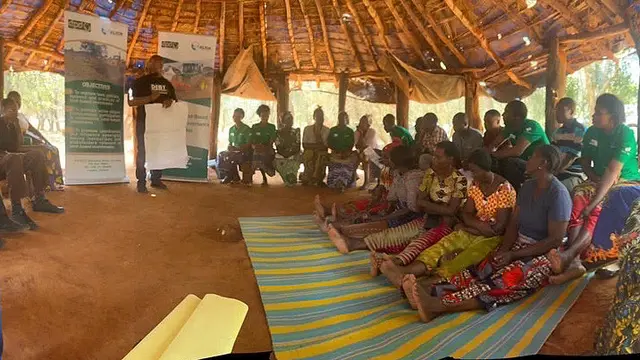
- Community-led environmental and social monitoring of large-scale investments
- Establishing community-led grievance posts to facilitate access to justice and remedy, and
- Engagement with provincial and local-level government actors to advance participatory, inclusive and responsive spatial planning, locally-led development planning, and improved investment governance in the oil palm and nickel sectors.
In Central Kalimantan, the organisations address the challenges through several complementary strategies. These include:
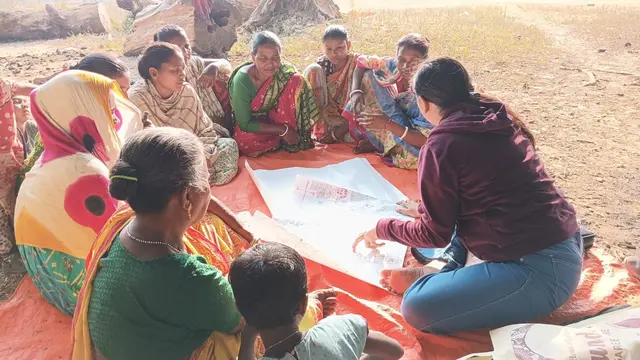
- Community mobilisation and mapping of Adat territories as basis for bottom-up advocacy to secure territorial and forest rights
- Community-led monitoring of the environmental impacts of large-scale investor concessions, and
- Engagement with district and provincial governments to improve regulations that adequately recognise and protect Adat communities’ rights to exist and live on their historical territories.
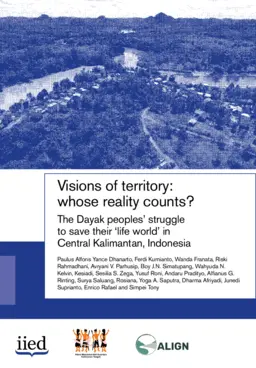
Additional resources
ALIGN - Advancing Land-based Investment Governance, IIED, CCSI (2022), project flyer
Partners
Columbia Center on Sustainable Investment (CCSI)
Central Kalimantan
Southeast Sulawesi
- Komnasdesa-Sultra
- Puspaham
- Rumpus Perempuan Sultra
- WALHI Sultra
- Komunitas Teras