Where to find IIED and partners at COP30: event listing
The 30th Conference of the Parties (COP30) of the United Nations Framework Convention on Climate Change (UNFCCC) was a pivotal moment for advancing climate action. IIED researchers and partners led and presented at several events in-person and online throughout COP30.


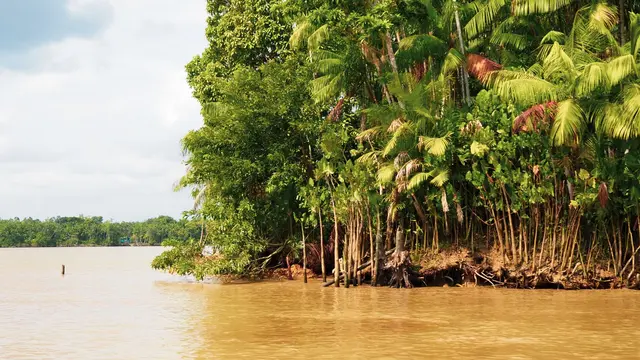
COP30 was held in Belém, Brazil
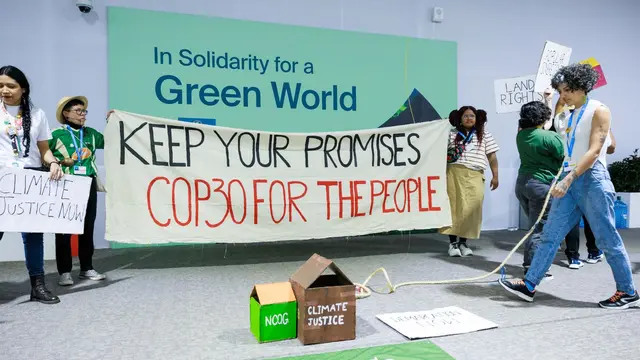
The 2025 global climate change negotiations ran from 10 to 21 November in Belém, Brazil, and saw a focus on securing the scale of finance needed to support resilience and adaptation, particularly for communities in the least developed countries (LDCs) that are most impacted by climate change
IIED engaged actively in key events on the road to COP30 to influence global debates and ensure local priorities shape climate finance and action.
Key events have included the Finance in Common Summit, 19th International Conference on Community-based Adaptation (CBA19), Bonn climate meetings, London Climate Resilience Finance Summit, International Monetary Fund/World Bank meetings, the 4th International Conference on Financing for Development (FFD4) and the UN General Assembly.
At COP30, IIED advocated for climate and nature finance that gets to where it’s needed most, governance that includes those most affected, and just transitions that deliver for people and planet – to restore trust and ensure the multilateral system works for all.
We hosted and contributed to a range of events alongside our partners, focusing on four critical themes:
- Get money to where it’s needed most: shift power in global financial systems so that finance reaches the people and places most affected by climate change and biodiversity loss
- Make all voices heard in climate talks: support those most impacted – including LDCs, Indigenous Peoples and local communities – to shape international climate decision-making
- Shift the power to local communities: advocate for local leadership, rights and priorities in climate action and finance, and
- Transition economies to serve people and planet: champion bold, green economic models that promote human wellbeing, equity and sustainability.
Supporting LDC leadership in negotiations
IIED will continue its long-standing support to the Least Developed Countries (LDC) Group at COP30, working to level the playing field in international climate negotiations.
In the lead-up to COP, IIED co-hosted a pre-COP training workshop for LDC negotiators on 8 November in Belém, supporting new delegates to strengthen their negotiation skills, focusing on key LDC issues and expected COP outcomes.
Events
Monday 10 November
The Climate and Development Ministerial: operationalising country platforms for adaptation for SIDS and LDCs
Pavilion event
Venue: Moana Blue Pavilion
Hosted by: Climate and Development Ministerial (C&DM), IIED, E3G
Partners: Vanuatu
This event aimed to demystify the concept of climate finance country platforms: what they are, how they work in practice, and what lessons can be drawn from the lived experiences of Small Island Developing States (SIDs) and least developed countries (LDCs) that are leading adaptation-focused, country-owned programmes.
It explored how these approaches have evolved and showcased the work of the C&DM on this topic. It also explored how countries could come together to align and strengthen adaptation finance coherence and operationalise implementation in a crowded institutional landscape.
Related reading: Bridging climate and nature: the next generation of country platforms | The realities of country platforms for LDCs and SIDS: ten key lessons
Philanthropic action for housing justice
Public event
Venue: Casa das ONGs, Rua Cônego Jerônimo Pimentel, 315 – Umarizal, Belém – PA, 66055-080
Hosted by: IIED and Instituto Polis
Partners: Iniciativa Pipa, Movimento dos Trabalhadores Sem Terra Leste 1
This session focused on housing justice and global solidarity, exploring ways to transform philanthropic action and housing finance in the global South. Based on community experiences and collaborative practices, the dialogue identified how public policies, research and social mobilisation can be coordinated so that resources effectively reach the most vulnerable populations.
Organisations, foundations and social movements discussed new models of governance and social investment capable of addressing climate, economic and territorial inequalities, promoting decent and inclusive housing that leaves no one and no place behind.
Further reading: Brazilian philanthropies’ vision to tackle social and climate injustices | The missing social infrastructure: financing housing justice as a strategy to advance global agendas
Identify, assess, respond: the role of insurance and risk management in advancing National Adaptation Planning
Pavilion event
Venue: Resilience Hub
Hosted by: Zurich and MarshMcLennan
Partners: ALL-ACT, IIED
This session focused on three critical elements to effectively developing and deploying National Adaptation Plans at the national level. IIED's Ritu Bharadwaj joined to explore how the insurance sector’s risk assessment tools and financial innovation can strengthen climate finance and resilience planning.
The agenda covered risk identification and quantification, national risk and resilience prioritisation and mobilisation of capital to implementation resilience measures.
Tuesday 11 November
Beyond warnings: pre-arranging financing to outpace disasters
Pavilion event
Venue: Resilience Hub
Hosted by: Centre for Disaster Protection and Ignitia
The international crisis financing system is fragmented and not configured to meet current or future crisis financing demands effectively. Despite advances in early warning systems and climate risk modeling, finance is too often reactive, fragmented and late.
IIED's Ritu Bharadwaj joined this session that provided an early view of new research on the use of pre-arranged finance, looking at trends in triggerable finance globally. It explored how triggers can be used to transform early warnings to early action to protect people, economies and nature. By blending science, technology and finance, the session spotlighted models that move beyond theory into scalable, investable solutions.
Further reading: Climate resilience through social protection: the economic case for early action
Belém high-level roundtable on “mutirão for adequate housing and the transformation of informal settlements as components of a just urban transition”
Blue Zone event
Venue: Blue Zone (TBC)
Hosted by: UN-Habitat, Ministry of Cities
Partners: Build Change, Habitat for Humanity, Hub for Housing Justice, Misereor, UNDRRR, UNEP, UNITAC, WHO, WRI, UNITAC
As the world rapidly urbanises, with nearly 70% of the global population projected to live in urban areas by 2050, cities have become both engines of opportunity and epicentres of inequality and climate vulnerability.
The convergence of the housing crisis and climate vulnerability presents one of the most pressing challenges of our time. Yet it also offers a transformative opportunity that demands coordinated action at the global, national and local levels.
Adequate housing and the transformation of informal settlements are not only development goals – they are climate imperatives. A just urban transition must prioritise the dignity, resilience and rights of urban communities most vulnerable to climate impacts.
By integrating housing justice into climate action, we can build inclusive, low-carbon and climate-resilient cities that leave no one behind. This roundtable explored how expanding access to adequate housing and investing in the transformation of informal settlements – rooted in local needs and led by communities – can serve as powerful levers for climate justice, social equity and sustainable urban development.
Further reading: Hub for Housing Justice
Debt sustainability and resilient infrastructure: unlocking sustainable finance for SIDS and LDCs
Pavilion event
Venue: Disaster Resilient Infrastructure (DRI) Pavilion
Hosted by: ALL ACT and IIED
Partners: Government of Antigua & Barbuda, Government of Somalia, IDRC, Coalition for Disaster Resilience Infrastructure (CDRI) OPEC Fund and members of the DSSS Strategic Advisory Group
Small Island Developing States (SIDS) and least developed countries (LDCs) contribute least to global greenhouse gas emissions yet face the greatest fiscal and physical exposure to climate change.
This high-level COP30 side event explored how debt reform, risk-informed infrastructure investment, and innovative partnerships between governments, development banks, private insurers, legal experts and civil society can unlock sustainable finance for SIDS and LDCs. It highlighted how integrating debt sustainability and resilient infrastructure planning can deliver fiscal stability, accelerate adaptation and strengthen long-term economic resilience in vulnerable economies.
Further reading: Currencies under pressure: how currency fluctuations and climate risks impact debt sustainability in SIDS and LDCs
Benefits beyond borders: collaborative governance for a global just transition
Official side event
Venue: Side event room 5
Hosted by: Republic of Chile, Climate Strategies, Plataforma CIPÓ
In an interconnected world, national transitions do not stop at borders and measures to support the most affected may exceed national just transition policy. Focusing on the fossil fuel transition, this event explored spillover effects and how to align national just transitions for shared benefits beyond borders.
IIED's Alexandre Apsan Frediani joined this event where participants discussed cross-border prosperity potential of fossil fuel transitions, impacts for oil and gas producing countries, shared pathways and mechanisms for global solidarity with perspectives from governments, researchers, civil society and private sector actors focusing on global South.
Related reading: The Lobito Corridor: opportunities and challenges for a just transition | A just energy transition? Impacts on Indigenous lands in Argentina
Wednesday 12 November
Building resilient futures: locally-led solutions for loss and damage
Pavilion event
Venue: Disaster Resilient Infrastructure (DRI) Pavilion
Hosted by: IIED, ALL ACT, Coalition for Disaster Resilience Infrastructure (CDRI)
Partners: OKUP, IDRC, government of Antigua and Barbuda, OPEC Fund
This side event explored how locally-led solutions can drive system-wide resilience and address loss and damage in climate-vulnerable countries. Drawing on evidence from the ALL ACT and ASPIRE programmes, it highlighted how linking anticipatory social protection, community-driven infrastructure and resilient planning delivers high returns, saving up to five times in avoided losses while strengthening livelihoods and food security.
The discussion brought together government leaders, development finance institutions and civil society to share experiences from Somalia, Senegal, Brazil and Bangladesh, and outline pathways to scale through the DRI Action Agenda and the Fund for Responding to Loss and Damage (FRLD). The event concluded with a joint commitment to advance a locally-led, inclusive and finance-ready roadmap for resilient infrastructure and loss and damage solutions across Small Island Developing States and least developed countries.
Further reading: From conflict to resilience: tackling climate, debt and food insecurity in Somalia | Tackling climate change loss and damage by strengthening anticipatory risk response under social protection programmes
Scaling adaptation in LDCs: moving from promises to delivery for the world’s most vulnerable
Pavilion event
Venue: Climate Funds Pavilion
Hosted by: LDC Group secretariat
Over the past decade, LDCs have invested heavily in planning for resilience through National Adaptation Plans (NAPs), which provide a national framework for identifying priorities, mobilising finance and coordinating delivery. Yet despite this progress, the adaptation gap continues to widen. Needs are rising faster than the support available, and finance remains inadequate, fragmented and difficult to access.
COP30 offers a critical opportunity to show that global pledges can translate into tangible, scaled outcomes on the ground. For LDCs, scaling adaptation delivery is the clearest measure of credibility, justice and solidarity. This event brought together stakeholders to explore how commitments can be turned into results for the world’s most vulnerable countries.
Related reading: Transforming climate finance for effective resilience: insights from LIFE-AR frontrunner countries
Building climate resilience through debt reform, infrastructure investment and private sector action
Side event
Venue: Side event room 2
Hosted by: ALL ACT
Partners: Government of Antigua and Barbuda, CDRI, APCO, OPEC Fund
This side event presented a holistic approach to align debt reform, climate-resilient infrastructure and public-private investment for long-term adaptation. It featured the Global Small Island Developing States (SIDS) Debt Sustainability Support Service model endorsed in FfD4 and the Antigua and Barbuda Agenda for SIDS, and launched the DRI Action Agenda to guide integration into national adaptation strategies.
Further reading: Currencies under pressure: how currency fluctuations and climate risks impact debt sustainability in SIDS and LDCs | Redefining credit ratings to support investment in climate resilience
Thursday 13 November
Safe pathways for climate mobility – preventing loss and damage
Pavilion event
Venue: Climate Mobility Pavilion
Hosted by: ALL ACT
Partners: Global Centre for Climate Mobility
This session explored the links between climate stress, human mobility and social protection, highlighting evidence from the ALL ACT migration research on adaptive pathways for displaced and mobile populations.
Further reading: New study shows early investment in social protection beats aid payments after the disaster | Exposed and exploited: climate change, migration and modern slavery in Bangladesh
Friday 14 November
LDC call to action to support LDC leadership for climate adaptation action
Pavilion event
Venue: Resilience Hub
Hosted by: LDC Group
Partners: LIFE-AR (IIED), LDC Group secretariat, FCDO, QCF
This LIFE-AR side event’s core purpose was to present the key directions emerging from the strategy revision, celebrate the progress made by LIFE-AR countries in delivering locally led adaptation, issue a global 'call for action' inviting governments and philanthropies to invest in the next phase, and build political momentum leading into the 2026 transition and the donor dialogue planned for early 2026.
Financing resilient built environment: solutions for infrastructure, housing and informal settlements
Side event
Venue: Side event room 7
Hosted by: IIED, Build Change, Habitat for Humanity International, World Green Building Council and International Federation of Consulting Engineers, WFEO Young Engineers
As climate risks intensify, the built environment faces growing challenges in ensuring resilience, equity and sustainability – yet vulnerable communities and informal settlements continue to be left behind in climate finance and policy.
IIED's Alexandre Apsan Frediani moderated the discussions exploring how inclusive partnership across communities, businesses and government can unlock climate action and investment for a more resilient built environment.
Further reading: Building heat resilience in informal settlements: community-led data collection
Saturday 15 November
Development & Climate Days at COP30: turning ideas into influence
Pavilion event
Venue: Resilience Hub, City Park/Hangar Convention and Exhibition Centre, Belém, Brazil
Hosted by: IIED and Red Cross Red Crescent Climate Centre (RCCC) with DanChurchAid, Global Resilience Partnership, Wellcome Trust, with additional support from the Ministry of Foreign Affairs of the Netherlands via the Generating Ambition for Locally Led Adaptation programme
What does it take to influence global climate negotiations? This event put the D&C Days key messages to the test, hosting a critical discussion examining the key messages generated at the online D&C Days event.
This reception brought together COP30 experts and contributors to rigorously test and refine these messages – ensuring they have the impact needed to influence climate negotiations.
Through diverse perspectives and constructive challenge, participants determined what must be said to drive meaningful outcomes at COP30.
Monday 17 November
Transforming blue food systems for equity, resilience, and climate action
Side event
Venue: Food & Agriculture Pavilion
Hosted by: CGIAR
This session explored the multiple dimensions that shape blue food systems, including justice, equity, community leadership, aquatic animal welfare, resilience and fisheries data integration to climate action. Drawing insights from governments, communities and civil society, the discussion highlighted diverse approaches and solutions for building food systems that are both sustainable and inclusive.
Panellists analysed key opportunities and challenges, sharing insights on pathways to create more resilient and climate-aligned blue food systems.
The session also underscored the central role of artisanal fishing in supporting food security and livelihoods for nearly 50 million people in the Amazon, the vital contribution of fisherwomen as guardians of ecosystems within rainforest territories and the importance of improving aquatic animal welfare as part of equitable and climate-smart transformation.
Further reading: Blue social protection handbook: leveraging social protection and jobs interventions for sustainable fisheries (PDF)
Tuesday 18 November
Despejos e Clima (Evictions and climate)
Public event
Venue: Casa da Cidade, Tv. Rui Barbosa, 257 – Térreo e Sala 05 – Reduto, Belém – PA, 66053-260, Brazil
Hosted by: IIED, Instituto Polis, Habitat for Humanity Brazil, Vozes Negras pelo Clima, União dos Movimentos de Moradia
This discussion addressed the relationship between forced evictions, climate change and responses to this global crisis. The meeting brought together community representatives, researchers and social movements to discuss how climate impacts – such as floods, droughts and landslides – could intensify processes of displacement and removal of vulnerable populations.
Participants reflected on the negative impacts of the use of climate action to justify forced evictions as part of mitigation and adaptation efforts and shared experiences of resistance and locally-led adaptation. The roundtable sought to propose paths toward fairer public policies that integrate climate and social justice, ensuring the right to housing and the permanence of communities.
Further reading: Forced evictions and climate change: the damaging impact on risks and emissions | Forced evictions and climate change: on risk, CO2 emissions and anti-eviction struggles
Nature and people at the heart of policy and practice for climate resilience
Pavilion event
Venue: Nature Pavilion
Hosted by: Fauna and Flora International
Partners: IIED, BirdLife International, Wellcome Trust, WaterAid
How can we ensure that adaptation solutions maximise benefits for people, biodiversity and climate? How can we turn the locally led adaptation (LLA) principles into practice? This session shared lessons and good practices from communities at the forefront of nature-based climate action and reflected on how these findings can inform adaptation planning and policy.
Local actors presented evidence why locally-led and ecosystem-based approaches are key to effective, sustainable and just climate adaptation action. They also shared lessons learned, guidance and tools on how to deliver on the LLA principles in different sectors. Participants heard how cross-sector partnerships – enabling a whole-of-society-approach – and enhancing access to climate finance for local actors are both vital to accelerate the implementation of climate resilience measures.
Related reading: Piloting the locally led, ecosystem-based adaptation tool: insights from conservation practice in Nicaragua | From CBA19 to the global climate negotiations: nature must take centre stage
Financing resilience in fragile states: unlocking Sudan’s green transition
Pavilion event
Venue: NDC Partnership COP30 Pavilion
Hosted by: Sudan Zero Waste Organization, IIED and LRI consultations undergoing
Sudan stands at the intersection of multiple crises climate shocks, protracted conflict and mass displacement that are reshaping its development priorities and pathways to resilience. Yet, even under these fragile circumstances, opportunities exist to mobilise domestic private finance, unlock innovation-driven green growth and strengthen the role of small and medium enterprises (SMEs) in delivering Sudan’s Nationally Determined Contributions (NDCs).
This session explored how climate-induced displacement is altering Sudan’s social and economic landscape, creating urgent needs but also new avenues for inclusive climate action. It spotlighted the private sector’s critical role in Sudan’s green transition, from advancing renewable energy and sustainable agriculture to nurturing eco-entrepreneurship. Special emphasis was placed on identifying equitable pathways that balance urgent development priorities with long-term climate commitments.
Voices for climate justice and inclusive nature action
Pavilion event
Venue: UK Pavilion
Hosted by: UK Defra and FCDO
Partners: IIED, Fauna and Flora International, Scottish government
The principles for inclusive nature action are a collaboratively developed framework that promote gender-responsive, locally-led, rights-based approaches to halting and reversing biodiversity loss. The principles have been developed by a diverse multistakeholder group of governments, civil society actors, Indigenous Peoples and local communities, multilateral agencies and research institutes.
Set out in an eight-point framework, the principles emphasise the importance of centring the voices and leadership of Indigenous Peoples, local communities, women, youth and other historically marginalised groups in the delivery of nature finance. This event drew out how diverse actors can embody the principles in their work to tackle the climate and nature emergencies.
This session further launched a new project 'Voices for a just rural transition' delivered by Clim-Eat and the University of Leeds to put the voices of smallholder farmers at the heart of food system reform, amplifying local perspectives and shifting agricultural policy to deliver public goods.
Related reading: Principles for inclusive nature action | What will green transitions mean for food producers and workers?
Aquatic foods for climate action: resilient solutions from small-scale fisheries and aquaculture
Public event
Venue: AgriZone Auditorium 3
Hosted by: IIED, Stanford Center for Ocean Solutions, Brazilian Agricultural Research Corporation - Embrapa Environment, Ministry of Fisheries and Aquaculture, Brazil, Food and Agriculture Organization of the United Nations, Aquatic Blue Food Coalition, European Bureau for Conservation and Development, WorldFish, Environmental Defense Fund
This roundtable explored the vital role of aquatic foods in climate-resilient and low-emission food systems, with a focus on small-scale fisheries and aquaculture. These sectors are essential to food security, livelihoods, and biodiversity, especially in coastal, inland and Indigenous communities, but often remain overlooked in climate and agricultural policy.
The session highlighted practical solutions such as nature-based practices, integrated systems and guidance tools to support the inclusion of aquatic foods in national and regional climate planning, including Nationally Determined Contributions.
Further reading: Leveraging social protection and labor market interventions for sustainable fisheries (PDF)
Wednesday 19 November
Launch of TERRA (Training and Exchange for Resilient and Restorative Agroecology and Agroforestry): towards a Global Productive Forests Initiative
Pavilion event
Venue: Forest Pavilion
Hosted by: FAO Forestry Division (NFO), Forest and Farm Facility (FFF), Ministry of Agrarian Development and Family Farming (MDA), Brazil
Partners: CGIAR/Alliance Bioversity-CIAT, Agroecology Coalition, IFAD, NOW Partners Foundation
The transformation of global food systems requires integrated solutions that address the interlinked crises of climate change, biodiversity loss and rural inequality. Agroecology and agroforestry offer a systemic response linking climate resilience, productive restoration and inclusive rural development.
Building on Brazil’s National Productive Forests Program, a pioneering national effort to recover degraded lands through productive restoration, the government of Brazil, in collaboration with the Food and Agriculture Organization of the United Nations,) together with the Forest and Farm Facilityand partners, co-launched TERRA: Training and Exchange for Resilient and Restorative Agroecology and Agroforestry.
TERRA is a global platform for scaling capacity development, knowledge exchange and access to finance for family farmers, Indigenous Peoples and local communities. It will strengthen collaboration across governments, producer organisations and research institutions to promote productive forest landscapes, integrating farms and forests as a single system that restores biodiversity, enhances food security, and builds resilient rural economies.
Related reading: Growing restoration: from backyard gardens to agroforestry landscapes | Agroforestry entrepreneurship by smallholder farmers – regreening Nepal
Housing justice and climate change: lessons towards the Global Goal on Adaptation
Pavilion event
Venue: Cities and Regions Hub
Hosted by: Hub for Housing Justice, IIED, UN-Habitat
This session examined the nexus between housing justice and urban resilience, emphasising the role of locally-driven initiatives in fostering inclusive, low-carbon development pathways.
Drawing on the experiences of civil society organisations, the dialogue identified practical mechanisms through which local and regional governments can shape housing systems that are equitable, affordable and climate-responsive. Particular attention was given to strategies that advance the right to adequate housing and mitigate vulnerabilities while disrupting carbon-intensive urban patterns.
By centring housing justice within the broader resilience agenda, the session aimed to inform policy frameworks and strengthen multi-level governance approaches.
Related reading: Housing justice and climate change in cities
Further reading
Press release: Less than a third of climate finance even mentions local communities, study suggests (November 2025)
Locally implemented or locally led? Tracking finance for community climate action, Pia Treichel, Rojy Joshi, Edward N. Taylor, Malcolm Ridout, Paul Mitchell, Aaron Acuda (2025), Issue paper
Insight: CBA19: Move from words to equitable action on locally led adaptation, Paul Mitchell, Aaron Acuda (June 2025)
Lessons for designing locally led adaptation programmes, Paul Mitchell, May Thazin Aung, Larissa Setaro (2025), IIED briefing
Anticipatory Social Protection Index for Resilience — ASPIRE, Ritu Bharadwaj, Tom Mitchell, N. Karthikeyan (2025), Toolkit
Comprehensive Climate Impact Quantification (C-CIQ): an approach to co-developing policy and programmatic responses for climate risk management, Ritu Bharadwaj, N. Karthikeyan, Krishnamurthi Pichandi (2024), Toolkit
The Lobito Corridor: opportunities and challenges for a just transition, Lorenzo Cotula, Rose Mosi, Eric Bisil, Lindlyn Tamufor Moma (2025), IIED briefing