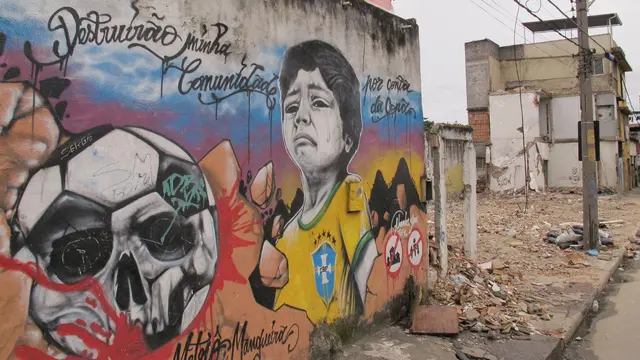
Forced evictions and climate change: on risk, CO2 emissions and anti-eviction struggles
Climate change is forcing people to leave informal settlements and is being used as a reason to justify evictions. But our evidence shows evicting residents undermines efforts to build climate resilience and to reduce carbon emissions in cities.



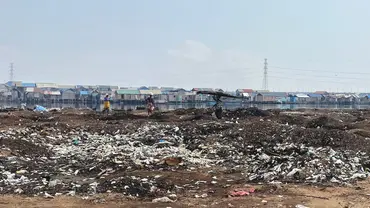
Evicted settlement in Lagos, Nigeria, 2017 (Photo: Alexander Macfarlane)
For decades, housing rights groups have monitored and documented housing violations in their efforts against evictions. These violations – challenged using both legal and human rights arguments − are captured in detail by platforms such as the Housing and Land Rights Violation Database and the Centre on Housing Rights and Evictions (COHRE) archive.
Particularly, the Housing and Land Right Network of the Habitat International Coalition has documented cases of violations affecting thousands of people, specifically linked to climate events.
As threats of evictions grow, grassroots and civil society groups are looking for ways to expand their repertoire of arguments, particularly in the context of climate change.
Evidence that explicitly demonstrates how forced evictions contribute to environmental damage and, at the same time, how climate change deepens the threat of evictions can be a powerful tool for local and global justice-oriented movements; generating this evidence is more critical than ever.
A renewed agenda on evictions and climate change
In this context, and acknowledging that forced evictions are a gross violation of human rights, we embarked on a research project to build a renewed action-research agenda against forced evictions in the era of climate change.
Our synthesis report shows that not only are forced evictions a handbrake on urban resilience by increasing vulnerabilities of communities, but they also undermine carbon reduction targets. Our new estimates, for example, show that in Nigeria, CO₂ emissions related to evictions over the past 25 years have generated more than 2.46Mt CO₂e, which will take a forest the size of Paris 11 years to absorb.

Beyond showing the impacts of eviction on climate action, this project has explored how climate change is impacting anti-evictions efforts. To this end, activities included a series of online exchanges with civil society and grassroots groups struggling against evictions.
Participants included Slum Dwellers International (Kenya), Rujak Center for Urban Studies (Indonesia), Centro Gaspar Garcia de Direitos Humanos (Brazil), Justice and Empowerment Initiatives (Nigeria), and Red de Derechos Humanos y Desalojos (Chile).
In a series of short videos available below, the groups reflect on how climate change is impacting local anti-eviction efforts. The summary video below captures common threads and key messages.
Four common and interconnected challenges
The exchanges demonstrated complex and multifaceted links between climate change and the struggles against forced evictions.
From communities facing the impacts of wildfires and floods, to organised responses to government-led climate-justified evictions and maladaptive interventions, the experiences from these five locations showcase common and interconnected challenges.
They shed light on important issues:
-
Forced evictions hinder the ability of cities and communities to mitigate and adapt to climate change, particularly in those settlements where there have been processes of long-term investment in infrastructure for adaptation and in which low carbon emission livelihoods and ways of building and living co-exist with other forms of urban development.
Often, informal settlements represent low-carbon forms of development; demolishing them undermines their role in safeguarding cities and their inner-city areas against more carbon-intensive usages and unsustainable urban sprawl.
The video from Lagos describes the destruction of a well-established, low-carbon fishing community; from Indonesia we hear how the construction of a state-led wall led to maladaptation for a long-standing community; in Brazil, community-led adaptation in hillside neighbourhoods is now threatened by evictions. -
Threats of evictions and housing dispossessions are embedded in larger ecosystems and social structures that perpetuate violence and make marginalised communities more vulnerable. These include political and institutional forms of discrimination and exclusion, interconnected with threats from extreme climate events. The videos capture violent government-led processes that deepen the vulnerability of evicted communities.
In Chile, a community (which since the recording of this video has been evicted and demolished) is excluded from the official response to aggressive wildfires due to tenure insecurity; in Indonesia, extreme flooding leads to displacement, and it is made worse by inadequate or ‘maladaptive’ infrastructure.
-
Communities show they know how to adapt and respond to growing risk exposure – but informal settlement dwellers shouldn’t carry the weight of climate response. By training themselves to prepare for and prevent disasters, forming resource hubs for increasing resilience, improving their food sovereignty, or adapting their housing conditions to rising sea levels, organised communities are collectively responding to growing environmental challenges.
This resourcefulness and resilience must be recognised from a climate justice perspective. It is our collective duty to reverse the unfair distribution of climate burdens and responsibilities – this should translate into public policies and resources that deal with the structural drivers of uneven climate impacts.
Examples from the videos show how SDI Kenya developed a local resilience hub, or how an urban farming community in Brazil increased their resilience by improving food security and reducing soil degradation.
- Forced evictions and the effects of climate change deeply affect the cohesion and emotional connections within communities. All videos show, in different ways, the profound impact of eviction and the threat of eviction on communities.
In Indonesia, the emotional upheaval of being forced to move from home; the memories and imaginations of alternative futures of a fishing village in Nigeria; the efforts to establish community infrastructures and strengthen collective power in Kenya; the caring for the ecological and social function of land in Brazil through collective interventions; or the traumatic experience of a fire and official violence in Chile – so beautifully captured by a closing poem in the video.
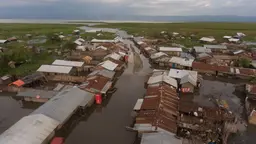
Promoting slum upgrading as climate action
Our calculations show that upgrading and retrofitting informal settlements can save up to 66% of CO₂e compared to alternative demolition and relocation policies.
This should be a crucial consideration for ongoing policy debates and agenda setting processes, such as the IPCC Special Report on Climate Change and Cities, and its approach to ‘relocation’ as an urban strategy.
The conclusions of this research build on previous work by IIED, SDI and Cities Alliance, recognising that “slum upgrading is climate action”. We have demonstrated that in-situ upgrading of informal settlements is not only a socially just solution, but can also support the adaptation capacity of communities and is the most responsible action in terms of CO₂ emissions.
Climate change shouldn’t be used as an argument to support evictions from informal settlement, but a reason to prioritise their security, rights and wellbeing. The videos below are a call for action in this direction (also available as a playlist on IIED's YouTube channel).
About the author