Youth strategies from informal settlements: harnessing civic media to drive change around urban governance and housing
Future leaders from urban youth movements are embracing community-led digital tools and practices to organise, exchange and learn – and to advance a vision for housing and urban governance that is inclusive and just.



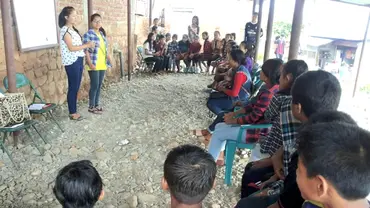
Across the world, young people from informal settlements are organising and finding ways to influence urban and housing governance (Photo: Muungano wa Wanavijiji/SDI Kenya)
People from informal settlements are often invisible in urban processes; young people even more so.
Although they represent a significant demographic group in cities of the global South, youth from informal settlements tend to be an unheard majority in housing and urban governance. They are often excluded from decision-making spaces for myriad reasons − because they are deemed incompetent, to lack maturity, or perhaps due to a growing mistrust of young people.
They are further excluded because of stigma based on gender, class, caste, ethnicity or ability. This exclusion is coupled with economic hardship, making it difficult for young people to find meaningful opportunities to engage in decision-making spaces.
But despite the obstacles that hinder young people from engaging with urban governance, youth leadership is emerging in informal settlements as part of collective efforts to be heard and to engage in the processes where decisions are made on housing and other basic services such as water, sanitation and waste.
An audiovisual exchange
IIED is part of a project to explore how young people are embracing ‘civic media’ – community-led digital tools and practices for driving social change − and using this to influence urban governance.
In 2025, IIED coordinated a series of online exchanges with youth groups, convened through the Hub for Housing Justice’s networks.
During these exchanges, youth groups from informal settlements from Benin, India, Indonesia, Kenya, Nepal, Nigeria, the Philippines, Uganda, and Zambia [see the list of organisations below] developed videos to collectively reflect on two questions: how is youth represented or excluded from urban processes in your city? And what strategies have you used to engage and empower diverse youth, change narratives, and bring about change?
Here we share some of the key strategies shared in those exchanges and which are summarised in the synopsis video below. The videos produced by these groups are available lower down.
Five strategies to enhance youth engagement
Youth groups from informal settlements are finding ways to organise, exchange knowledge, learn together, mobilise and bring about changes from the bottom up. Many of these strategies involve media and digital technologies.
Using tools to share knowledge
Young people exchange knowledge and learning collectively, by training and becoming trainers for others, expanding their personal and collective skills to engage with their urban contexts. These include organising peer-to-peer training sessions about their rights, storytelling, and the collective production of media. These processes allow them to challenge inequalities across gender, age, caste or ability, and to lead processes of empowerment and emancipation that go beyond the acquisition of skills.
One attendee of media training that focused on producing audiovisual media in Nigeria said "The video we made after the media training made community members take action” on issues such as access to water and infrastructure. Likewise, one member of the KYNS collective (or the ‘Kutch Youth Redevelopment Council’) in Bhuj, India, shared how joining the group not only allowed her to gain “knowledge about many things”, but also to begin a process of personal transformation that has allowed her to speak out
“I didn’t know how to address the problems in our areas and streets. I also didn’t know who to talk to and would just feel angry about these issues,” she said.
Making the invisible, visible
Secondly, they collect data and produce knowledge about their communities, their urban and housing conditions, the risks they are facing, as well as their needs and aspirations. Data collection through neighbourhood mapping and enumeration, surveys and digital tools is a powerful way to challenge the invisibility of informal settlements, while also mobilising and creating tools for youth engagement.
An example of these organised community mapping efforts is the Know Your City (KYC) campaign of Slum Dwellers International (SDI) and its youth-led arm, KYC-TV, where young people from countries including Kenya, Zambia and Benin share their experiences through film, photography, writing and radio, among other media.
From Uganda, one young person reflected on how public officials “tend to neglect us because they think that people in slums are not educated, are illiterate, and don’t care about their country”; they are challenging these perceptions by collecting data on demographics, housing and infrastructure to document their own realities.
[They say] I should wait for my time. In my 30s? So, when exactly is that time they expect us to wait for? … That’s why I am saying: the earlier, the better
Young leader from Lagos, Nigeria
Online and offline platforms to organise and mobilise
Young people also are mobilising in numbers and stepping up as new leaders in their communities. Building on the legacy of older community organisers, they are raising awareness of issues in their cities through digital platforms, WhatsApp groups and social media channels, and bringing their communities together through in-person assemblies and regular neighbourhood meetings.
As a young leader from Benin reflected: “We noticed the exclusion of the young generation when it comes to decision-making... For this reason, we decided to mobilise ourselves into a national urban movement.”
Creating media to challenge narratives that discriminate
Another important form of youth engagement involves changing narratives and finding their own voices through media production, and in turn challenging mainstream perspectives about groups that are often marginalised.
Through videos and counter-narratives on social media that highlight diversity in informal settlements, young people are shedding light on groups that have been historically discriminated against, for instance, by telling the “stories of young single mothers that no one sees” in the settlement of Kibera in Kenya.
They are contesting stigma and crafting their own story, even reaching international film festivals, as with the Media4change Collective production of the Nigerian feature-length film 'The Legend of the Vagabond Queen of Lagos', describing the experiences of forced evictions of the Otodo-Gbame community in 2016-17.
Training to build expertise
Finally, these young people are becoming expert activists, engaging with and beyond formal processes of urban governance and planning, and bringing their locally informed collective claims to spaces of decision-making.
By organising training sessions about urban and neighbourhood planning, housing regulations and governance structures, youth are acquiring technical and political skills that enhance their capacity to participate in and influence official meetings. Young groups from Dharan, for example, have engaged directly with local authorities by sending a letter with demands to intervene and improve the sanitary and safety conditions of a damp site that they have been documenting closely.
These forms of informed engagement can challenge deeply established power dynamics. As young woman from India who joined youth-focused training led by the Indian Institute for Human Settlements (IIHS) on inclusive housing, said: “The entire government department is now afraid of me because I can communicate with them in legal language”.
A call for support and action
Young people from informal settlements are the future leaders of housing and urban movements, and are devising and mobilising strategies to drive change. But they face enormous challenges and huge obstacles. As one young person from the Philippines said: “Many still question our capabilities, as if age defines commitment”.
Different parts of society (government, donors, the private sector, researchers, media, and other social movements) have a role to play in creating more enabling conditions to support the work of these young leaders.
Supporting youth leadership in housing and urban movements is not only important for improving the conditions of informal settlements, but also for ensuring healthy, sustainable, inclusive and just cities today and in the future.
Collection of partner videos
The following organisations participated in these exchanges and produced the above videos: ACTogether (Uganda); Alumni of the IIHS Inclusive Housing Programme, Delhi Cohort, 2023-2024 (Delhi, India); Community Mappers (Kenya); HaZoBiT (Benin); HPFPI (The Philippines); Know Your City TV (Zambia); KYNS and Hunnarshala Foundation (Bhuj, India); Media4Change (Nigeria); MPNNM and IIHS (Indore, India); Muungano wa Wanavijiji and SDI Kenya (Kenya); TongBasuara and Arkom (Indonesia); Youth Network for Positive Change and Lumanti (Dharan, Nepal); and YCIV team representatives from IIED, University of Sheffield, and the Asian Coalition for Housing Rights.