Nature for climate in cities: exploring nature-based solutions for informal settlements
IIED is working with local and international partners to examine how nature-based solutions are reflected in policy and practice, identify where gaps remain and explore how urban nature-based solutions can be more effectively integrated and scaled to deliver equitable outcomes for people, nature and climate.

Located in the Peixinhos neighbourhood of metropolitan Recife, the Dandara People’s agroecological garden is a grassroots urban agriculture project (Photo: Nora Nisi, IIED)
For more than a decade, nature-based solutions (NbS) have been enthusiastically promoted by global North-based governments, international organisations and environmental NGOs as an affordable, adaptable and effective response to climate change.
Some of the benefits presented are mitigating emissions, supporting climate adaptation and addressing the parallel crisis of biodiversity loss, while also enhancing human wellbeing.
However, it remains unclear whether, in countries across the global South, NbS are being meaningfully integrated into policy frameworks and implemented in practice, and whether these solutions are being considered for some of the most climate-vulnerable areas: cities and informal residents. Ultimately, questions of who NbS are designed for and who benefits from their implementation remain.
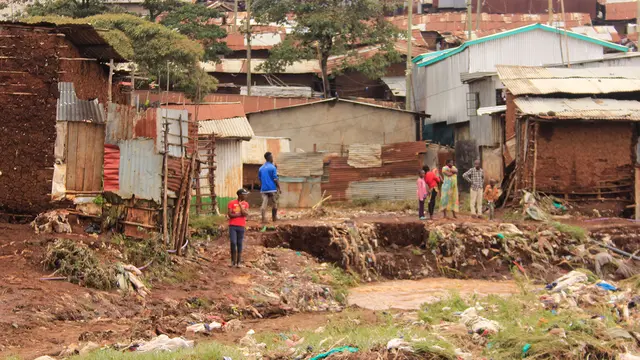
As of 2023, 1.1 billion people were living in informal settlements. Cities in the global South, and informal residents in particular, sit at the intersection of climate risk, socioeconomic exclusion and environmental degradation.
The concentration of people, economic activities and assets in urban areas, combined with emerging risks such as rising sea levels, storm surges, heat stress and landslides, result in particularly high potential losses from climate impacts.
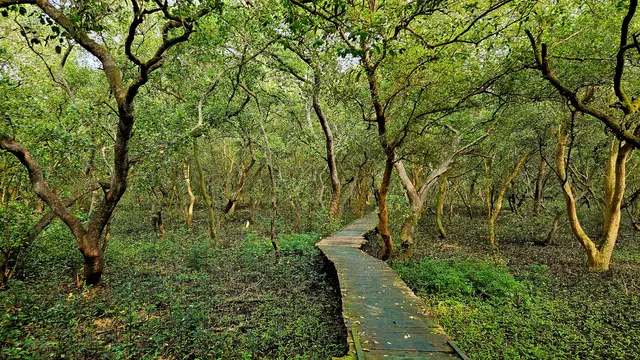
NbS can be integrated into cities through strategic design of buildings and urban spaces or through the restoration of natural landscapes within, or close to, the city (including the per-urban environment).
Urban NbS can deliver a rich bundle of ecosystem services, enhance climate adaptation through processes such as reducing ambient temperatures and managing stormwater and runoff, and create health, wellbeing and social benefits for people.
Given this, there is an urgent need for broader recognition of the role that nature can and must play in urban areas. In this process, informal and low-income communities should be recognised as legitimate and strategic sites for NbS implementation.
This project aims to unpack what equitable, participatory and context-specific urban NbS might look like and its potential for transformative change in cities and informal settlements.
What is IIED doing?
- To better understand the spatial distribution of the prioritisation of NbS in policy: we are leading research that examines how the concept of ‘working with nature’ is being reflected in policy frameworks in selected countries in the global South, and how they are spatially distributed across national, urban and informal settlement contexts.
- To understand what’s already happening and what we can learn from it: we plan on documenting real-world examples of NbS that are being undertaken by low-income communities and informal settlements across the global South.
- To better understand what gaps there are in the evidence: we will host a workshop with NbS and urban technical experts and practitioners to ask who benefits, who decides and who pays when it comes to urban NbS.
- To contribute to the understand of NbS as part of integrated, layered resilience strategies: we are carrying out research with longstanding urban partners to explore how nature and NbS can be better integrated into slum upgrading and financed sustainably.