Closing the data gaps on heat stress and developing strategies for resilience
IIED is researching the health and financial impacts of heat stress on the most vulnerable people across Africa and South Asia and documenting how these impacts accumulate to create large-scale health and economic losses. IIED is supporting governments to respond to extreme heat.

A man sells steamed potatoes on the busy streets in India. Outdoor workers lose about 24 days’ work a year due to heat (Photo: Jeet Khatri, via Unsplash)
Adapting to climate change in urban environments is becoming a major climate resilience challenge. In 2025, IIED analysis found the world’s major cities now experience a quarter more very hot days on average than they did three decades ago.
The impacts are most intense – but least well-documented – among informal workers and people living in informal settlements.
Across Africa and South Asia, people working in the informal economy and living in informal settlements are hugely vulnerable to extreme heat. Yet their plight is often overlooked by national and international policymakers, and the economic costs are largely unaddressed in national policy and international climate finance.
Bridging the data gap to highlight economic and health costs
IIED has undertaken detailed, on-the-ground research on how heat impacts on informal workers in India and Bangladesh.
Informal workers constitute nearly 90% of India’s workforce, many of them rural migrants with few economic or social resources. IIED and partners surveyed 538 informal worker households in three Indian cities (Ajmer, Delhi and Agra) about how extreme heat affects them.
Workers in outdoor occupations lost about 24 days’ work a year due to heat, costing them the equivalent of US$151 – nearly one tenth of their annual earnings. Indoor workers lost roughly 15 days and $89.
In total, about 11 billion workdays, or $55 billion in wages, are thought to be lost to heat-related productivity decline. This is equivalent to 1.41% of India's GDP.
Health impacts
The Indian cities research also found alarming health impacts: nearly one fifth of workers reported symptoms of kidney injury due to strenuous effort and dehydration. Repeated injury can lead to chronic kidney disease.
The study extrapolates from these findings to suggests chronic kidney disease may lead to some 4.5 billion lost workdays annually, or $23 billion in lost wages.
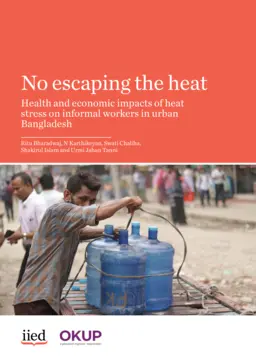
We found similar results in Bangladesh. Research by IIED and the NGO Ovibashi Karmi Unnayan Program found that extreme heat impacts cause outdoor workers to lose about 8.5% of their annual income. The consequences included wage loss, damaged kidneys and sleep deprivation. Almost none of this is officially recorded.
Here too, individual losses accumulate into national impacts: IIED estimates the national wage loss from extreme heat at $4.1 billion a year. Chronic kidney disease linked to prolonged heat exposure may add as much as $2.12 billion more.
Developing policy responses to extreme heat
We have identified strategies to help governments to respond to extreme heat. Anticipatory social protection is a key mechanism for reducing heat-related losses and damages.
In India, authorities should coordinate existing resilience programmes and ensure they are activated before extreme heat arrives, as well as introduce legislation that protects workers. The government of Bangladesh should build new social protections into existing systems, introducing seasonal health camps and legally binding heat protection.
The costs of this type of support are modest compared with the losses already being borne by workers and represents an economic investment in protecting livelihoods, health and productivity.
Documenting extreme heat in Africa: homes that offer no respite
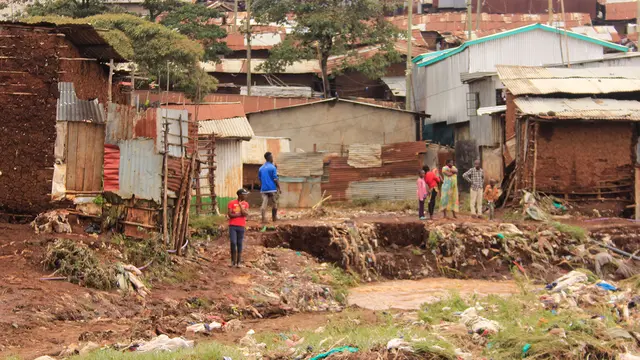
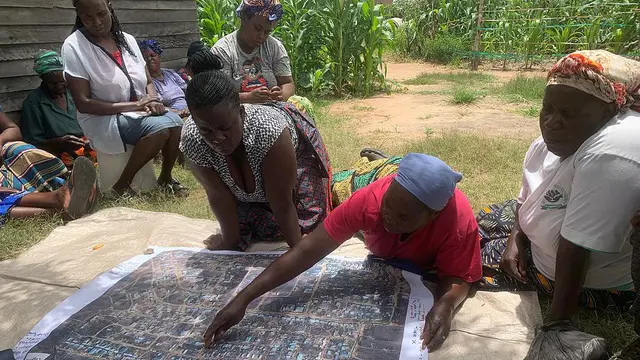
Informal settlements are often invisible in climate risk assessments and policy planning. IIED worked with Slum Dwellers International and grassroots partners and residents to collect heat data in informal settlements in Kenya, Tanzania and Zimbabwe.
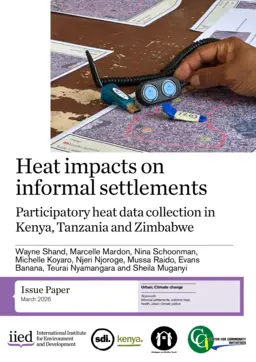
Our aim: to inform heat action planning and build a global evidence base for adaptation that works for the people who are most exposed.
The surveys showed indoor temperatures in homes were up to 9°C hotter than outside, exacerbated by indoor cooking and smoke, and affecting women and children most.
Previous IIED research (PDF) has shown how improving conditions in informal settlements can boost an entire country’s GDP, underlining the benefits of adapting cities to extreme heat.
Around the world, more than a quarter of urban residents live in informal settlements. IIED research demonstrates the importance of community-led inclusive data collection to identify hazards and the urgent need for forward-thinking action on resilience to reduce losses and damages due to heat.