Indigenous women in India fight for land rights
As India’s Forest Rights Act marks its 20-year milestone, IIED’s ALIGN project supports over 100 Indigenous women to claim their legal rights to forest lands.

Wooden path through a mangrove forest in India (Photo: Landscape Alliance, via Flickr, CC BY-NC-ND 2.0)
It has been two decades since India’s parliament passed the Forest Rights Act, 2006.
This landmark law was enacted to recognise the customary rights of forest-dwelling communities to live in, and manage resources on, forest lands.
Twenty years on, claiming rights under the legislation remains difficult for many Indigenous communities, particularly women, with social and procedural barriers blocking the way.
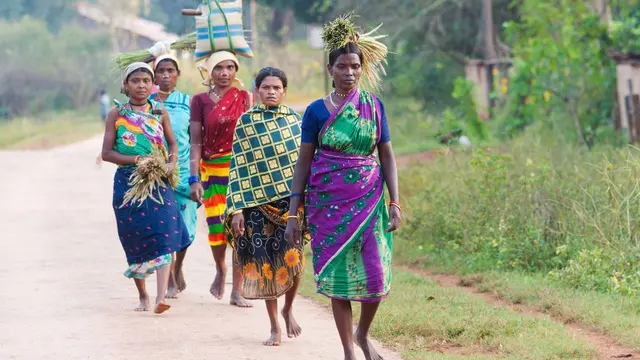
The Advancing Land-based Investment Governance (ALIGN) project, co-led by IIED, has supported Indian civil society organisation Swadhina to address the obstacles preventing Indigenous women in Jharkhand State from submitting claims to their land rights under the Forest Rights Act.
ALIGN’s technical support facility assisted Swadhina by sharing legal expertise on the act, providing advocacy training and political economy analysis, and facilitating mentoring for Swadhina from state legislative experts. ALIGN also drafted briefings to enable stronger dialogue with government officials.
Through this work, Swadhina helped Indigenous women progress 102 applications for land rights under the Forest Rights Act. This figure is expected to rise as community awareness, support from communities and government stakeholders, and legal clarity continues to grow.
‘Remarkable’ outcomes
Swadhina’s workshops have led to more women managing natural land resources and more Indigenous Peoples reclaiming fallow or degraded land. It’s meant more households can now grow their own crops – improving food security.
Not only have our joint advocacy and engagement efforts removed procedural barriers, they’ve also inspired more political will at local and state levels. The outcomes achieved over a relatively short period are remarkable, as they’ve brought systemic change for Jharkhand’s Indigenous women – a deeply marginalised group
– Nathaniah Jacobs, IIED’s senior researcher for law, economies and justice