Research on women-led biodiversity data praised at UN talks
IIED and the Women's Caucus of the Convention on Biological Diversity (CBD) documented how women are gathering biodiversity data and brought the findings into policy spaces. The research won praise from international organisations, and key people are beginning to make the same points.

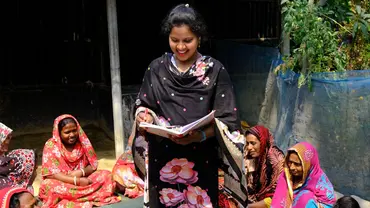
A group of women walks back after collecting plants and fresh produce in India (Photo: Wietse Jongsma, via Unsplash)
Women-led and community-based organisations are generating data on biodiversity that offers vital insights for policy and planning. But this evidence is still overlooked in formal climate and biodiversity processes.
IIED and the CBD Women’s Caucus co-produced a worldwide survey to assess how women’s organisations collect, manage, analyse, use and share biodiversity data. The survey covered 70 women-led organisations engaged in biodiversity conservation across 33 countries, working at local, regional and national levels.
The findings report calls for recognition and partnership with women’s organisations as valuable contributors to implementation of the global biodiversity framework (GBF).
IIED and partners launched the report at a key preparatory meeting for this year's UN biodiversity conference (CBD COP17).
Women’s organisations, UN agencies and policymakers, including the UN Environment Programme World Conservation Monitoring Centre (UNEP-WCMC) and UN Women, engaged with and explicitly referenced our evidence.
Ceire Boothe, programme officer at UNEP-WCMC, echoed a key call to action from the report, calling on governments to integrate gender and social inclusion indicators as core biodiversity metrics and to recognise community-generated data as valuable evidence for informing policy.

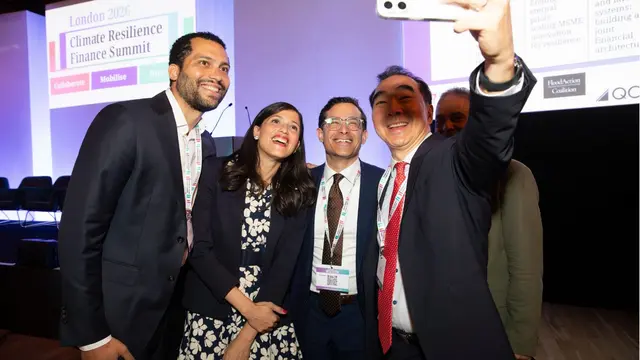
IIED's team joins members of the CBD Women's Caucus during SBI-6, where the report was launched (Photo: CBD Women's Caucus)
Timely and methodologically grounded
Venge Nyirongo, intergovernmental specialist at UN Women, praised the report:
I would like to commend the CBD Women’s Caucus and IIED for producing a report that is not only timely to UN Women’s work but also methodologically grounded in the lived realities of 70 organisations across 33 countries, evidence that is both wide-ranging and deeply situated
Nyirongo said the report highlighted "a long-held truth" that women-led and community-based organisations are generating vital biodiversity data. He also praised the report's valuable contribution in illustrating holistic data ecosystems, where gender, socio-economic, ecological, legal and Indigenous knowledge categories overlap.
He noted these datasets mirror the interconnectedness of biodiversity, livelihoods and social norms, and that this approach aligns with calls for inclusive monitoring contained in the GBF – the global plan to protect and restore biodiversity.
IIED is doing more work to strengthen women-led organisations' capacity to collect and deploy biodiversity data. Meanwhile, the influential organisations that IIED wanted to reach are recognising this research and positioning it to inform future implementation of the framework.