Advancing gender justice in biodiversity data and policy through women-led data collection and evidence generation
Together with the CBD Women’s Caucus, IIED is working to enable women’s organisations to generate and use gender-responsive data to influence biodiversity policy and advocacy.
Senior researcher (strengthening partnerships team), Climate Change research group


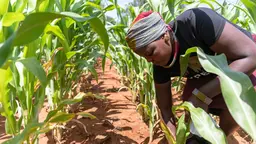
In climate-vulnerable coastal Bangladesh, 26-year-old Shapna Munda is helping her Indigenous Munda community build resilience in the face of rising sea levels, cyclones and poverty (Photo: UNDP Climate, via Flickr, CC BY-NC 2.0)
The lack of gender-responsive data in biodiversity conservation is a key barrier to effective, equitable policy and governance at all levels.
Despite the wealth of knowledge within women-led organisations, much of the existing data is gender-blind, ignoring the critical roles that women and girls, including those from Indigenous Peoples, Afro-descendant and local communities, play in both the conservation and sustainable use of biodiversity. This has led to policies that fail to recognise their contributions, address their needs and respect their rights.
Women-led organisations are also left without the capacity to generate and use gender-responsive data for environmental decision-making, depriving them of the opportunity to advocate for their communities and territories.
Additionally, self-representation is missing from official narratives surrounding biodiversity conservation, which often overlook the invaluable contributions of Indigenous, Afro descendant and local women.
This misalignment between official frameworks, such as the Kunming-Montreal Global Biodiversity Framework (GBF), and the lived realities of underrepresented women further deepens the gap in addressing the needs and solutions that these communities can offer.
What is IIED doing?
Through this collaboration with the Convention for Biological Diversity (CBD) Women’s Caucus, we seek to address these gaps by supporting women’s organisations to generate their own evidence, tell their own stories and use data as a tool for policy influence, self-representation and agency.
By decolonising the data supply chain and focusing on self-representation, the project will support women's organisations to influence both policy and political action.
The partnership also aligns with a number of global policy milestones, including the mid-term review of the CBD Gender Plan of Action at CBD COP17 in Armenia in October 2026.
IIED is working with the CBD Women’s Caucus and its member organisations to co-develop a tool to assess existing data collection and management organisational capacities, and identify gaps within women organisations, including those from Indigenous and local communities.
Building on this assessment, IIED will contribute to the co-design of a learning process for the mutual strengthening of women’s organisations’ capacities to generate gender-responsive data, and to transform gender data into effective evidence for gender-responsive biodiversity decision-making, upholding ethical and data sovereignty principles.
In February 2026 IIED and the CBD Women’s Caucus called for greater recognition of the crucial role women-led and community-based organisations play in generating gender-responsive biodiversity data. This followed a report (PDF), launched at the sixth meeting of the CBD Subsidiary Body on Implementation (SBI6), that highlighted the ways formal decision-making spaces weren't using gender-responsive biodiversity data provided by women-led and community-based organisations when setting policies.
News and updates

Additional resources
IIED’s Gender Environment Hub
Report: Gender-responsive biodiversity data: a practical handbook (2026), CBD Women's Caucus/IIED
News: Women’s environmental knowledge overlooked, new handbook warns, Water Journalists Africa (October 2026)
Video: Advancing gender justice in biodiversity data and policy (March 2026)
Report: Advancing gender justice in biodiversity data and policy (PDF), Shruti Ajit, Amelia Arreguin, Fatima El Aaraby, Karen Wong-Pérez, Francesca Booker, Cinzia Cimmino, CBD Women's Caucus, IIED (February 2026) | en français (PDF) | en español (PDF)
Briefing: Advancing gender justice in biodiversity data and policy (PDF), CBD Women's Caucus, IIED (February 2026)
Gender Plan of Action (PDF), Convention on Biological Diversity (December 2022)