Call for expressions of interest: peer learning series on gender and biodiversity data
IIED and the CBD Women’s Caucus are inviting organisations to take part in a new peer-to-peer learning series on advancing gender justice in biodiversity data and policy.

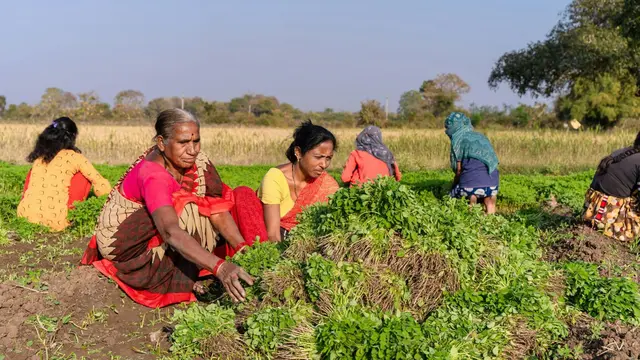
With training in production, processing and marketing, farmers are embracing sustainable practices like mulching and crop rotation to improve soil health and adapt to climate risks (Photo: UNDP Climate, via Flickr, CC BY-NC 4.0)
Together with the CBD Women’s Caucus, IIED is working to enable women’s organisations to generate and use gender-responsive data to influence biodiversity policy and advocacy. Following a recent report that focused on recognising women-led biodiversity data as vital to advance gender justice, we are launching a new series centred around peer learning.
The series is open to women-led organisations, Indigenous Peoples, local community groups and civil society actors working at the intersection of gender equality and biodiversity.
It aims to support participants in strengthening their capacity across the full biodiversity data cycle – from data collection and management to analysis, use and communication – while creating a collaborative space for exchange, learning and co-creation of knowledge.
Running between May and July 2026, the workshops will bring together practitioners from different regions to share experiences, address common challenges and build practical skills to support the generation of more gender-responsive biodiversity data.
A key outcome will be the development of a handbook on methodologies and tools for gender and biodiversity data. Participants will have the opportunity to contribute to this collective output, with active contributors acknowledged as co-authors.
The space is for individuals/organisations that are currently working on biodiversity and/or gender-related issues, have experience or interest in generating or using biodiversity data, and are looking to strengthen their capacities across different stages of the data cycle. Participants should be willing to actively engage in all sessions and contribute to the shared learning process.
Selected participants will be expected to engage in:
- One orientation session
- Three thematic workshops (data collection, data management and analysis, and data use and communication)
- A closing reflection session, and
- Inter-session activities, including sharing experiences and contributing to learning materials.