Land, local governance and South Africa’s just transition
The topic of land has often been absent from conversations on the just transition from fossil fuels: a new guide for South Africa’s local governments is setting out to change this.

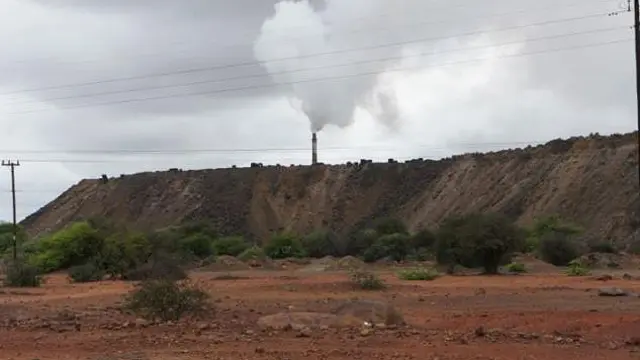
Informal settlement on the edge of a coal mine, Phola, Mpumalanga Province, South Africa (Photo: copyright Gaynor Paradza)
The Advancing Land-based Investment Governance (ALIGN) project (co-led by IIED) and the Public Affairs Research Institute (PARI) in South Africa have published a new guide to help local governments recognise the importance of land in the ‘just transition’ towards a greener, more sustainable future.
Published in April 2026, the guide supports local municipalities to navigate issues around land governance in climate action and highlights the vital role local government can play in delivering South Africa’s just transition. The initiative is supported by the South Africa High Commission.
ALIGN and PARI began working with local governments in South Africa’s Mpumalanga Province, a hub for the country’s coal power generation, in 2023. Their initial research revealed land and land tenure rights were missing from conversations around the just transition, while local government institutions were mostly excluded from strategic decision-making.
In response, ALIGN and PARI engaged local, provincial and national stakeholders to discuss challenges and explore potential solutions.
Formal endorsement
The South African Local Government Association (SALGA), which joined the partnership in 2025, has formally endorsed the new guide. Its backing means the work will be integrated into local authority positioning and responses to the just transition: SALGA will disseminate the guide across the country’s 257 municipalities.
In addition, the release of the guide coincided with South Africa’s ‘white paper on local government review’ process. The guide has generated interest and engagement from the review team, as well as other stakeholders.
Through this work, local, provincial and national governments, and their office bearers, are now contending with issues related to land tenure, land access and land-use planning, as part of ongoing efforts to ensure South Africa’s transition away from fossil fuels is, indeed, just. We’re pleased this initiative has put land squarely at the centre of these crucial conversations
− Nathaniah Jacobs, IIED senior researcher for law, economies and justice