Brazilian philanthropies’ vision to tackle social and climate injustices
A recent congress of Brazilian philanthropies discussed the role of philanthropy in “decentring power, knowledge and wealth”. It reflected on ways to advance locally-led responses to social and climate injustices more effectively. Here is what we learned.



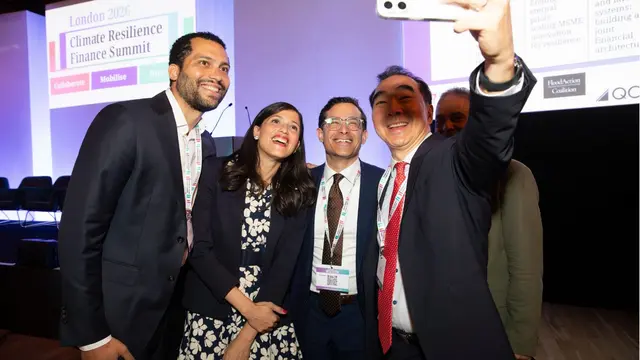
IIED colleagues and partners attend the GIFE congress in Fortaleza, Brazil (Photo: Morena Lima/GIFE)
For any actor committed to social transformation, these are challenging times. We have never lived in a time with greater wealth and resources to tackle our society’s issues. Yet, the increasing accumulation of wealth and rising inequalities, current contestations of democracy and restrictions of civic space, and a backlash against international solidarity in favour of isolationism are jeopardising our ability to respond to global challenges.
The question then becomes: how can we transform our ways of working to be up to the task?
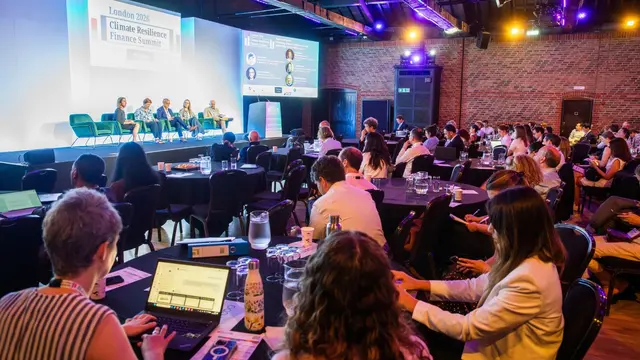
Earlier this month, GIFE – a network of more than 170 Brazilian philanthropies – brought together its members and partner organisations in Fortaleza to jointly address this question. Around 1,200 participants reflected on the role of philanthropic action in driving transformative change.
Could philanthropy move on from pursuing incremental approaches to being truly disruptive? What would it take for philanthropic action to not just distribute resources, but democratise decision-making, both within philanthropic spaces and in society more generally?
IIED and GIFE, Instituto Pólis, the philanthropy network WINGS, and the Tide Setubal Foundation organised a pre-congress seminar to explore strategies for philanthropic action to support locally-led action to tackle social and climate injustices. Here are some lessons we learned.
Brazilian philanthropic actors are diverse, and they are asking the tough questions
A look at the congress participants revealed that philanthropy has many faces. Philanthropy is much more diverse than many people realise. It goes beyond the traditional idea of philanthropy as a large organisation usually tied to a global North-based high-net individual (often white and male). Current forms of philanthropy are much more varied.
While some philanthropic organisations may be tied to high-net-worth individuals and large companies, they also include community and grassroots organisations that leverage resources and assets from their communities. Philanthropy also draws on longstanding principles of solidarity and mutual aid that drive individual and communal giving practices locally.
In this diversity, philanthropic actors play many roles beyond providing funds. They are also innovators, connectors of initiatives and social movements, conveners of political and economic actors, and advocates with civil society actors for transformative change.
The conversations at the GIFE congress were not overly idealistic, however. While highlighting the many opportunities for impact, participants also grappled with the limits and contradictions that philanthropies face when addressing injustices.
For instance, not only are philanthropic resources limited and unable to address all social issues, but their origins may also be controversial. Participants noted that many traditional, institutional philanthropic organisations have received their funding from extractive and exclusionary economic activities, and may continue to benefit from harmful practices.
Another issue that participants flagged was how to balance the desire to promote philanthropic action with a push for more equitable fiscal systems and higher wealth taxation.
Despite having the capacity to be more innovative and flexible in their funding than actors like governments, top-down decision-making processes and the need to prove impact can make philanthropic actors overly risk-averse or more focused on short-term engagements. Philanthropic engagement also often takes siloed approaches focused on a specific sector like education or health, without reflecting the intersectional realities in communities.
To address systemic transformation, philanthropy must transform itself
Understanding these limits and contradictions is a first step towards transforming the philanthropic ecosystem so that it is better able to address current challenges. People at the congress emphasised that at the heart of this transformation was the shift from top-down finance distribution towards a genuine sharing of decision-making power. GIFE congress exchanges included calls for more transformative, anti-racist and 'liberatory' philanthropic action.
There were calls to review what philanthropies are supporting. One criticism was that philanthropy often responds to the desires of those who give, and not to the needs of those it seeks to serve.
This can result in discrepancies between the project approaches and the needs on the ground. For example, philanthropies tend to prioritise issues such as education and health, while grantee organisations’ greatest need might be investment in institutional capacities to develop bottom-up solutions.
An essential lever of transformation for philanthropy is its relationship with civil society. Investing in the capacity of civil society is more important than ever at a time of shrinking civic space. However, this type of investment remains extremely limited, with less than one per cent of global philanthropic funding being directed to social movements.
It also requires long-term, flexible funding, as well as considerable investment in relationships and trust-building. It demands listening to the needs of communities but also opening decision-making spaces to historically excluded groups, and adapting financing and capacity-building mechanisms so that they are more accessible to groups that often face structural and administrative barriers to accessing resources.
A territorial approach can open pathways to transform the philanthropic ecosystem
Many of these transformations are already underway. Philanthropic networks such as the Comuá Network, Aliança Territorial and Alianza Fondos del Sur, and philanthropic organisations like Iniciativa PIPA and Casa Socio-Environmental Fund, among others, are building a pathway to transform the Brazilian philanthropic ecosystems by taking a territorial approach – that is, an approach that is grounded in local circumstances.
Congress discussions highlighted the importance (content in Portuguese) of listening to, being present in, and working with local communities to build on existing knowledge and capacities and ensure long-term impact.
Employing tools like the 'Guide of peripheries for donors' (Guia das Periferias para Doadores) can help hold philanthropic actors to account, while also creating mechanisms and alliances to support ‘peripheries’ - geographic areas and communities that have been historically marginalised - more systematically and via social movements and grassroots actors.
Delegates emphasised how this territorial approach is a useful lens through which philanthropic actors can explore more effective ways of tackling social inequalities and the climate crisis.
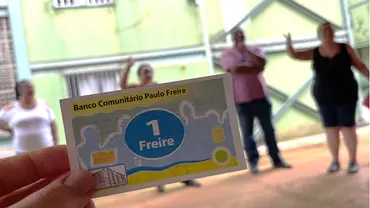
We learned about initiatives ranging from establishing participatory and regenerative community funds to collaborating with and protecting human and environmental rights defenders in Indigenous communities, favelas and quilombolas (Afro-Brazilian settlements established by escaped slaves) and other local communities. These also included different efforts to advance housing justice, an area of action that IIED and partners are working to make more visible and stronger within the philanthropic ecosystem.
The seminar helped us to explore ways to join forces with philanthropies to carry out action-oriented research, convene different actors and advocate for housing policy reform from local to global arenas.
The experiences and lessons shared at the seminar and congress demonstrated the great impact that philanthropic actors can achieve when, in collaboration with grassroots movements, civil society and research organisations, they use their financial resources, political connections and social capital to support the recognition, protection and fulfilment of rights.
We look forward to joining forces with philanthropy to strengthen partnerships that are grounded in local communities and deliver transformative change for the people who give life to them.