Nature finance: some progress at COP30 with more needed in 2026
As host of the 2025 climate conference (COP30), Brazil promised to put nature back on the international climate negotiation agenda. But despite some positive steps on nature finance, the meeting produced no clear nature outcomes and the anticipated roadmap for halting and reversing deforestation did not materialise. What does this mean for the 2026 biodiversity negotiations?




Rainforest on the banks of the River Pará, close to COP30 host city Belém (Photo: Paul Mitchell, IIED)
Held in the wake of the Convention on Biological Diversity’s (CBD) roadmap for scaling up and delivering biodiversity finance – a key milestone to achieving the finance ambitions of the global biodiversity framework (GBF) – COP30 marked the culmination of the Baku-to-Belém roadmap, which aimed to scale up finance for climate action to US$1.3 trillion by 2035.
Taking place in the hot and humid Amazon city of Belém, COP30 was billed as the ‘nature COP’ or ‘forest COP’, with finance for nature and climate as a key focus. Combating deforestation was a top priority for addressing climate change and the COP welcomed an unprecedented number of Indigenous Peoples, widely considered the global stewards of nature.
In this context of high ambition, Brazil’s presidency brought hopes of pushing joint momentum on nature and climate and ensuring finance reached Indigenous Peoples and local communities, sending a clear message that protecting nature is critical to addressing climate change.
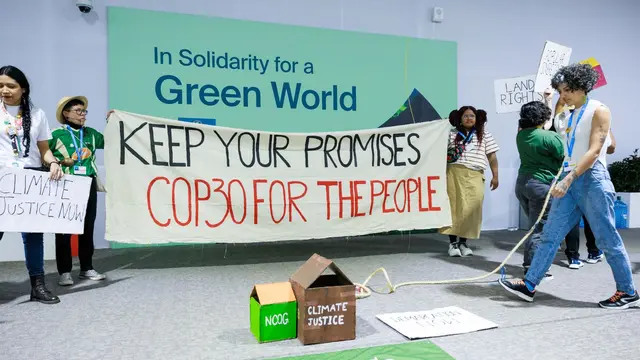
But the COP was beset by protests and as it drew to a close, the inability to deliver roadmaps for fossil fuel phase-out and to end deforestation dominated the headlines.
IIED at COP30
In the run-up to COP, IIED held an online Development and Climate Days event on the role of the private sector in financing nature and locally-led action.
Key takeaways included recognising the wide range of private sector actors involved – from large multinational corporations to forest and farm producers managing village savings schemes – the need for trust, transparency and shared understanding between local and private sector actors, and better use of data, evidence and capacity building to bring these actors closer together.
At the Climate and Development Ministerial event with our partner E3G, we reinforced the importance of ensuring country platforms work for the most vulnerable countries and communities.
And with the UK Department for Environment, Food and Rural Affairs and other partners, we launched the principles for inclusive nature action, encouraging a wide range of donors and other organisations to embed them into their ways of working. Building on the principles for locally led adaptation, they mark a crucial step to recognise the role of locally-led action for nature.
Some positive steps for nature finance
After months of consultation and diplomacy, Brazil launched the Tropical Forests Forever Facility (TFFF) at the COP30 Leader’s Summit, ahead of the main conference. Labelled a ‘paradigm shift’ in the way we finance nature, this innovative finance mechanism aims to invest funds in the global market and channel the returns into protecting forests in tropical forest countries.
By the end of COP30, $6.7 billion had been pledged to the facility, which also aims to channel 20% of funds directly to Indigenous Peoples and local communities.
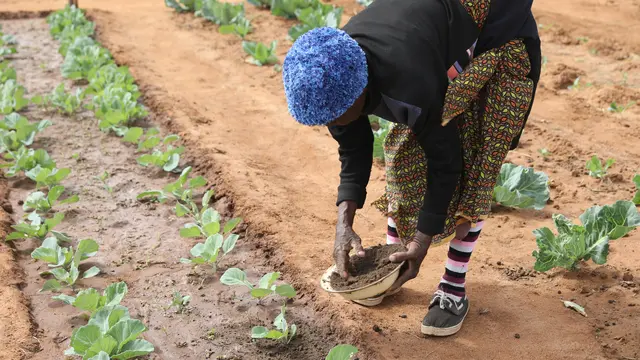
With technical support from the Food and Agriculture Organization of the United Nations through IIED partner the Forest and Farm Facility, the government of Brazil launched the Together for the Expansion of Resilient and Restorative Agroforestry (TERRA) platform, a global initiative for resilient farming that aims to channel blended finance to grassroots agroforestry and agroecology initiatives.
The final COP decision included a goal to triple the amount of finance for climate adaptation by 2035, which will also benefit nature. But while this is a key step towards recognising the urgency of scaling up finance for adaptation – especially for the most climate-vulnerable countries, including least developed countries and Small Island Developing States – the language does not commit countries to these targets and the timeline is less ambitious than some proponents had hoped.
Despite these positive steps, protests from Indigenous Peoples and the lack of decisive action to phase out fossil fuels and halt deforestation captured the media’s attention.
Many Indigenous Peoples have also rejected the TFFF, arguing that it goes against their values by trading nature as a marketable commodity, fails to address the true causes of deforestation and reinforces colonial financial structures that suggest developing countries need developed country investments to protect their own forests.
Looking ahead to the 2026 negotiations
With no decisive milestones on nature at COP30, we now look to the CBD COP17 in Armenia and COP31 in Türkiye, both in late 2026, as the next major opportunities to move the needle on nature finance.
Nature and adaptation go hand in hand, so the win for adaptation finance at COP30 is also a win for nature finance. Many communities that are vulnerable to climate change rely on nature and ecosystem services for their resilience.
There now needs to be a clear plan for how this adaptation finance will reach the communities most at risk, be informed by diverse knowledge systems and support Indigenous Peoples’ and local communities’ rights and priorities.
Building on our work around COP30, we expect to see increased emphasis on private sector nature finance as development funding continues to be squeezed.
And, recognising the need to channel nature finance according to priorities at the national and local level – including in alignment with National Biodiversity Strategies and Action Plans (NBSAPs) – we hope to see more emphasis on nature-inclusive country platforms.
Asks for 2026
With this in mind, in relation to nature finance we call on CBD COP17 and COP31 hosts Armenia, Türkiye and Australia to push for:
- More nature finance to reach Indigenous Peoples and local communities and clarity on how the TFFF and other key nature funds will be held accountable
- More equity in the TFFF and other funding mechanisms to address coloniality in funding and better meet the needs of Indigenous Peoples and forests
- A more targeted approach to private sector nature finance, recognising the diversity of actors and the importance of trust and transparency
- A bigger role for nature-inclusive country platforms to channel nature funding in line with national priorities and NBSAPs
- The principles for inclusive nature action to be embedded into nature policy goals and nature funding mechanisms to provide direct, patient, flexible, predictable and accessible funding (principle 5), and
- Better integration across the biodiversity and climate conventions, including by aligning the GBF finance goals with the COP30 goal of tripling adaptation finance, noting the strong links between nature and adaptation.