Key points
- COPs are regular meetings that bring together governments and observers to negotiate action on the world’s biggest environmental challenges
- The Rio Conventions are international environmental treaties that address the interlinked problems of climate change, biodiversity loss and land degradation. Each of the three conventions has its own COP, its supreme decision-making body
- The next major ‘COP’ is the 31st United Nations Climate Change Conference, taking place in Antalya, Türkiye. Dubbed the ‘implementation COP’, its focus is transitioning from abstract climate commitments to action
What does COP mean?
‘COP’ stands for Conference of the Parties. It is the supreme decision-making body of an international treaty (or ‘convention’). Parties to the treaty review its implementation and agree on broad global goals, procedural steps and targets set to tackle an issue.
Every COP has a country host, known as the ‘COP president’. Each conference is referred to by its number in the series.
What is the ‘climate COP’
The term COP is most often associated with the international treaty on climate change, also known as the United Nations Framework Convention on Climate Change (UNFCCC).
It was adopted in 1992 at the Rio Earth Summit and entered into force in 1994. It calls on countries to address “dangerous human interference with the climate system”. The first climate COP was held in Berlin in 1995 and it takes place annually.
There are COPs for other international agreements. The other major COPs are the UN Convention on Biological Diversity (CBD COP) and the UN Convention to Combat Desertification (UNCCD COP). These take place every two years.
Who attends the climate COP?
You might hear the term ‘parties’ in terms of who goes to COP. Parties are national governments and member states that are bound by the treaty and review its implementation.
There are nearly 200 parties to the UNFCCC. This includes almost every nation in the world, plus regional blocs like the European Union. There are also negotiating groups and alliances based on shared economic or geographic interests, such as the Alliance of Small Island States or the Least Developed Countries Group.
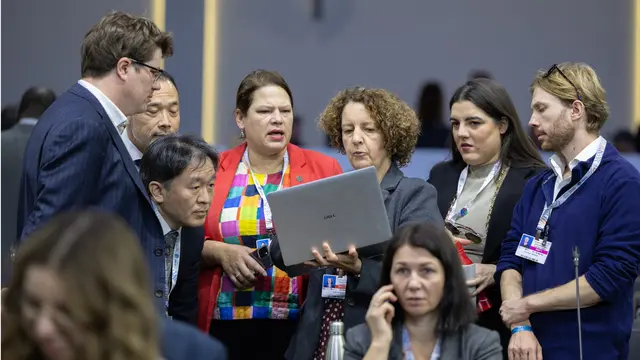
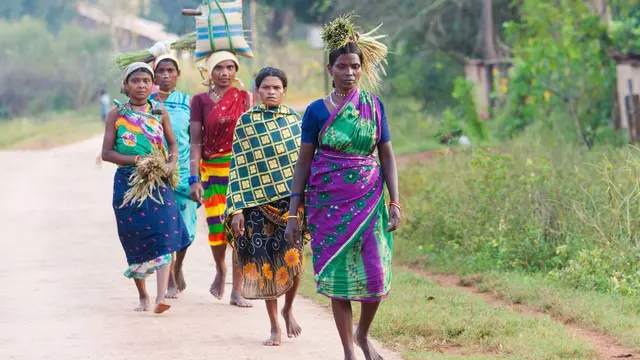
Only official parties have the legal right to negotiate and make decisions at the UNFCCC COP. Accredited observer organisations can participate in events, advise delegations and, where appropriate, take the floor, but do not have a formal vote. Observers include civil society organisations, youth and women’s groups, Indigenous Peoples and local communities, research organisations and others.
Observers can also form caucuses and negotiating groups that coordinate on strategies with the goal of influencing decisions. Examples include the CBD Women's Caucus and the International Indigenous Peoples' Forum on Climate Change (IIPFCC).
Organisations such as IIED join with partners to try to influence the outcomes of COPs.
When is the next COP?

Negotiations at the UNFCCC pre-COP meeting in June 2026 (Photo: UNClimateChange/Lara Murillo, via Flickr, CC BY-NC-SA 4.0)
The 31st United Nations Climate Change Conference (COP31), takes place in Antalya, Türkiye, from 9-20 November 2026.
Unlike past climate COPs, the focus in Antalya will not be on concrete negotiation outcomes, but on accelerating implementation and gauging whether countries can back and deliver on the pledges they’ve already made.
IIED and partners will be at COP31 to champion the priorities of low-income and climate-vulnerable countries, pressing for decisions that put finance and power in the hands of those most affected.
Five key priorities that we think Parties and negotiators should keep in mind as negotiations unfold:
- Ensure climate finance reaches where it is needed most
- Turn locally led adaptation from principle into practice
- Make loss-and-damage evidence central in policy and financial decisions
- Build inclusive, climate-resilient cities, and
- Put local knowledge, lived experience and justice at the heart of climate policy and science.
IIED is also a partner of the Sustainable Innovation Forum 2026, which will bring together influential voices to advance implementation, mobilise investment, scale climate solutions and accelerate cross-sector collaboration. Tom Mitchell, IIED’s executive director, will be a featured speaker, joining leaders including Lord Alok Sharma, Lord Adair Turner, Faustine Delasalle and Stephanie Pfeifer to help turn ambition into delivery at COP31.
What was agreed at the last climate COP?
A significant outcome of COP30, held in Belém, Brazil, was a commitment to triple adaptation finance by 2035, alongside the adoption of 59 indicators to track progress on global adaptation. This might sound positive, but the target had been pushed back from 2030 and the agreement did not include any concrete financial commitments.
IIED’s Tom Mitchell described this as “a recipe for delay and confusion”, warning that weaker commitments leave the countries and communities most vulnerable to climate change facing greater uncertainty.
And on climate finance more broadly, COP30 did little to advance the Baku-to-Belém roadmap (covering finance for both mitigation and adaptation) to scale up finance for climate action to US$1.3 trillion by 2035.
Brazil also positioned COP30 as the "nature COP", but there were no clear outcomes on nature including on the anticipated roadmap to halt and reverse deforestation.
What happened at the last biodiversity COP?
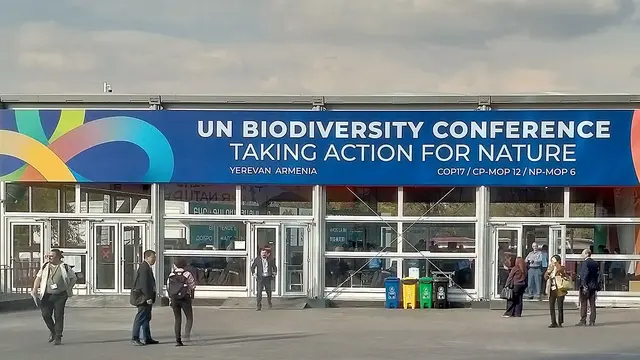
The 17th UN biodiversity conference (CBD COP17), took place in Yerevan, Armenia, from 19-30 October 2026. COP17 marked the first global review of collective progress towards implementing the Kunming-Montreal Global Biodiversity Framework (GBF) - the landmark policy instrument agreed to halt and reverse global biodiversity loss.
The conference highlighted that the world remains off track to meet its 2030 biodiversity targets.
Countries agreed the Yerevan Pathway (PDF), setting out priorities to accelerate implementation, including increasing biodiversity finance, reforming harmful subsidies and strengthening monitoring and accountability.
Parties also officially adopted the Sevan Guidelines as a new permanent body under the convention, meant to strengthen the role and knowledge of Indigenous Peoples and local communities in shaping global biodiversity policy.
There were also other positive developments, including new financial commitments and growing support for repurposing subsidies that harm nature but substantial finance gaps remain.
IIED and partners contributed to seven side events, focusing on shifting power to local communities, getting money where it’s needed most, challenging unfair economics, recognising the value of nature and putting gender justice at the heart of GBF implementation.
Our research highlighted a major funding gap: only around 2% of biodiversity finance project descriptions mention Indigenous Peoples. At COPs and beyond, we will continue to advocate for gender-just, Indigenous Peoples and local communities-led approaches, highlighting the need to shift decision-making power and finance to those most affected by biodiversity loss.
Sources
Conference of the Parties (COP), UNFCCC
Conference of the parties, Wikipedia
Everything you need to know about COP, Global Witness
What is COP?, McKinsey
What is COP?, Cambridge Institute for Sustainability Leadership (CISL)