New handbook on gender-responsive biodiversity data
A new handbook co-developed by IIED and the CBD Women’s Caucus aims to help women-led and community-based organisations influence biodiversity policy.

Members of the CBD Women's Caucus and IIED after a side event on gender and biodiversity data at COP17 (Photo: Fatima El-aaraby, CBD WC)
The handbook aims to address persistent gaps in how gender and biodiversity data are collected, managed and used, helping to ensure women’s knowledge, experiences and priorities are better reflected in biodiversity policy and decision-making.
Developed through a joint initiative between IIED and the CBD Women’s Caucus, it brings together practical tools, experiences and lessons from women-led and community-based organisations.
The handbook stems from a series of peer-to-peer learning sessions held earlier this year to explore questions about biodiversity evidence: who decides what counts as evidence, whose knowledge is recognised and whose priorities shape decisions?
The sessions brought together women, community-based organisations, researchers and practitioners from different geographical and sociocultural contexts. Through regular exchanges, participants shared experiences and lessons in a collaborative space to enable skills to be strengthened across the biodiversity data cycle – from data collection and management to analysis, use and communication.
The resulting publication, 'Gender-responsive biodiversity data: a practical handbook', draws on this collective learning to help users generate and use biodiversity evidence that better reflects diverse perspectives and experiences.
Designed as a flexible resource rather than a guide to be read from beginning to end, the handbook enables users to easily access relevant tools and guidance at different stages of the data cycle, depending on their needs.
Women-led and community-led organisations are already generating valuable gender-responsive biodiversity data, but this is not recognised. The barriers include lack of resources and no access to key decision-making spaces. This is why this work is so important
Shruti Ajit, project officer, CBD Women's Caucus
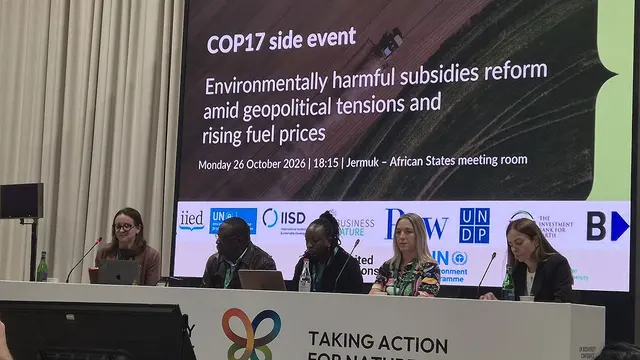
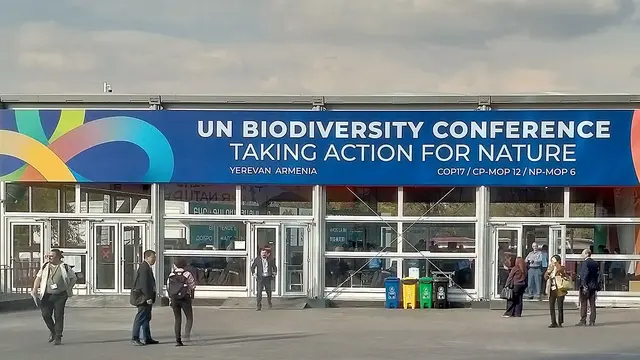
The handbook was launched at a side event during the 17th Conference of the Parties to the Convention on Biological Diversity (COP17) in Yerevan, Armenia, in October 2026. During the event, representatives from the International Land Coalition, Gender + Environment Data Alliance (GEDA), Women4Biodiversity, UN Environment Programme and UN Women also joined to speak about the importance of building gender-responsive biodiversity data systems.
An online launch on 2 December will introduce the resource, alongside its French and Spanish translations, to a wider international audience and encourage its uptake across biodiversity policy, research and community-led initiatives.