Reflections from Yerevan: did COP17 deliver inclusive and equitable nature outcomes?
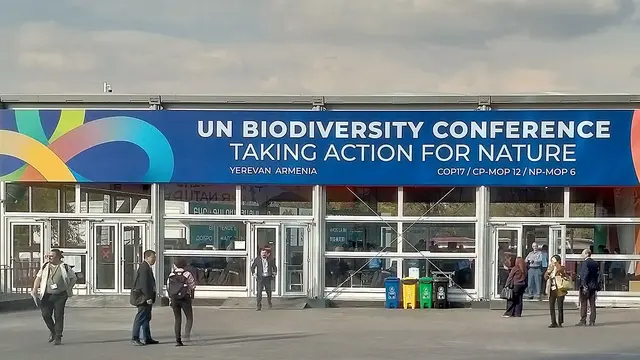
The UN biodiversity summit (CBD COP17) concluded on 31 October. Nicola Sorsby explores the outcomes from the discussions, and assesses what they mean for community-led, rights-based and inclusive biodiversity action.



IIED’s side event on environmentally harmful subsidy reform at COP17 Finance Day on 26 October (Photo: Nicola Sorsby, IIED)
Four months ago, IIED launched a series of insights exploring key issues for COP17, with one clear message: effective biodiversity action, finance and implementation across all the global biodiversity framework (GBF) targets must be led by Indigenous Peoples and local communities, be rights-based, gender-responsive and inclusive of diverse knowledge systems and values.
The global review of progress signalled parties were off track to meet almost all overarching global targets to protect nature by 2030. Hopes were high that this COP could deliver concrete steps forward.
So what happened?
Progress to reform harmful finance
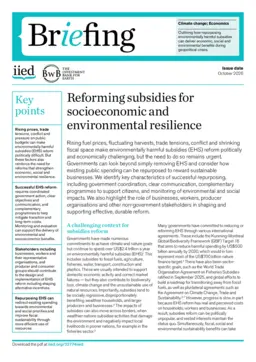
A significant achievement was the presidency’s initiative to accelerate action to reform harmful subsidies and incentives. Target 18 of the GBF seeks to reduce incentives harmful to nature by at least US$500 billion per year.
With governments currently spending trillions of dollars every year on initiatives which destroy nature – over 30 times the amount which is spent on protecting it – it is no wonder we are losing biodiversity at catastrophic rates. Despite its importance, Target 18 remains one of the least advanced so far.
But Yerevan put the spotlight on this target. The COP presidency launched a three-part flagship initiative to trigger political momentum on harmful finance, including the Yerevan Call on Incentives Positive to Biodiversity and the Friends of Target 18 platform.
IIED welcomes this progress and stresses that subsidy reform must include measures to mitigate impacts on citizens who benefit from subsidies (especially vulnerable or low-income households) and to monitor and prevent unwanted social or environmental impacts.
Mixed outcomes elsewhere on nature finance
COP17 also saw $1.8 billion pledged in new finance for nature, including $500 million to the Tropical Forests Forever Facility, $60 million to the Global Biodiversity Framework Fund and $500 million through a Species Recovery Alliance.
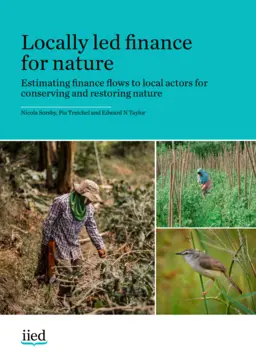
However, this figure is still woefully short of the $200 billion per year needed by 2030. Furthermore, it's unclear how these funds are supporting direct access and leadership by Indigenous Peoples and local communities, despite their aspirational targets. Current research shows that only 2% of international nature funding even mentions Indigenous Peoples.
Parties were deadlocked over which countries should be paying to protect nature. Currently, only so-called ‘developed countries’ are mandated to do so, with other countries only making voluntary commitments. The countries classed as ‘developed’ have not changed since 2006, so proposals to broaden this are well-justified. However, strong pushback from some parties meant no updates were made.
Conversations also focused on how the private sector can engage in the GBF. Some saw the launch of the Friends of Nature Credits as a promising development. However, with little money mobilised through such nature markets and questions around integrity, equity, commodification of nature and demand, more needs to be done to align these instruments with diverse ways of valuing nature.
Furthermore, the Cali Fund, established for companies to pay for their use of digital sequence information, has received barely more than $10,000 in two years.
Food systems integral to biodiversity discussions
The world relies directly on biodiversity to sustain food systems, so we can't discuss nature without discussing food and agriculture. However, there is no formal mechanism for smallholder producers to participate in CBD negotiations.
IED attended with partners from the Forest and Farm Facility to highlight how important the voices of small-scale farmers and fishers are for CBD negotiations, and helped develop the ‘Yerevan Declaration on small-scale women farmers for biodiversity conservation, sustainable use and ABS’, alongside the Farmer Seed Network China.
We also co-hosted a side event on how the TERRA platform, a flagship initiative launched at COP30, can scale up transitions towards sustainable agricultural practices such as agroforestry and agroecology.
Wins for Indigenous Peoples
COP also agreed the Sevan Guidelines outlining how the new Subsidiary Body on Article 8(j) (PDF), a permanent body for Indigenous Peoples, will operate through a co-chairing arrangement, with one of the co-chairs nominated by Indigenous Peoples and local communities. This important milestone elevates their full and effective participation in the CBD process.
The new body provides a forum for Indigenous Peoples and local communities to interact directly with the CBD and mandates countries to respect their traditional knowledge on biodiversity.
For the first time, Indigenous and traditional territories (ITTs) were acknowledged as a distinct conservation pathway, separate from conventional protected areas and other effective area-based conservation measures (OECMs). This breakthrough recognises Indigenous Peoples’ land management, such as Indigenous and community conserved areas, territories of life and biocultural heritage territories, as critical for conservation.
However, ITTs were excluded from the Programme of Work on Protected Areas, a missed opportunity to align global and national policies, recognise and protect ITTs and strengthen equitable governance.
Varied outcomes on gender-responsive action
Parties adopted a decision on the mid-term review of the Gender Plan of Action (PDF), which encourages stronger gender-responsive GBF implementation.
The global review exposed persistent gaps in Target 23. In response, IIED has called for better recognition and use of women’s knowledge and evidence when assessing biodiversity progress, and to address the gaps, IIED and the CBD Women’s Caucus launched a practical handbook on gender-responsive biodiversity data, developed with over 100 participants.
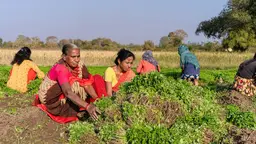
There were setbacks: ‘gender-responsive’ language was weakened to 'gender-sensitive' (PDF) in relation to forest biodiversity (paragraph 8). In practice, this means parties only have to recognise gender differences rather than actually addressing gender inequalities. Furthermore, dedicated finance for women-led action remained limited.
While it was good to see COP17 adopt new guidance on sustainable wildlife management (PDF), protections for environmental human rights defenders were dropped. This reflects a wider push by some parties to weaken or remove rights-based and inclusive language in several COP decisions.
Recognising women’s contributions to biodiversity is not enough without protecting their rights, safety and access to resources.
Connecting Yerevan to the climate negotiations
The UNFCCC COP31 is now underway in Antalya. It's critical to promote synergies between the Rio conventions on nature and climate.
Türkiye's COP31 presidency has launched the Rio Synergies Group for Action, a voluntary, country-led group supporting integrated action across the Rio conventions.
However, progress on cooperation between the conventions stalled at COP17. Several countries rejected text referring to the science-backed IPBES Nexus and Transformative Change assessments, undermining the role of science in multilateral agreements and weakening the impetus for parties to address climate and nature policy holistically.
Parties also failed to agree on citing the International Court of Justice’s landmark advisory opinion on holding countries to account for their carbon emissions, which would have strongly signalled that countries must also take accountability for their harm to nature.
Time is running out for biodiversity targets
Parties will reconvene at COP18 in Ecuador in 2028 – by then, only two years will remain until the 2030 deadline for all GBF targets.
With significant progress still needed, the pressure is on.
With thanks to Anna Ducros, Barbara Lassen, Karen Wong Pérez and Krystyna Swiderska for their contributions to this insight.