Two-thirds of nature finance fails to mention local communities, study suggests
Indigenous Peoples mentioned just 2% of the time.

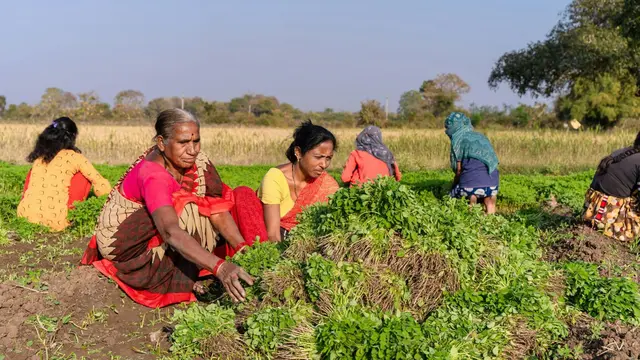
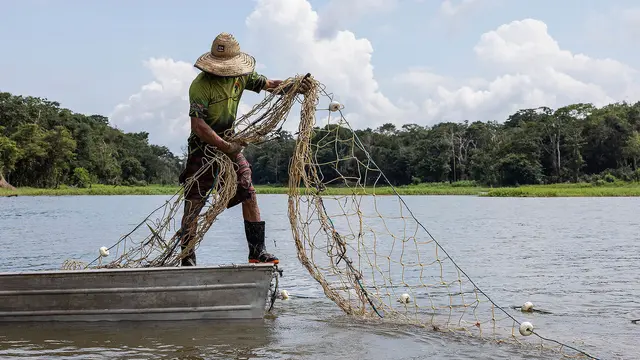
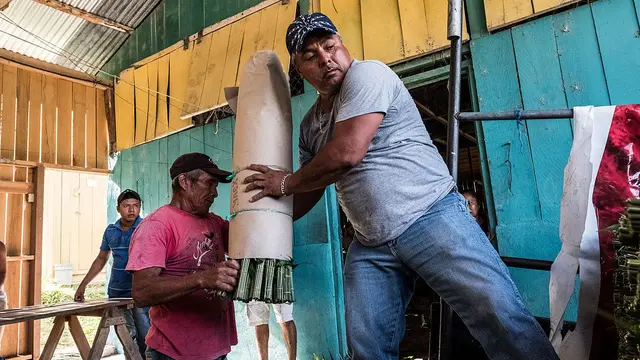
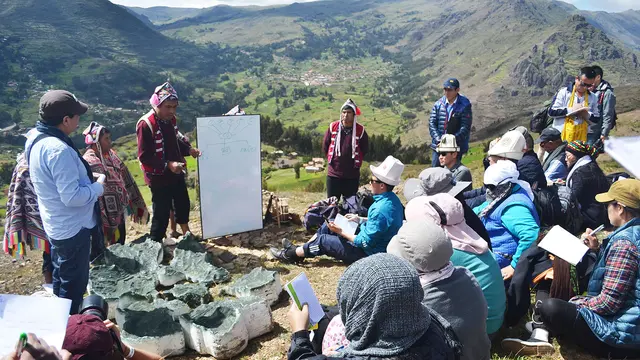
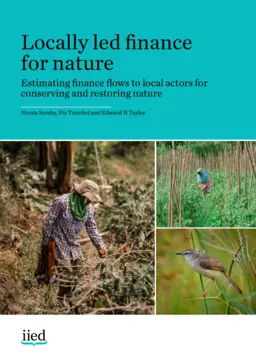
Two-thirds of foreign aid spending to restore nature fails to mention the communities it’s expected to help, new research by IIED suggests.
Researchers used a keyword search technique in English, French and Spanish to scour the OECD’s database of development finance for projects designed to restore nature and habitats. There were some 233,000 funding lines over the 14-year period studied, which included both grants and loans.
Just 33.7% of biodiversity finance entries between 2011 and 2024 referred to local communities or leadership, while only 2.24% included a reference to Indigenous Peoples or related terms. The proportion of funding lines that referred explicitly to local leadership was tiny, at 0.28%. We found only six direct mentions of Indigenous leadership among the 233,000 transactions.
Specific mentions of local and Indigenous leadership varied but remained below 1% until about 2023, when a marked increase can be seen. The UK, United States, Netherlands and Ireland appeared to be the highest funders of locally-led nature projects, but Washington has now ended most aid spending so the trend line may look very different from 2025 on.
It comes as countries prepare to take part in the 17th Conference of the Parties to the Convention on Biological Diversity (CBD) in Armenia in October. Following preparatory talks in Kenya, governments admitted they were lagging well behind on fulfilling their promises to protect nature.
Key points
- Of the official development assistance reported to the OECD between 2011 and 2024 and tagged for biodiversity, just 33.7% included some reference to the grassroots level and only 2.24% referred to Indigenous Peoples – despite evidence that nature is best conserved by these groups and by local communities. This means the vast majority of projects will reflect funders’ priorities, not those of people living in the areas being targeted
- Exact dollar amounts of money actually reaching the local level are unknowable, because the OECD dataset doesn’t allow the tracing of finance all the way from funders to recipients. Funders’ own description, tracking and reporting of their activities is also sub-optimal in this regard – a failing IIED noted in a previous study of climate finance
- It’s also impossible to accurately track money coming from the Global Environment Facility (GEF), the main multilateral fund for nature finance and host of the CBD’s flagship financial mechanism. The GEF sends very limited details to the OECD, and appears to direct less of its funding to local communities (13%) than the overall trend. However, this might be because its sparse descriptions confounded the keyword search
- Overall a quarter (24.9%) of nature finance was provided in the form of debt during the period studied. However, for funding linked to “local” keywords that figure dropped to a fifth (19.1%). While the mix varies significantly from year to year, the use of loans as opposed to grants is trending upward
- New loans risk increasing financial burdens on countries with limited ability to repay, and, at any rate, will force them to spend scarce income on debt servicing instead of resilience-boosting investments that could reduce the need for future recovery or restoration work
Nicola Sorsby, researcher on climate and nature at IIED, said: “Lots of communities in developing countries depend for their livelihoods on natural systems which are under threat from climate change and biodiversity loss.
“This connection means they also have the knowledge and skills to maintain these important habitats. Protecting nature is vital for reducing the impact of extreme weather, improving air and water quality, and bolstering food security.
“Most people around the world could probably give an example of outside ‘experts’ or officials imposing changes on their neighbourhood that didn’t serve its real needs. When it comes to restoring nature, local people should have real decision-making power so outcomes reflect their priorities – not just those of funders.
“Because a keyword search is rather a blunt instrument it can give only so much insight into how funding is deployed. That means the true proportion of nature finance reaching the grassroots level will be much lower than 34%. Funders definitely should not be happy with this performance.”
Notes to editors
- Evidence relating to Indigenous Peoples’ and local communities’ conservation of nature: IPBES, 2019; Fa et al., 2020; Dawson et al., 2021 (PDF); Dawson et al., 2024
- A 2025 study by IIED found less than a third of climate finance provided to developing countries explicitly mentioned local communities
- Another paper found only limited funding from the Global Environment Facility was reaching the local level
- Read about the principles for locally led adaptation to the effects of climate change, and the inclusive nature action principles
For more information or to request an interview, contact Jon Sharman:
+44 7407 727 886, or [email protected]