Locally-led restoration: the critical link between land, nature, climate and people
Dilys Roe and Francesca Booker explore the essential role that nature restoration plays in achieving the goals of all three Rio Conventions and in particular, the importance of locally-led initiatives.




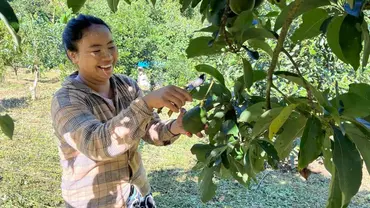
In Cambodia, farmers are restoring soil health through cover crops that strengthen farming systems, improve resilience and support more sustainable food production (Photo: UNDP Climate, via Flickr, CC BY-NC 4.0)
The UN Convention to Combat Desertification (UNCCD) held its most recent Conference of Parties (COP) in Mongolia in August 2026. While it rarely receives the media coverage the UN climate and biodiversity meetings attract, the issue it focused on this year, ‘Restore Land, Restore Hope’ is pivotal to both sister “Rio” conventions’ goals.
UNCCD’s COP17 put restoration firmly in the spotlight and highlighted that restoring degraded land delivers for ecosystem health, climate resilience and human wellbeing.
Will the CBD and UNFCCC follow suit and embrace restoration as central to their agenda?
Locally-led restoration unlocks synergies
At the UNCCD COP, the UN handed out three awards to World Restoration Flagship initiatives: Saudi Arabia's National Greening Programme, Brazil's Araticum Initiative and the Sahel Integrated Resilience Initiative.
Different geographies, different drivers, but the same underlying logic — connecting climate, nature and people.
Such mega initiatives are important and impressive in their scale and vision. But just as important are smaller, locally-driven initiatives that ensure restoration takes place in ways that don’t only deliver on the big measurable targets of hectares of land under sustainable management or tonnes of CO2 emissions reduced, but also ensure local peoples’ knowledge, rights and priorities are fully taken into account.
Locally-led restoration draws on the knowledge, rights and priorities of the people who depend on the land, restoring the nature that sustains their livelihoods and strengthens their resilience to climate change.
The REDAA initiative – Reversing Environmental Degradation in Africa and Asia – led by IIED and funded by FCDO, is supporting 27 locally-led initiatives across 25 countries. REDAA is demonstrating that connecting land, nature, climate and people’s wellbeing (especially those most marginalised) works in practice.
In the Sahel, for example, Secrétariat Permanent des Organisations Non Gouvernementales (SPONG) is championing inclusive, locally-led restoration that enables communities to invest in, and sustainably manage, their land.
The initiative recognises that farmer-managed natural regeneration (FMNR) is one of the most promising restoration solutions in the Sahel but is constrained by insecure land tenure, often the result of poor governance and social inequities.
Clarifying and strengthening land rights is rarely straightforward, yet it is the foundation that allows communities to invest with confidence in sustainable land use and restoration.
The initiative expects to restore over 10,000 hectares of agricultural land in rural communities in Niger, Burkina Faso and Senegal. This will revitalise soils and biodiversity, strengthen resilience to climate change including drought extremes, improve livelihoods and food security, and secure more equitable access to land for women and young people.
If restoration is to be recognised as the connector between the three conventions, it is these local, rights-based efforts that prove making the connection across conventions works in practice.
The overlooked biodiversity target
With the UN Convention on Biological Diversity (CBD) later this month our attention moves to the Kunming-Montreal Global Biodiversity Framework (GBF).
Target 2 of the GBF set a global ambition to restore at least 30% of degraded ecosystems by 2030. But it is Target 3 – to protect 30% of land and sea and referred to as “30X30” – that is receiving greater attention, anchoring campaigns, national strategies and attracting investment.
Target 2 has struggled to escape its shadow and there is a strong sense among practitioners that restoration is less prioritised than protection.
This imbalance matters, because degraded ecosystems that are never restored stay degraded, no matter how well the 30% is protected.
The CBD’s global review of implementation of the GBF reports that while restoration efforts have increased, current commitments still fall short of the 30% target.
Nevertheless countries are beginning to acknowledge the role of local actors in achieving the target – many national reports on progress highlight contributions from NGOs, subnational governments, Indigenous peoples and local communities such as forest and fisheries user groups.
Examples from REDAA include an initiative led by Nutrition Action Zimbabwe that is working with local farmers (particularly women) to restore pollinator diversity and abundance through agroecological practices with a focus on flowering, insect-pollinated crops.
This initiative has increased pollinator activity, improved soil health and supported vegetation recovery. It has also helped farmers adapt to recurrent drought and unreliable rainfall, and improved incomes, food security and nutrition – particularly women’s dietary diversity.
Pushing for restoration at UNFCCC
At UNFCCC COP30 in Belém in 2025, the presidency was keen to draw attention to the synergies between nature, climate and land degradation, releasing a joint statement alongside CBD and UNCCD presidencies. The statement committed to identifying areas and opportunities for alignment.
This is not the first time joint declarations have been made; synergy has become an important theme of the Rio COPs. Focusing on restoration, and especially locally-led restoration, as a concrete point of synergy, would make the practical next steps far more actionable.
In the Philippines, a REDAA-supported initiative led by the International Institute of Rural Reconstruction is working with farmers and local government to rewet and revegetate the Leyte Sab-a Basin Peatland (the country's second largest peatland) through canal blocking, tree nurseries, natural regeneration and peatland friendly farming.
This will restore the peatland's hydrologic balance, protect its remaining forests and reduce biodiversity loss, while supporting climate resilient livelihoods in a landscape highly vulnerable to flooding.
The final “Global Mutirão” text (PDF) at Belém noted restoration and cited efforts related to Article 5 of the Paris Agreement to reverse deforestation and forest deforestation. But the negotiations ended without clear action, and with the most interesting advances on restoration being championed by the Brazilian presidency itself.
Locally-led restoration yields global dividends
Although restoration is integral to all three Rio Conventions, until the UNCCD COP this year, it has not been recognised for the synergetic role it plays as a connector and deliverer of multiple nature, climate and people co-benefits.
Hard work is already being done by local people on the ground, in the management of their farms, fisheries, forests and their patches of nature within urban spaces.
Get locally-led restoration right and recognised, it will reap dividends for attaining global nature and climate goals.