Is culture the missing ingredient in the biodiversity economy?
Dilys Roe and Krystyna Swiderska look at the global biodiversity framework’s Target 9 to explore how it has been interpreted and how it could be strengthened for the benefit of both people and wild species by integrating traditional knowledge and culture.



A fisher from the São José community prepares a net to catch pirarucu fish in a lake in the Amanã Sustainable Development Reserve in Brazil (Photo: FAOAmericas, via Flickr, CC BY-NC-SA 2.0)
Target 9 of the global biodiversity framework (GBF) aims to ensure the management and use of wild species is sustainable so that they can continue to benefit people now and in the future. It encourages the adoption of “sustainable biodiversity-based activities, products and services” to achieve this.
Many countries have embraced this. Indeed, well before the agreement of the GBF, the value of wild species had been recognised at international, national and local levels, and a diversity of wildlife-based activities, products and services emerged, including hunting, fishing, wildlife tourism and wild products trade.
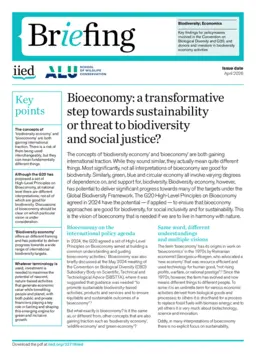
Some countries – in Africa in particular – have described this collection of activities as their 'wildlife economy' or 'biodiversity economy' and have adopted strategies, policies and plans to further advance this.
In South Africa, for example, the national biodiversity economy strategy aims to contribute to economic growth, with a specific focus on local benefits, job creation, poverty alleviation and food security, while maintaining the ecological integrity of the biodiversity resource base.
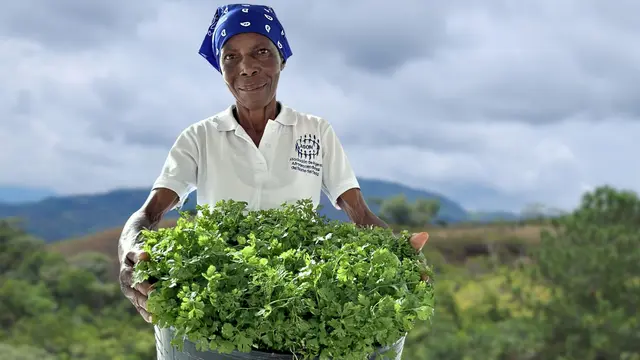
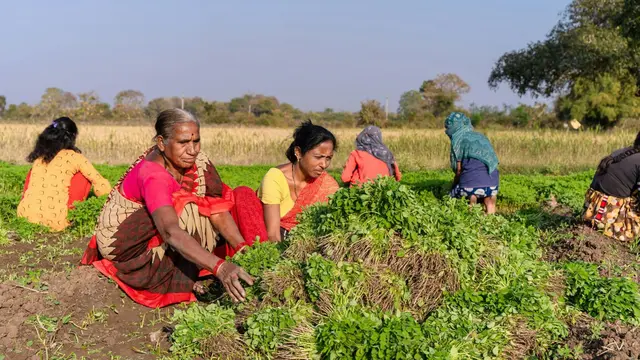
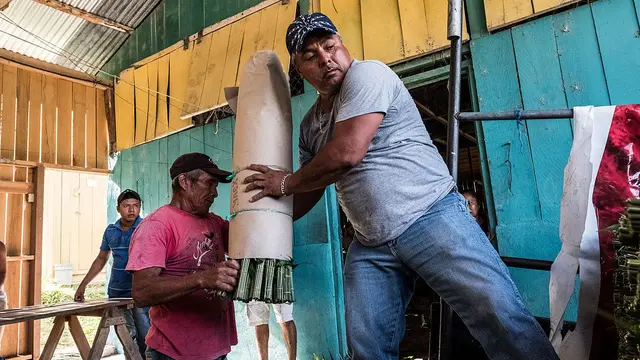
Many of the biodiversity-based activities, products and services that support the delivery of Target 9 have their roots in Indigenous, traditional and local knowledge, culture and practices. Examples include the herding and shearing of Vicuna in the Andes; the management and use of the giant pirarucu fish in Brazil; the use of San knowledge as guides and trackers for recreational hunting in Namibia; and the collection and crafting of bamboo products in India.
These cultural contributions are, however, often overlooked in formal biodiversity economy plans and strategies, despite their important contributions to Target 9 and a range of other GBF targets.
Why integrating traditional knowledge and culture is key
Target 9 is clear that biodiversity-based activities, products and services should protect and encourage customary sustainable use by Indigenous Peoples and local communities, while Section C of the GBF emphasises the need to “ensure that the rights, knowledge, including traditional knowledge associated with biodiversity, innovations, worldviews, values and practices of Indigenous Peoples and local communities are respected, and documented and preserved….” in its implementation.
The Convention on Biological Diversity (CBD) has long recognised the vital role of traditional knowledge, innovations and practices and customary use in biodiversity conservation and sustainable use (Articles 8(j) and 10(c )). This is backed by global evidence on traditional knowledge and cultural values. Yet this knowledge is fast disappearing.
Integrating culture and traditional knowledge into biodiversity economy approaches is important to ensure they do not inadvertently contribute to eroding traditional knowledge and culture.
As well as safeguarding traditional knowledge, such integration can also create opportunities to generate income from unique biocultural heritage. This, in turn, can foster stronger conservation incentives and ensure benefits reach those in vulnerable situations and those most dependent on biodiversity in particular, as required by Target 9.

Vicuna in the Altiplano part of the Andes. Their herding and shearing is an example of a biodiversity-based activity that supports the delivery of Target 9 with its roots in Indigenous, traditional and local knowledge, culture and practices (Photo: Nomadfoto, via Flickr, CC BY-NC 4.0)
Biocultural economy should be a key element of the biodiversity economy
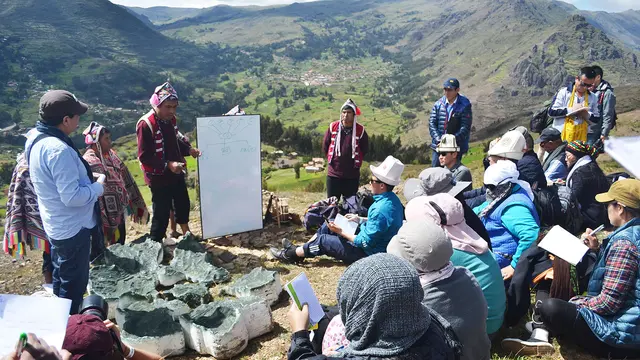
Some Indigenous and traditional peoples have already developed biocultural economies or mixed economies that generate income while sustaining non-monetary customary sustainable use activities that maintain traditional knowledge, such as hunting and gathering, barter, and subsistence farming guided by wildlife indicators.
Biocultural economies generate income from products and services that are derived from both biodiversity and traditional knowledge and seek to strengthen biocultural heritage as a whole – interlinked biodiversity, traditional knowledge, landscapes, cultural and spiritual values, customary laws and languages.
They are guided by precolonial holistic wellbeing concepts that promote sufficiency and balance with nature rather than infinite growth, such as ‘Sumaq Kausay’ in the Andes and ‘Ubuntu’ in Southern Africa, and by precolonial values that promote conservation and equity, such as sharing, reciprocity, solidarity and balance.
From CBD to the G20 – embracing a more holistic vision of nature and culture
The CBD is not the only international policy forum with an interest in the biodiversity economy. The G20, under the presidencies of Brazil and South Africa, championed the concept of 'bioeconomy' but made it clear bioeconomy is more than bioenergy or other bio-based industries.
The G20 vision of bioeconomy articulated in a set of High Level Principles (PDF) suggests that bioeconomy activities should: "Be inclusive and equitable, uphold the rights of all persons, including Indigenous Peoples and members of local communities..." (Principle 2), and also that they should: "Contribute to the conservation of biodiversity, the sustainable use of its components and the fair and equitable sharing of benefits arising from the utilisation of genetic resources and associated traditional knowledge...” (Principle 4).
Embracing cultural heritage as well as biodiversity heritage in our uptake and implementation of biodiversity-based activities, products and services will not only help meet the ambitions of GBF Target 9 but also align with this G20 vision.
More in this series
Insight: Women’s tenure rights for gender-responsive coherence across the Rio Conventions, Karen Wong Pérez, Omaira Bolaños (October 2026)
Insight: What will count as progress in the first global review? We need a gender-just evidence system, Karen Wong Pérez, Amelia Arreguín Prado (October 2026)
Insight: More money for nature? Ensuring finance supports local action is as important, Anna Ducros, Nicola Sorsby (September 2026)
Insight: Achieving 30x30: the vital role of Indigenous and traditional territories, rights and governance, Barbara Lassen, Krystyna Swiderska (August 2026)
Insight: Why nature finance and gender data are central to achieving the world’s biodiversity goals, Nicola Sorsby, Karen Wong Pérez (August 2026)
Insight: Getting back on track: turning global biodiversity promises into fair and locally-led action by 2030, Nicola Sorsby and Barbara Lassen (July 2026)