More money for nature? Ensuring finance supports local action is as important
Ahead of the 17th Conference of the Parties to the UN Convention on Biological Diversity (CBD COP17) in October, Anna Ducros and Nicola Sorsby highlight that, as well as mobilising more biodiversity finance, global targets must consider where this finance flows, who controls it, and how it supports locally led, rights-based biodiversity action.



Funding has supported community members in Uaxactun, Guatemala, to create a local enterprise to process xate, a non-timber product harvested from forests the communities manage sustainably (Photo: Jason Houston/USAID Biodiversity & Forestry, via Wikimedia Commons)
The global biodiversity framework (GBF), the world’s leading policy agreement for protecting and restoring nature, has two 2030 targets on finance: Target 19, to scale up the amount of finance from all sources to US$200 billion annually, and Target 18, to reduce the finance flowing to activities that harm nature by $500 billion annually.
Achieving both targets is essential to reach the $700 billion needed to realise the full ambition of the biodiversity plan.
CBD COP17 marks the halfway point of the GBF. Ahead of this milestone, the first global review of collective progress against the GBF targets sends a clear message that Parties are not on track to achieve almost any of the biodiversity targets.
Targets 18 and 19 are no exception. Harmful subsidies remain substantial, and international and domestic finance, although increasing, remains insufficient to meet the scale and ambition laid out in the framework.
Biodiversity finance has not been immune to broader funding cuts to overseas development aid and domestic budgets. The latest round of funding from the Global Environment Facility, the world's largest multilateral fund for the environment and host of the CBD’s flagship financial mechanism, is 27% lower than the previous one, raising concerns from Parties in the lead-up to CBD COP17. Other funds – such as the Cali Fund, launched at CBD COP16 in Colombia – also remain underfunded.
And analysis shows that for every $1 spent on protecting nature, $30 goes towards destroying it.
Quality: as important as quantity
While having enough money to implement the GBF is key, focusing on the quantity of money alone will not solve the biodiversity crisis. It is as important – or even more – to ensure finance reaches the communities that steward nature and are best placed to protect it, including Indigenous Peoples, local communities, Afro-descendants and women’s organisations.
Crucially, these communities must also have decision-making power and agency to design and deliver projects according to their needs and priorities. Only this can ensure finance is locally led, gender responsive and rights based, in line with the inclusive nature action principles.
Early insights from IIED research shows that only one-third of nature finance reported by donors to the Organisation for Economic Co-operation and Development's Development Assistance Committee mentions being locally led, and only 2% mentions Indigenous Peoples. But existing reporting mechanisms also make it a challenge to track funds accurately, which itself is a barrier to ensuring funds reach the right people.
Practitioners and governments are increasingly looking towards private sector actors to increase investment in biodiversity and decrease harmful spending. However, this approach is not without its challenges. Not only could it allow governments to avoid their own responsibility to protect and restore nature, but it could also risk propagating the systems – which have resulted from historical challenges and contemporary power dynamics between private companies and Indigenous Peoples and local communities – that heavily contribute to the biodiversity crisis in the first place.
Any private sector investment in nature must be made in accordance with the needs and priorities of Indigenous Peoples and local communities. They should have the power to decide how this money is spent.
Too much money going to harmful activities
Environmentally harmful subsidies (EHS) – government costs that encourage unsustainable production or consumption and harm nature – remain a challenge in both closing the biodiversity funding gap and ensuring the finance that is mobilised is not undermined.
While EHS often have valid objectives of supporting vulnerable households and individuals by increasing their real income and spending power, they are often poorly targeted, favouring richer households or large businesses. They can also have international repercussions, with richer countries subsidising environmental damage in the Majority World, making it harder for poor communities, sustainable businesses and least developed countries to transition to more sustainable economies.
At the same time, subsidies reform can cause real and perceived risks to small-scale producers in the short term.
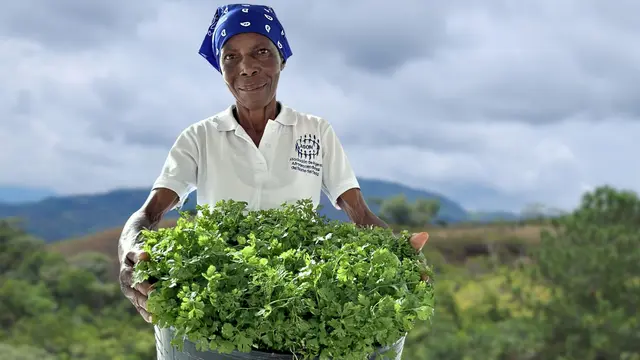
But there is an opportunity to repurpose government spending into positive incentives, including by investing in social assistance that benefits those living at the forefront of biodiversity loss or incentivising practices that support agrobiodiversity.
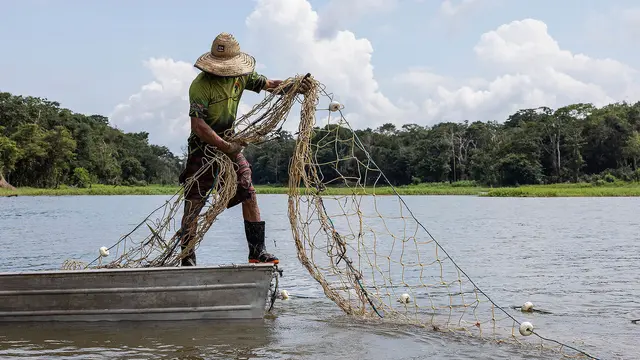
A recent brief jointly produced by the World Bank, PROBLUE and IIED explores options for repurposing harmful subsidies to benefit both nature and people in the fisheries sector, which has historically been damaged by subsidies that support stock depletion and favour large industrial fishing fleets.
We urge CBD Parties to eliminate EHS and redeploy this finance to activities that benefit people and nature. Social assistance, cash transfers and other mechanisms can help alleviate impacts on local communities and ensure government budget is used effectively to generate social and environmental benefits.
Locally controlled finance mechanisms
The contributions of locally-led and self-generated finance mechanisms still remain largely unrecognised in policy. Indigenous-led funds, locally led credit mechanisms such as savings and credit cooperative organisations and village savings and loans associations, and small-scale producers’ investments are highly effective at channelling finance to local needs and priorities.
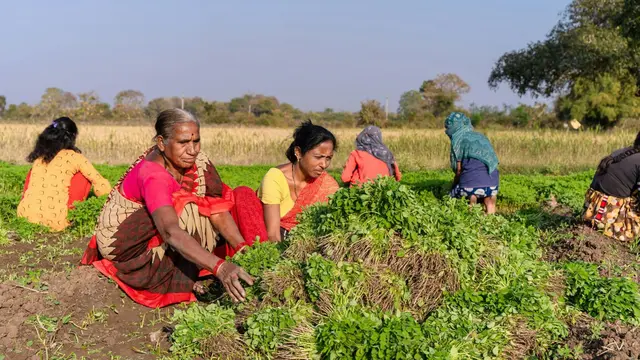
Collective forest and farm producer organisations are also effective channels for delivering finance to smallholder producers that are actively protecting nature and contributing to food security and climate resilience by engaging in agroecological and agroforestry practices. But these are mostly unsupported by the international donor community.
We therefore urge donors to invest directly in such mechanisms and organisations to address biodiversity goals and effectively channel finance to the local level for people, nature and climate.
Find us at CBD COP17
IIED will be at COP17 advocating for quality finance, an end to funding harmful activities, more support for locally controlled finance mechanism and much more.
More in this series
Insight: Women’s tenure rights for gender-responsive coherence across the Rio Conventions, Karen Wong Pérez, Omaira Bolaños (October 2026)
Insight: What will count as progress in the first global review? We need a gender-just evidence system, Karen Wong Pérez, Amelia Arreguín Prado (October 2026)
Insight: Is culture the missing ingredient in the biodiversity economy?, Dilys Roe, Krystyna Swiderska (September 2026)
Insight: Achieving 30x30: the vital role of Indigenous and traditional territories, rights and governance, Barbara Lassen, Krystyna Swiderska (August 2026)
Insight: Why nature finance and gender data are central to achieving the world’s biodiversity goals, Nicola Sorsby, Karen Wong Pérez (August 2026)
Insight: Getting back on track: turning global biodiversity promises into fair and locally-led action by 2030, Nicola Sorsby, Barbara Lassen (July 2026)
_(39407333555).jpg)