Women’s tenure rights for gender-responsive coherence across the Rio Conventions
At COP17, Parties will have an opportunity to connect biodiversity, climate and land agendas that communities have never experienced as separate. Women from Indigenous, Afro-descendant, pastoralist and local communities are already demonstrating how to connect these agendas in practice. COP17 should listen to their experiences and strengthen the conditions that make their action possible.




A woman farmer from Norte del Cauca, Colombia, holds a large container overflowing with freshly harvested coriander (Photo: copyright ASOM)
Biodiversity loss, climate change and land degradation are deeply interconnected. But governments still often address them through separate policies and plans.
At last year’s meetings in Panamá City, the CBD Subsidiary Body on Scientific, Technical and Technological Advice (SBSTTA) formulated recommendations for submission to COP17. Recommendation 27/3 (PDF), which focuses on the links between biodiversity and climate change, includes proposals to strengthen coordination across national plans on biodiversity, climate and land degradation.
The text, which remains subject to negotiation and adoption at COP17, also recognises that coherent action must be gender-responsive and human rights-based.
Greater biodiversity-climate coherence does not automatically mean more equitable or gender-responsive action. This is particularly important as countries consider how nature-based solutions (NbS) and ecosystem-based approaches (EbA) can help achieve biodiversity, climate and land objectives together.
These approaches are implemented in lands and territories where rights to land and natural resources are often unequally secured, particularly for grassroots-level communities and women. Without attention to these inequalities, efforts to achieve multiple environmental objectives risk reinforcing existing disparities.
Experiences of Indigenous, Afro-descendant, pastoralist, and local women show why women’s land and territorial rights can provide an important entry point for more coherent, gender-responsive action. They also show what is needed to make those rights meaningful in practice and enable women to continue leading responses to interconnected crises.
Coherence needs strong safeguards
We cannot assume that coherent biodiversity-climate action will be equitable and gender-responsive. The draft decision contained in SBSTTA recommendation 27/3 emphasises the need to strengthen social and environmental safeguards, including for Indigenous Peoples and local communities, women and youth.
It also calls for avoiding actions that risk dispossession, undermine rights or fail to ensure free, prior and informed consent and benefit-sharing.
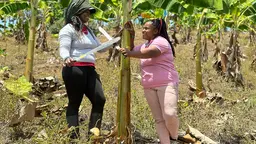
The experience of Indigenous and Afro-descendant women in northern Cauca, Colombia, illustrates why these rights and safeguards matter in practice. Women are responding to interconnected crises by restoring forests, recovering native seeds and conserving soil and water while at the same time actively defending their territories against land dispossession, the expansion of mining and industrial agriculture, and threats from armed groups.
Their efforts show how locally-led action can simultaneously advance biodiversity and climate objectives, but also how women’s ability to manage and restore ecosystems is closely connected to their land and territorial rights.
As countries look for more integrated biodiversity and climate action, including through NbS and EbA, securing women’s land and territorial rights is essential for ensuring coherent action is equitable and gender-responsive.
Women’s land rights as a bridge across biodiversity, climate and land
Securing community-based and women’s land tenure rights is fundamental to achieving global commitments of the three Rio Conventions on biodiversity, climate change and desertification. Recommendation 27/3 of SBSTTA acknowledges that “unclear and unrecognised tenure can undermine communities’ ability to address biodiversity and climate concerns and build resilience”, while external interventions can exacerbate dispossession when tenure is left unresolved.
And while there is a growing international recognition of the crucial role women in Indigenous Peoples, Afro-descendant Peoples, pastoralists and local communities play as land stewards, traditional ecological knowledge holders, territorial governance and climate change mitigation and adaptation action, their land tenure rights remain insecure, overlooked in global and national commitments and systemically underfunded.
Rights without resources are not enough
Global women’s networks and cross-sectoral initiatives are mobilising to open a pathway to ensure women from Indigenous and local communities, Afro-descendant Peoples and pastoralists are recognised as rightsholders in global funding ecosystems and that women’s tenure rights are fully integrated into existing funding programming under the Rio Conventions.
The Rights and Resources Initiative (RRI) and the Women Land Rights Initiative will be promoting a global women's land rights protocol (WLRP) for donors at the CBD COP17 as guidance to fund women’s land tenure rights. The WLRP seeks to strengthen funders' support for women’s land tenure rights, close the historical gap in women’s tenure rights and advance towards gender equality.
Complementing this effort, the inclusive nature action principles provide guidance for governments, donors, NGOs and other actors to make biodiversity action more locally led, gender-responsive and inclusive.
Women’s tenure rights at the heart of coherent action
Global commitments to fund biodiversity and climate action must ensure a gender-responsive perspective that prevents women’s land tenure rights from being left behind.
The WLRP constitutes one of the pathways donors can use to ensure women’s tenure rights are funded and secure. The inclusive nature action principles provide a complementary framework for ensuring that biodiversity finance gets to where it’s needed most.
COP17 offers an opportunity to move beyond coherence on paper towards coherent, gender-responsive, human-rights-based action.
Securing women’s land and territorial rights, and supporting and financing the approaches women are already leading, can scale up their capacity to respond to interconnected crises while helping ensure that integrated biodiversity and climate action does not reinforce existing inequalities.
More in this series
Insight: What will count as progress in the first global review? We need a gender-just evidence system, Karen Wong Pérez, Amelia Arreguín Prado (October 2026)
Insight: Is culture the missing ingredient in the biodiversity economy?, Dilys Roe, Krystyna Swiderska (September 2026)
Insight: More money for nature? Ensuring finance supports local action is as important, Anna Ducros, Nicola Sorsby (September 2026)
Insight: Achieving 30x30: the vital role of Indigenous and traditional territories, rights and governance, Barbara Lassen, Krystyna Swiderska (August 2026
Insight: Why nature finance and gender data are central to achieving the world’s biodiversity goals, Nicola Sorsby, Karen Wong Pérez (August 2026)
Insight: Getting back on track: turning global biodiversity promises into fair and locally-led action by 2030, Nicola Sorsby and Barbara Lassen (July 2026)