Housing challenges are not solved by forced evictions. What is the way forward? full transcript
[Music]
Host [00:01] You’re listening to Make Change Happen, the podcast from IIED that offers insights on issues affecting the path towards a fairer, more sustainable world.
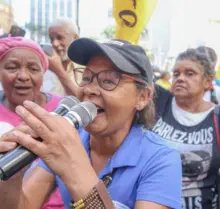
Camila Cociña [0:15] Forced evictions are a gross violation of human rights. They are usually accompanied by violence and often leave families with many other of their fundamental rights violated. We will now hear a snippet from Verinha, a community leader and organiser from the Housing Movement of the West and North-West of Sao Paolo Brazil, talking about her direct experiences of forced evictions.
Verinha [0:38]
Portuguese
E é muito constrangedor, gente. Nesse dia, eu nunca vou esquecer. A polícia chegou, choque, soltando bomba, tiro, revolver.
Mulheres gravidas, pessoas deficientes. Infelizmente, algumas famílias. Tivendo até casa de parente, de amigos, para estar indo, famíliares.
Outras voltaram novamente para outra ocupação. A maioria dos casos, aqui no São Paulo, quando acontece a reintegração de posse, a gente não resolve o problema habitacional. Simplesmente, a gente aumenta o problema habitacional.
English
And it's very distressing. I'll never forget that day. The police arrived, riot police, throwing bombs, shooting... pregnant women, people with disabilities.
Unfortunately, some families even had to stay with relatives or friends, to move with their family.
Others returned to another slum or occupation. In most cases, here in São Paulo, when evictions happen, we don't solve the housing problem. We simply increase the housing problem...
[Music]
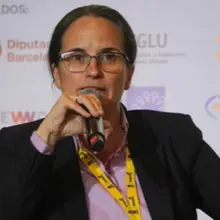
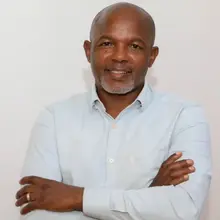
Camila Cociña [1:14] My name is Camila Cociña, I am a senior researcher at IIED, and I'm here in São Paulo with Lorena Zarate and with Joseph Kimani. Lorena Zarate is the coordinator of the Global Platform for the Right to the City and the former president of the Habitat International Coalition, and Joseph Kimani is the executive director of Shack Dwellers International Kenya.
We know that forced evictions are not going away, that the criminalisation of land occupations and housing occupations and the financialisation of land and housing and climate change and war and conflicts are all filling processes and narratives of dispossession, with increased environmental risk often used as an argument to promote the displacement of slums, of informal settlements, and people who are claiming the right to urban land.
Only in Brazil, a recent report from the Zero Evictions Campaign estimates that over two million people are affected and are threatened by evictions, of which almost 1.4 million are Black people and are affecting particularly women.
So Lorena and Joseph, we just want to start this conversation hearing from you in one sentence. What do forced evictions represent for housing struggles and for your housing struggles?
Lorena Zarate [2:24] Thank you, Camila. Hello, everyone. For our organisations, evictions are a serious violation of human rights that destroy people's lives and livelihoods and actually entire communities.
Probably one of the cruellest manifestations of greed and dispossession that we can see [everywhere] in the world.
Joseph Kimani [2:46] Yes, that's quite true. We perceive forced evictions as state-sanctioned violence which erases the poor from the city while protecting inequality.
Camila Cociña [2:58] The reason why we are here in São Paulo is because we are learning from the struggles here. We are learning from how communities are actually resisting evictions and learning from communities how they're finding housing solutions.
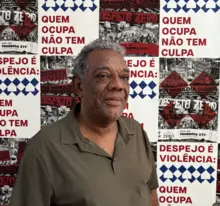
So we will listen now to the one of the most important voices from Brazil, from the struggles against evictions for the right to dignity, for the right to participation, for the right to social movements, to be engaged in urban processes, Benazito Bardosa, Dito.
Dito [3:24]
Portuguese
Em geral as ocupações, as favelas, os bairros pobres, eles são muito invisibilizados. Então, a estratégia de resistir aos despejos e aos processos de remoções, primeira coisa é tentar sair da invisibilidade. Então, usar toda a estratégia que nós pudermos de comunicação, de media alternativa, de denúncia, de carta aberta, é muito importante tentar sair da invisibilidade para construir o processo de resistência ao despejo.
A segunda coisa, articular, vamos dar assim, uma rede de apoios, porque quanto mais a ocupação ela tem apoio, fora da própria ocupação, da universidade de professores, artistas, pessoas que são reconhecidas na comunidade ou na cidade de uma forma geral.
A terceira estratégia, que a gente poderia considerar também importante, é articular uma asensoria jurídica. Então, é muito importante que tenha advogados populares, que acompanha a ocupação, articular também as defensoria públicas, para apoiar também, jurídicamente é esse processo de resistência.
A quarta possibilidade também é pressionar os governos. Então, ir para cima da prefeitura, do governo estadual, do governo federal, a quinta possibilidade também, é buscar também apoio no legislativo. Então, você tem um parlamentar, um vereador, um deputado, que possa também repercutir nesse espaço do legislativo essa situação que está acontecendo, esse conflito também.
Nessa relação e nesse trabalho da defesa das ocupações, a ação e a defesa judicial sozinha, ela não tem força nenhuma. É preciso ter uma ampla articulação e uma ampla resistência popular, para que a gente possa garantir que o despígio seja suspeço de alguma forma. E a última e a mais importante é o povo na rua.
Mobilização popular é muito importante.
English
Generally, slums, poor neighbourhoods are extremely invisible. Then, the first strategy to resist evictions, is to try to get out of invisibility. Using every communication strategy, alternative media, open letters, is very important to try to become visible, to build the process of resistance to eviction.
The second thing is to coordinate a network of support, because the more outside support the occupation has, the better, from universities, professors, artists, people who are recognised in the community or in the city in general.
The third important strategy, is to articulate a legal support system. So, it is very important to have ‘popular’ lawyers who accompany the community, also to coordinate with the public attorney, to provide legal support for this resistance process.
The fourth possibility is to pressure the governments: to reach out to the municipality, the state government, the federal government.
The fifth strategy is to seek support in the legislature, reaching out to a parliamentarian, a city councillor, who can make this conflict resonate in this legislative space.
In this relationship and in this work of defending the occupations, legal action and defence alone are not enough. It is necessary to have broad coordination and broad ‘popular’ resistance, so that we can ensure that the evictions are suspended in some way. And the last and most important strategy is the people in the streets. Grassroots mobilisation is very important...
Camila Cociña [5:05] So Dito is a key social and housing leader here in Brazil and a key piece of a national wide card coordination that is called the Zero Evictions Campaign. The Zero Evictions Campaign has been incredible in promoting achievements by passing a court rule that suspends evictions during the pandemic, but also by producing a whole system of social, institutional and legal coordination of care systems that support the resistance in settlements to promote the right to adequate housing.
Over the last year we have been working here with the Instituto Pólis here in Sao Paulo and with the União dos Movimentos por Moradia in a research project to understand the role of evidence, the role of civil society coalitions in promoting policy responses that actually prevent evictions. And in this collaborative process, we have been learning a lot. We have been learning the importance of strengthening unit and coordination among social movements, and why is that critical to achieve impact, how actually coordination, social coordination is a victory in its own term, but also the importance of generating systematic evidence, data that showcases the impacts of forced evictions and the scale of evictions that promotes actually more sustainable institutional changes.
And in this process also, we recognise that it's not only about institutional legal changes, it's about having governance structures, professionals, and a cultural change, a change of narratives, that actually can stop the criminalisation of people who are just looking to protect their right to stay in place, their right to home and their right to the city.
So Joseph, we know that SDI has been a pioneer in promoting community-led data collection, promoting social organisation. We want to understand how does the work of SDI of mapping and enumerations contribute to this worldwide anti-eviction struggles?
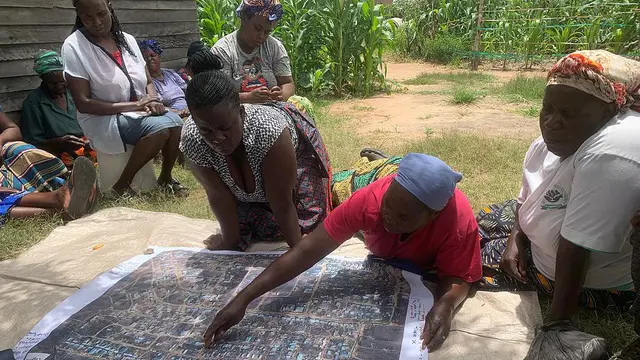
Joseph Kimani [6:48] In movements like Slum Dwellers International and Mungano Navidziji in Kenya, mapping and enumerations are not technical exercises.
They are political acts. Because in our cities, invisibility is what allows evictions to happen. We talked of the city erasing the urban majority. So if a community is not counted, not mapped, not recognised, it can be erased without consequence. So when communities produce their own data, they are saying, we are here, we matter, and we are organised.
That shifts power. It forces the state to engage, not with victims but with citizens. And this way it connects deeply with struggles here in Brazil, because like movements in Sao Paulo, like we saw, it's about turning knowledge into power and power into negotiation.
The data is important, but the real power is the collective organisation behind that power. And that's what enumerations do to organise those voices.
Camila Cociña [7:51] Thank you, Joseph, that's a great reflection. And as you just say, beyond data, there is the need for social mobilisation and of solidarity. So Lorena, you have so much experience on working with collectives around the world in different regions that mobilise solidarity and mobilise experiences to create collective power.
In your experience as a former president of the Habitat International Coalition and also in the current work of the Global Platform for the Right to the City, what do you think is the role of civil society coalitions in making that evidence visible and effective and also in sustaining political transformation in the long term?
Lorena Zarate [8:27] Yeah, I would say that it's a multi-dimensional kind of task, right? So of course, documenting and visibilising what's going on, documenting the details of the living conditions of different people and groups, the material, immaterial conditions, the individual and collective dimensions, and of course the numbers, the quantitative dimension of the reality, but also the qualitative dimensions of how many people, what kind of families, the racial backgrounds, migrants, so on and so forth, right?
But also, on the other hand, identifying the role of the different actors and the responsibility of the different actors, both in the current conditions, but also in terms of the threats, eviction threats and violence and dispossession when they occur.
The public sector is present, is allowing conditions to remain as they are, is supporting in many cases private interest in terms of displacing people and so-called new developments.
And finally, of course, mobilising different kinds of support, both inside the communities and affected communities, but also outside the community. So support from professionals, support from urban planners, support from lawyers, and so on, right? And that's really, really important at the local level, at the national level, and of course, at the international level, and bringing these cases in front of different United Nations agencies, for example, and giving those communities an international voice, an international space.
[Music]
Camila Cociña [9:58] That's brilliant Lorena and I think precisely in that last point now about the need of coalitions and networks at different scales to promote this systemic change that goes beyond the local but also through the local and with the local.
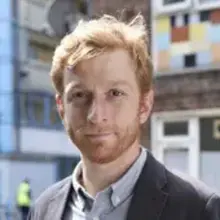
And in that in that vein, we are going to hear now from my colleague, Alexandre Frediani, who is principal researcher at IIED, and we work together in the housing justice programme at IIED and are part of the secretariat of the Hub for Housing Justice. And he will tell us a little bit about these efforts at the look at the global scale and how different coalitions and different networks are working together through the Hub for Housing Justice precisely to promote that change of narrative, that change of policy, that change of culture, and above all, that change of practice in the housing sector.
Alexandre Fredinari [10:42] The efforts of connecting struggles across places is fundamental to advance the fight against evictions. We have seen so, so many times that by making alliances internationally or acting internationally, one can actually influence decisions that are happening in their local context or national context. The Hub for Housing Justice has been a very important space through which we can, and we have been, coordinating exchanges, lessons learned across different civil society networks and research organisations.
So for us, it is critical that we continue building this solidarity across places, that we identify these key entry points, organisations and spaces that we can raise the visibility of evictions and the efforts that can be done to stop evictions, and so we can make sure that people have the right to adequate housing secured, protected, and so that we can advance housing justice.
[Music]
Camila Cociña [11:45] So to conclude this discussion, we know that these are enormous challenges with multiple layers and we don't want to simplify its complexity. But we want to conclude with a short input from you: what brings you hope in the fight against evictions. Hopefully we can think about the future, understanding what those challenges are, but also what we can do together in the promotion of more fair or just, but also more sustainable cities. A few last words from you of hope, of future, and of what is needed from us working together.
Joseph Kimani [12:15] Yeah, very important because I think we don't want to be seen like we're just saying stop evictions. We want to be heard in terms of the solutions we are bringing to the city. We want to talk about how cities should transform also the governance. The whole idea of a model where the state plans for the poor or worse against them. That's what we need to deal with. So we want a co-production with organised communities, with the support from allies like IIED and the others.
And this means securing land, investing in upgrading and recognising that informal settlements are not temporary. They are part of the city. We've seen many models even within different organisations that have put tested models that are successful. So co-production is working. I think we just need to scale it. We just need to integrate it within our governance system and make it a culture. And importantly, it means building stronger global solidarity as well.
Because whether it's Kenya or Brazil or Chile, the pattern is the same, but so is the resistance. So the future of our cities will not be decided in our boardrooms, of course, in our research laboratories, it will be shaped by organised communities on the ground.
Lorena Zarate [13:40] Yeah, totally in agreement. And I think along those same lines, I would highlight three elements. So one, I think we need changes in terms of ah policy and programmes that respect every person's right to a place to live in peace and with dignity and support the processes that we call the social production of habitat, what Joseph just called the co-production processes, right? People are building the city, mobilising their own resources even with little money but with many other kinds of resources.
The other change of course at the at the level of the normative framework and the laws and the role of justice in terms of not criminalising these groups and these efforts and respecting and understanding the right to housing that is different than the right to property.
And finally, cultural changes in and public debate in terms of removing stigma from these settlements, from these communities, from these groups. Of course, they are citizens. They citizens with full rights. And not just that. They are not just reclaiming the right to be in the city and be part of the city. They are building that city at the material level, the physicality of the cities, the housing, the neighbourhoods, but also they are part of the culture and the economy of the city. And therefore, they should be part of the decision-making processes in the city.
[Music]
Camila Cociña [15:04] Thank you so much, Lorena. Thank you so much, Joseph. This has been a very, very enlightening conversation of a very difficult topic in a very short period of time. We invite everybody to look at some of the resources from the Hub for Housing Justice, from Slum Dwellers International, from the Global Platform for the Right to the City, from Instituto Polis, but also from IIED, from our housing justice work, to find more resources about how communities are resisting evictions and are providing solutions to live a dignified life.
And we invite everybody to grow empathy, to grow solidarity towards people and communities who are suffering systemic violence, and we invite everybody to look to protect something that we all should get for granted, which is just a home and a community.
Thank you very much.
[Music]
Host [16:26] If you’d like to send us your thoughts and feedback on the discussion, email us at [email protected]. That’s [email protected].
You can find out more information about this podcast and our guests, and learn more about IIED’s research around the issues covered in today’s episode, at iied.org/podcast, where you can also listen to previous episodes and browse the rest of our website for more information about IIED and our work.
[Music]

 Soundcloud
 TuneIn
 Spotify
 iTunes