Five years on: how Brazil’s Zero Eviction Campaign is driving policy change for housing justice
A seminar marking five years of a national campaign in Brazil to end forced eviction was a timely moment for IIED and partners to reflect on how civil society coalitions are promoting policies for secure, fairer and more sustainable housing.



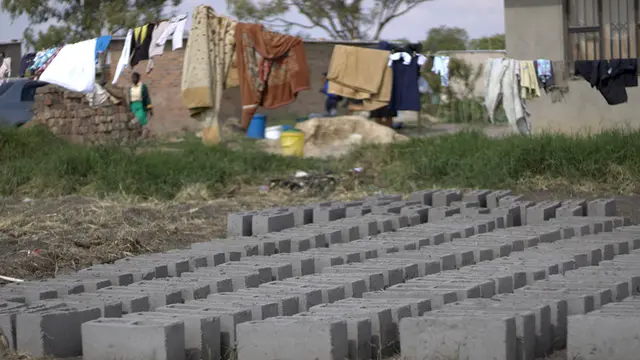
Climate change has had a devastating impact on local communities in Brazil living in informal settlements, further exacerbated by the COVID-19 pandemic (Photo: International Monetary Fund, via Flickr, CC BY-NC-ND 2.0)
Brazil was among the countries worst affected by the COVID-19 pandemic, experiencing catastrophic loss of life, and social and economic devastation. And the crisis magnified deep inequalities, including in relation to housing; in Brazil, millions live in insecure housing conditions and under the constant threat of eviction. For these people there was bitter irony in the nationwide instruction to ‘stay at home’.
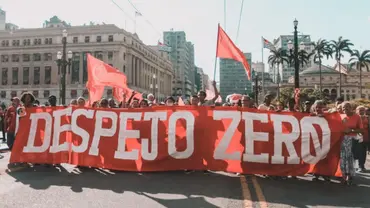
In June 2020, grassroots and social movements from across urban and rural areas, housing sector researchers and specialists and lawyers and rights-based organisations formed the Zero Evictions Campaign.
Their mission was to fight against forced eviction and ensure that while battling the tragic losses from the pandemic, no one should face being forced from their homes.
Five years on from the launch, campaign representatives gathered at a national seminar in Brasilia to celebrate victories, discuss challenges, analyse the current political landscape and develop strategies for future action. National authorities and ministers, and members of executive, legislative and judiciary powers also joined to share progress on mechanisms designed to resolve land conflicts.
The campaign’s report marking its fifth year (Portuguese only) shared sobering findings: it estimates that over two million people are affected by evictions in Brazil, of which almost 1.4 million are Black people. These are current figures, and their message is stark: while the threat of COVID-19 may have passed, the threat of forced eviction is relentless.
Understanding how change happens
A research project led by IIED alongside Instituto Pólis and União dos Movimentos por Moradia – São Paulo is analysing how the Zero Evictions Campaign has mobilised evidence to bring about change.
As part of the seminar, the project team ran a workshop with campaign members representing social movements from most states across Brazil. We identified key moments from the last five years including the campaign’s biggest victories and moments of impact. We then analysed the conditions that made those moments possible.
Together we built understanding of how civil society networks have collectively mobilised grassroots evidence to create impactful advocacy strategies towards housing justice.
Learning from the Zero Evictions Campaign
Below we share reflections about how the Zero Evictions Campaign has helped drive meaningful policy change, and the conditions, actors, strategies and tools used by civil society coalitions to generate evidence to support this drive.
1. Strengthening unity and coordination among social movements is critical to achieving impact; it is also a victory in its own terms
Setting up the campaign involved agreeing on common objectives and strategies across a diverse coalition of actors. This was achieved in a context of extreme political adversity, during an oppressive far-right government and a global health crisis. Strong coordination between social movements supported impact at the national level, while also reducing vulnerabilities at the local level.
This coalition has nurtured an infrastructure of care and protection among social movements and grassroots that has proven vital in challenging rights violations, creating rapid response and support networks, and defending social leaders against violence.
2. Generating systematic evidence that showcases the impact of forced evictions – disaggregated by gender, race and region – has been crucial to promote and sustain institutional changes
The campaign established 'ways of doing’ that included mapping and estimating the magnitude of eviction threats. Producing this evidence has only been possible by combining methods and tactics that have allowed direct involvement, documenting and ownership by the affected populations.
The coalition’s capacity to share this evidence in mainstream media and decision-making spaces has been critical for changing narratives, providing a human face to land and property conflicts and contesting the criminalisation of social movements.
This is particularly relevant in the context of extreme violence towards housing movements and people who live in favelas or other forms of occupied land.
3. Legal frameworks that prevent forced evictions are – alone − not enough; they must be supported by the right governance structures, and professionals who understand the impacts of eviction on a human level
The campaign has claimed some major victories. These included a ruling by the supreme federal court that made it unconstitutional to evict people during a health crisis, such as COVID-19. Following this ruling (known as ADPF-828), there was a mandate to establish committees for land conflict resolution that provide a space for stakeholders to come together to reach a consensus on housing and land conflicts.
The establishment of these committees, although with uneven progress and results, has been fundamental in opening spaces for resolving eviction cases. They illustrate that implementing any changes to the law requires appropriate governance structures.
Executing legal mandates also calls for legal professionals to truly understand the brutal consequences of forced eviction for the people experiencing them. ‘Technical visits’ to communities that are under threat can be a powerful tool to ensure that those making decisions are conscious of the realities of those impacted and understand the damaging effects of eviction for people’s wellbeing.
4. Meaningful change in the struggle against evictions requires strategies for reducing violence, and long-term promotion of the rights to adequate housing and land
This calls for evidence and advocacy to promote permanent solutions that go beyond temporary resistance against evictions. As part of the campaign, ‘popular lawyers’ – lawyers working for social movements – produced tools such as the ‘legal grammar’ guide (Portuguese only, PDF) which not only provides legal arguments to challenge evictions, but also lays out political and juridical tools to advance the right to adequate housing in the long term.
Likewise, movements across Brazil have shown for decades the power of collective forms of self-managed housing production, through strategies that range from recovering centrally vacant buildings, constructing new houses supported by federal and local schemes, promoting special area plans and upgrading informal settlements.
By continuously promoting diverse forms of guaranteeing the right to adequate housing and remaining in place, social movements address the roots of housing injustices and evictions.
As we press on with our analysis of the Zero Evictions Campaign and the factors contributing to its impact, we will draw wider lessons from these initial ideas around how grassroots coalitions can mobilise knowledge and bring about meaningful institutional changes in challenging political and social contexts.
As violence towards social movements intensifies, and democratic spaces continue to shrink, understanding the windows of opportunities for collective work is more crucial than ever.
The seminar was organised by 15 organisations, including Habitat para a Humanidade Brasil, Instituto Pólis, Terra de Direitos, União Nacional por Moradia Popular (UNMP), Central de Movimentos Populares (CMP), Movimento de Trabalhadoras e Trabalhadores Por Direitos (MTD), Movimento dos(as) Trabalhadores(as) Sem-Teto (MTST), Confederação Nacional das Associações de Moradores (CONAM), Movimento Nacional de Luta pela Moradia (MNLM), Movimento de Luta nos Bairros, Vilas e Favelas (MLB), Movimento dos Trabalhadores Rurais Sem Terra (MST), Luta Popular, Centro Popular de Direitos Humanos (CPDH), Núcleo de Assessoria Jurídica Universitária Popular Luiza Mahin (NAJUIP) and Rede Nacional de Advogados e Advogadas Populares (RENAP). It was supported by Misereor, IIED and The British Academy.