IIED at the Global Land Forum 2025
The Global Land Forum was held from 16-19 June in Bogotá, Colombia. This year's conference was centred around the themes of agrarian reform; transformation of agri-food systems; and climate justice, energy transition and extractivism

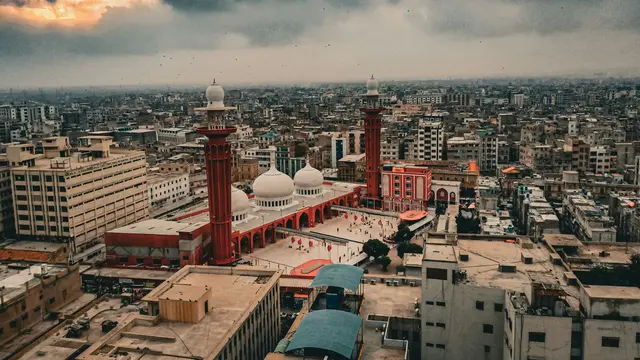
Downtown of Bogota (Photo: Flavia Carpio, via Unsplash)
 During the Global Land Forum, IIED colleagues and partners led discussions and participated in panels focused on shifting power to local communities.
IIED aimed to show how through engaging with different levels of government and leveraging laws and policies to change practices, local communities and marginalised groups can be at the forefront of decisions that affect them. We also championed bold, green economic models to drive a shift to renewable energy, while respecting the rights of Indigenous Peoples.
What is the Global Land Forum?
The Global Land Forum has convened every 2-3 years since 2003. It is the main conference of the International Land Coalition (ILC), an independent global alliance of people’s organisations, civil society and intergovernmental organisations working together to put people at the centre of land governance.
This year's conference in Colombia was focused on the themes of agrarian reform; transformation of agri-food systems; and climate justice, energy transition and extractivism. In Colombia, the intersection between the environment and food crises, land and territorial rights, peacebuilding and the energy transition is at the core of many organisations’ advocacy and rights work.
Key events
All times are COT (BST-6)
Tuesday 17 June
Africa Land Forum: Land, power & prosperity: promoting secure tenure rights for inclusive land governance, climate resilience and conflict resolution
Hosted by: IIED and ILC
The demand for inclusive land governance and secure land tenure rights is increasingly critical, illustrated by rising conflicts caused by resource scarcity, pressures from competition over resources, access and control, and climate change.
The Africa Land Forum (ALF) explored the various expressions of land conflicts and how power dynamics have been a contributing factor, affecting various people’s organisations supported by ILC. The forum also put a case for secure tenure rights and inclusive land governance as a rallying call not to leave anyone behind.
This was a space for ILC members and partners to learn what works, share best practices, and network, find solutions and forge strategic alliances towards a people-centred land governance in the region. ALF brought together ILC members from Africa, and women, youth, Indigenous Peoples and local communities, pastoralists and family farmers representing their constituency organisations, likeminded partners, and donors.
The forum created opportunities to learn from and highlighted the importance of land rights in addressing global challenges such as land conflict, climate change, and biodiversity crises while taking stock of the efforts made so far made and strategising next steps.
Further reading: Land, climate and justice: grassroots women at the Global Land Forum
Wednesday 18 June
LAB G: The role of traditional governance systems: practical approaches to ensuring Indigenous People and local communities are central actors in a just transition
Hosted by: IIED
Speakers include: Rose Mosi, IIED; Jesinta Kunda, Zambia Land Alliance; Imam Hanafi, JKPP, Indonesia; Sonia Bhattacharyya, Swadhina, India; Patrick Musole, Zambia Land Alliance (moderator)
Secure land tenure systems underpin the energy transition, from green investments, such as solar or wind farms and carbon investments, to the extraction of minerals. Energy transition-related investments often occur at grassroot level. The land footprint of these investment is large and often affects customary or communally held land, impacting Indigenous Peoples and local communities disproportionately.
This session unpacked the fundamental role secure land tenure plays in facilitating and securing a truly just transition. Land tenure rights can encourage a more equitable distribution of risks and benefits, the realisation of other key rights, and social legitimacy, among others.
This session shared practical and strategic approaches to how local – Indigenous, traditional and subnational – governance structures can be fully engaged in transition processes, thereby strengthening vertical and horizontal coordination.
Further reading: How Ekiti State is advancing transition-ready investment decision making | Recognising women’s land rights in Togo: a glimmer of hope
Contact
Anne Schulthess ([email protected]), marketing manager, IIED's Communications Group