Karachi’s housing crisis is about inequality, not just infrastructure
Focusing on his home city of Karachi where injustice and inequality are compounded by a pervasive anti-poor bias while those in informal settlements seek the ultimate security of ‘bricks and mortar’, Arif Hasan reflects on 50 years of working on urban issues.


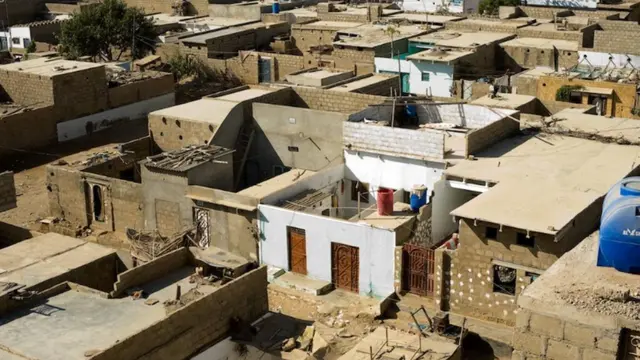
Aerial view of neighbourhoods in Karachi in 2024 (Photo: Muhammad Amir, via Unsplash)
Over the last 50-plus years, I have sat through numerous presentations from government, NGOs, and masters and PhD student development projects. In addition, international financial institutions (IFIs), such as the World Bank and the Asian Development Bank, have sought my assistance. I have sat on various UN committees on physical and social development and been a consultant to them. As the chief adviser and the chairperson of the Orangi Pilot Project (OPP) and the Urban Resource Centre (URC), I have challenged the structure of thinking of many such projects and documented my concerns regularly.
The most important thing I have learned in the process is that most of these projects have a very strong anti-poor bias and are primarily concerned with bricks and mortar. As far as academia is concerned, almost all teachers and supervisors bring their class prejudices with them. And the poor are portrayed as helpless.
Aspects of inequality
- Building standards for poor settlements are much lower, contractors are badly supervised and corruption is higher in percentage terms. Much of the roads, sewage trunks and water pipes constructed for them collapse in a short period of time and, in the absence of well-planned drainage, low-income settlements are often completely flooded.
- Access to parks and playgrounds: the main municipal parks in Karachi are eight to ten kilometres away from most low-income settlements. Meanwhile public areas in low-income settlements have been encroached upon or used as garbage dumps and sorting yards – further degrading the neighbourhood.
- The poor are clear in their view that the major cause of their poverty is the absence of a roof that they own. A roof gives dignity, the possibility of upward mobility, better proposals for their daughters’ marriages, the possibility of improving their home incrementally as and when they have money, and their children – especially girls – receiving an education because of the savings made on rent leading to better jobs for the women.
Eviction and resettlement
In resettlement projects, one of the main problems is acquiring land. This is done mostly by removing existing settlements and relocating them, on land identified and provided by the state.
The new settlements, which were previously in Karachi city centre, are relocated to the city’s fringes. This impoverishes the people and destroys community ties. It adds transport costs to work and back, deprives women of jobs because of the distances and costs involved from home to work and back, and it puts households in debt (since the poor pay monthly for their groceries, which was possible previously because of community links). Poor households also borrow from each other in times of need, which becomes difficult with new neighbours.
A marginal existence
There are other issues with land as well. Government agencies claim that they have no land for development for the poor. Yet they have no problem handing out large land parcels to formal sector developers. The state collects large revenues from the sale and or development of these land parcels. The poor can only live on peripheral or environmentally degraded land that no one else wants.
The market, realising the demand for cheap, low-income housing near the city centre, found ways to cater to this demand. Old downtown katchi abadis (informal settlements) are being converted into multi-storey apartments, often four to seven floors high. They have no lifts and very narrow streets.
When redevelopment began in the late 1980s and early 1990s, these blocks provided cheap flats for the lower-middle class to purchase with cash outright, by instalments or with pagrri (goodwill money). But today, they are not affordable, even for the better-off poor. The result is that an increasing number of flat owners are in debt, from purchasing and continuing to live in these high rises.
The legality challenge
These developments are not considered legal by state agencies, as they follow no by-laws and zoning regulations – simply because such regulations did not exist when they were built. Their legality is decided on the basis of by-laws which are applied to formally constructed houses. This is very unfair because these houses have no lease and they have never applied for a building permit – again, this concept did not exist previously.
In addition, government surveys of informal settlements for rehabilitation purposes are also faulty. These surveys usually count houses as they appear on a Google map even though many households often live on one plot of land or in one house. They count buildings – not people.
Residents live in a constant fear of eviction as a result of these injustices. But actors in the informal sector have devised documents of sale and possession among themselves to try and give residents an element of security.
The compensation challenge
Compensation given as money is usually more equitable, as the applicant can use it at their convenience. Yet it has to be sufficient to rent accommodation or purchase a plot. It never is, because the needs of the poor are always underestimated and because of the bias against them – in the name of transparency.
The manner in which money is given is complex and challenging. The applicant is viewed with suspicion by officialdom. So something that could take a few hours gets lost in bureaucratic complexity, with many steps to take and many days spent in taking them. Because of this applicants often lose day wages or have problems with their employers.
Cheap ‘accommodation’
A major problem is encountered by senior residents, particularly those who are disabled, who cannot afford to purchase or rent a home. As a result many of them end up living on the street or under bridges.
At night, many parks are full of elderly people but, as government attempts to prevent them sleeping there, so the number on the streets, under bridges or on the beach increases. The number of environmental/climate change refugees is also increasing rapidly, adding to the housing crisis.
So-called ‘street hotels’ on pavements that rent out a bed and offer breakfast along with some basic toilet facilities (often provided by the neighbouring mosque) is also increasing. These ‘hotels’ are adjacent to transport terminals, where drinking water is publicly available.
Although most homes possess a smartphone and have access to the internet and artificial intelligence, physical movement outside the home may be unsafe. There are often no pavements or they are blocked by trees or advertisement signage. As a result pedestrians are forced to use roadsides, making them vulnerable to road traffic accidents – especially when children and senior citizens need to make journeys.
There is much more that I have observed and written about but I can safely conclude that, unless these and many other factors are taken into account when trying to solve the housing and environmental issues related to poor people, we will only be delivering bad bricks and mortar that will not improve lives.
- A longer version of Arif Hasan’s 50-year reflections can be found in Dawn.
About the author