CBA20: Local solutions inspiring global action
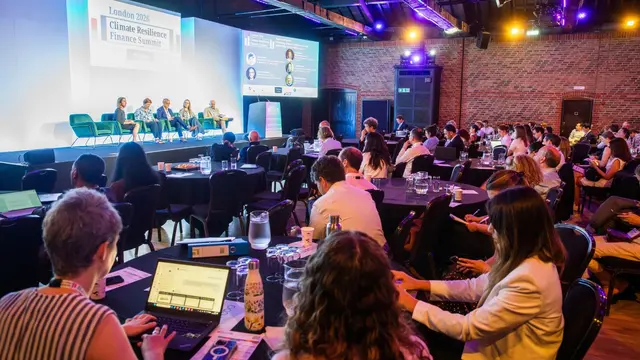
CBA20 brought together practitioners, grassroots representatives, local and national government planners, policymakers, researchers and donors working at all levels and scales to discuss how we can drive ambition for a climate-resilient future.

Informal settlement in Manila, Philippines (Photo: johnson li via Unsplash)
The 20th International Conference on Community-Based Adaptation to Climate Change (CBA20) took place from 11-14 May 2026 in Manila, Philippines.
The CBA conference series aims to bring together a community of practitioners that is collectively seeking to enable community-driven climate action.
The CBA20 agenda
CBA20 offered participants the chance to engage with three core themes. These guided the plenaries and parallel sessions, as well as other initiatives running in parallel to the main conference, such as accountability roundtables, project/community visits, a visual storytelling exhibit and poster competition.
The core themes were:
- Achieving just and equitable adaptation in urban areas, with a particular focus on building the climate resilience of informal settlement communities
- Scaling local level health investments as a critical adaptation response in the context of rising temperatures and escalating threats, and
- Knowledge nexus – combining local, traditional and Indigenous Peoples knowledge systems with climate science to drive adaptation decision-making.
The cross-cutting themes of finance, gender, decolonisation and equity underpinned all conference sessions.
The first two days of the conference featured parallel sessions under each theme while the third day comprised a series of community and project visits in the Metro Manila area, enabling participants to learn about locally led adaptation initiatives and share their knowledge. The final day brought everything together in cross-cutting sessions and concluded with a reflection on CBA over the past 20 years.
Click on the headings below for more information on the different conference sessions and activities.
Parallel sessions at CBA20 included three different formats:
- Lessons: these sessions were designed to share lessons (from successes and failures) in the operationalisation of locally-led climate action related to the conference themes
- Innovations: these sessions explored new or innovative applications of locally-led approaches to climate action across different contexts related to the conference themes
- Discussions: these curated sessions brought together people with different perspectives on critical issues related to the conference themes, providing a space for discussion and debate
All sessions were highly interactive. While ‘lessons’ and ‘innovations’ sessions included presentations from each speaker, hosts ensured that presentations were short, and the emphasis was on interaction and engagement with participants.
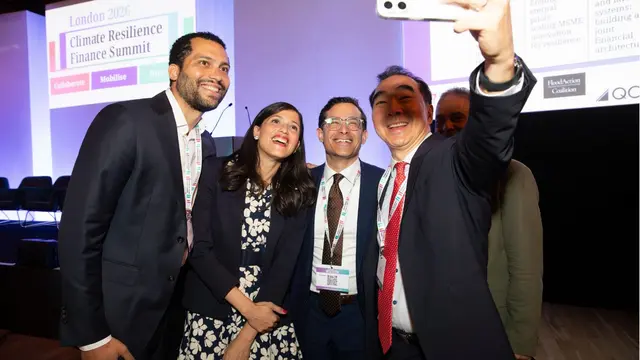
This blog reports back on one such session and argues that urban climate finance must go beyond mobilising more money to offer a wider range of financial tools and make funding genuinely accessible to vulnerable communities.
New for CBA20, accountability roundtables provided a space for participants to engage with critical issues around ethical partnership and monitoring processes.
These roundtables were convened to share feedback on specific investments and projects from the perspective of stakeholders right along the climate finance delivery chain.
The CBA20 poster competition was an opportunity for participants to showcase work relevant to the conference themes in a fun, visual and creative way.
Posters were displayed during the welcome reception and were judged by a team of experts, with a winner under each of the conference themes and a popular vote winner. See the results below.
The storytelling exhibit featured a number of highly nuanced, interconnected and contextual stories of impact, in short film format, produced by CBA participants and partners.
Community field visits in the Metro Manila area were available for interested participants.
What makes the CBA conference different?
It's the only global conference focused on practitioners
CBA prioritises lived experience, such as evidence and perspectives of those working directly to deliver community-based climate adaptation: communities, researchers and local and national government representatives. Practitioners make the programme, working together to articulate their knowledge, learning and experiences.
The conference fosters a safe environment, creating open space for sharing experiences, perspectives and uncomfortable discussions across disciplines, knowledge bases and local contexts.
It prioritises listening to and learning with participants living and working at the frontline of climate change impacts and adaptation action over ‘experts’ and ‘senior officials’. Everyone is encouraged to play an active role in the design and delivery of sessions, not just to attend.
[the] CBA platform helps us validate our issues and to share our thoughts [and] the way we are working, to get the confidence and inspiration. We didn’t know before [the conference] that [the way we work] is unique and meaningful
– local NGO leader
CBA creates spaces where local knowledge and lived experience is sought after and valued, through which participants gain confidence and strengthen their capacity.
It creates evidence that informs action
Participants from donors and large adaptation programmes to local NGOs come to CBA to find out directly from the practitioners what works and what doesn’t.
Vincent Gainey, climate resilience advisor in the energy, climate and environment directorate of the UK’s Foreign, Commonwealth, and Development Office (FCDO) began attending CBA “to learn about the groundswell from CBA [and to] learn from CBOs”.
He noted that attending CBA14, 15 and 16 helped him to formulate the arguments to convince the FCDO minister to endorse the LLA principles, the first government to do so. The UK has been funding the LDC Initiative for Effective Adaptation and Resilience (LIFE-AR) since 2020 and made LLA a key component of the UK COP26 presidency in 2021.
At CBA13, Euster Kibona from Tanzania Forum CC, learned from a participant in Zimbabwe how to work with men in communities to open space for women to participate in adaptation activities. Forum CC then worked with municipal staff in a project to produce energy pellets from market waste. Working with the municipality mitigated the cultural issues and staff were able to work with both men and women.
It was great to take part in such an exciting and inspiring convergence of key actors of LLA in my country, strengthening the recognition of local culture and knowledge to be a key source of solutions to overcome the huge challenges we are facing as a global community.
– Marcio Halla, Forest Trends
It puts community at the centre
CBA is the only adaptation conference that puts the lived experiences and knowledge of local people at the centre. It creates a space that enables the communities most vulnerable to climate impacts to discuss their priorities for adaptation at local level, as well as to share their approaches and shape decisions about the future of adaptation.
The conference is a space to explore the importance and urgency of locally led adaptation and other burning issues. CBA ensures that the perspectives of people on the frontline of climate impacts are heard at the highest levels through knowledge sharing, capturing key messages from the conference sessions and influencing global processes.
Participation, networking and interaction like no other
CBA provides an opportunity to build South-South networks, strengthen relationships and connect with like-minded practitioners and experts. Interactive sessions, skill-shares, dedicated meeting and networking spaces and a collegiate atmosphere brings participants together on an equal footing, regardless of background or formal level of education.
Participants find a sense of togetherness, with a wealth of knowledge and networks to support their efforts.
This was the first in-person CBA I was attending. I came to support the skillshares and thought I was coming to "give". I received so much learning, made some important connections and even developed a business proposal in just one afternoon! What an amazing conference it has been.
– Jenninah Kabiswa
Poster competition winners
One of the most vibrant parts of the conference, the poster exhibition created space for participants to showcase adaptation work in creative, visual and accessible ways and to highlight locally led solutions from across the world.
CBA20's winning posters reflected the breadth of conversations happening throughout the conference, from resilience and tenure security to Indigenous knowledge and participatory planning. The winners were:
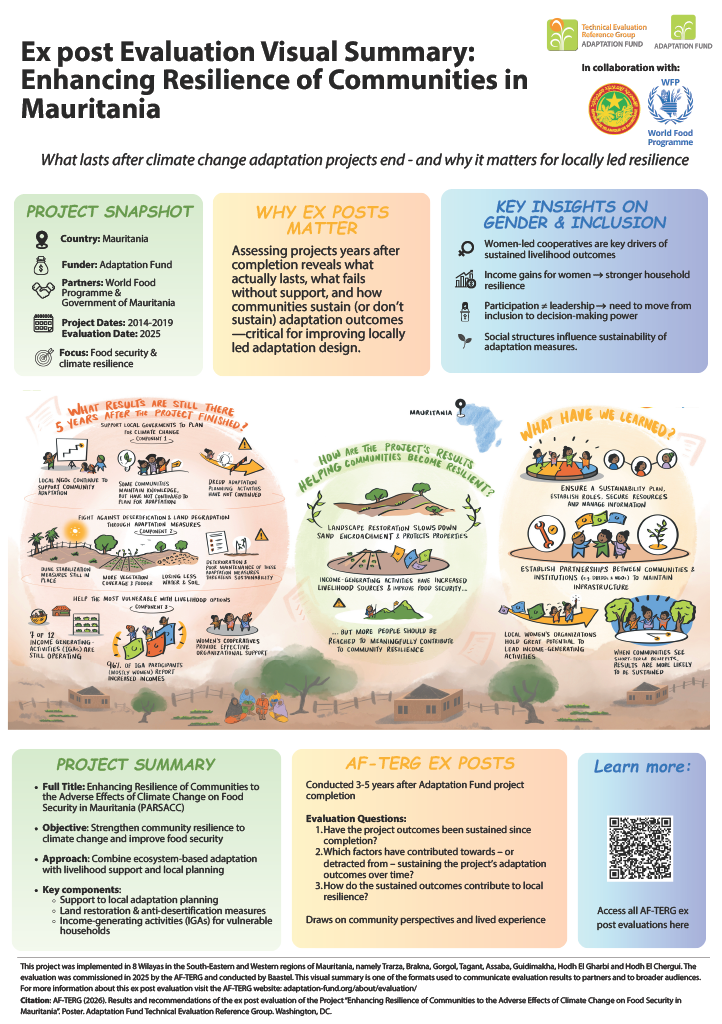
- Adaptation Fund: 'Enhancing resilience of communities in Mauritania' – demonstrates not just what adaptation projects do, but how they shape lives, livelihoods and resilience over time, with key insights on gender and inclusion from the project.
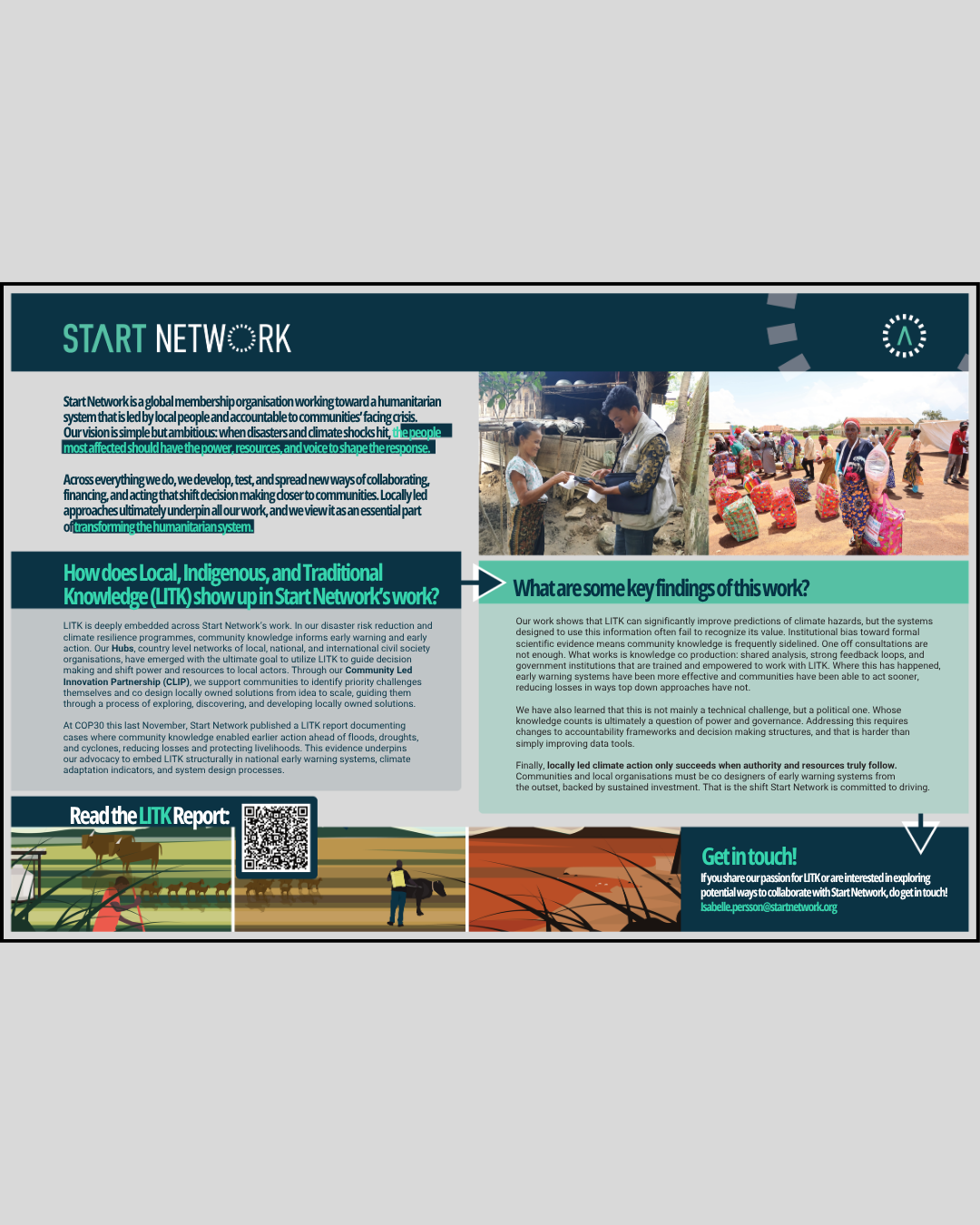
- Start Network: 'How does local, Indigenous and traditional knowledge show up in Start Network’s work?' – highlights the complex role of local, Indigenous and traditional knowledge in adaptation and key findings of the network's work, including how institutional bias toward formal scientific evidence means community knowledge is frequently sidelined.
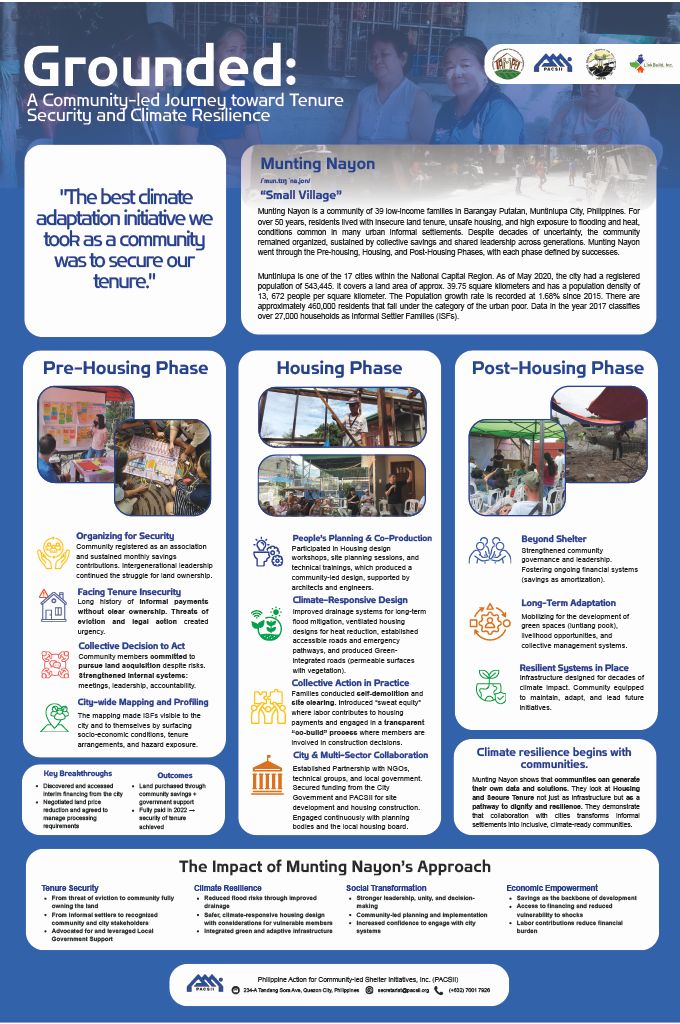
- Philippine Action for Community-Led Shelter Initiatives: 'Grounded: a community-led journey toward tenure security and climate resilience' – presents Munting Nayon, a community of 39 low-income families celebrated as a strong example of practical, community-led adaptation built on collective investment and long-term sustainability.
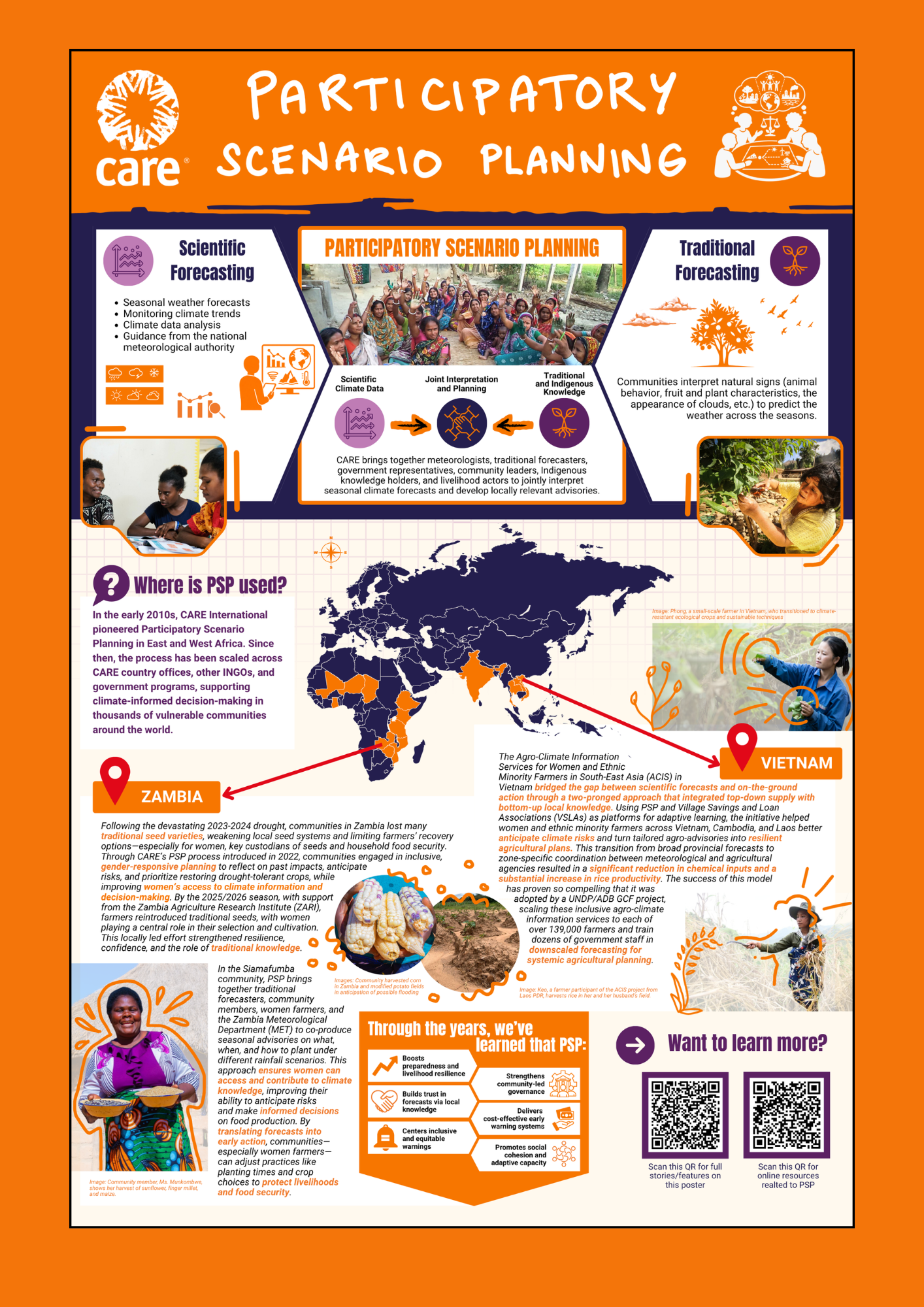
- CARE International: 'Participatory scenario planning (PSP)' – showcases what PSP is, where it is used and highlights the work that CARE has been doing since the early 2010s to pioneer this method in East and West Africa and beyond, including examples from Zambia and Viet nam.
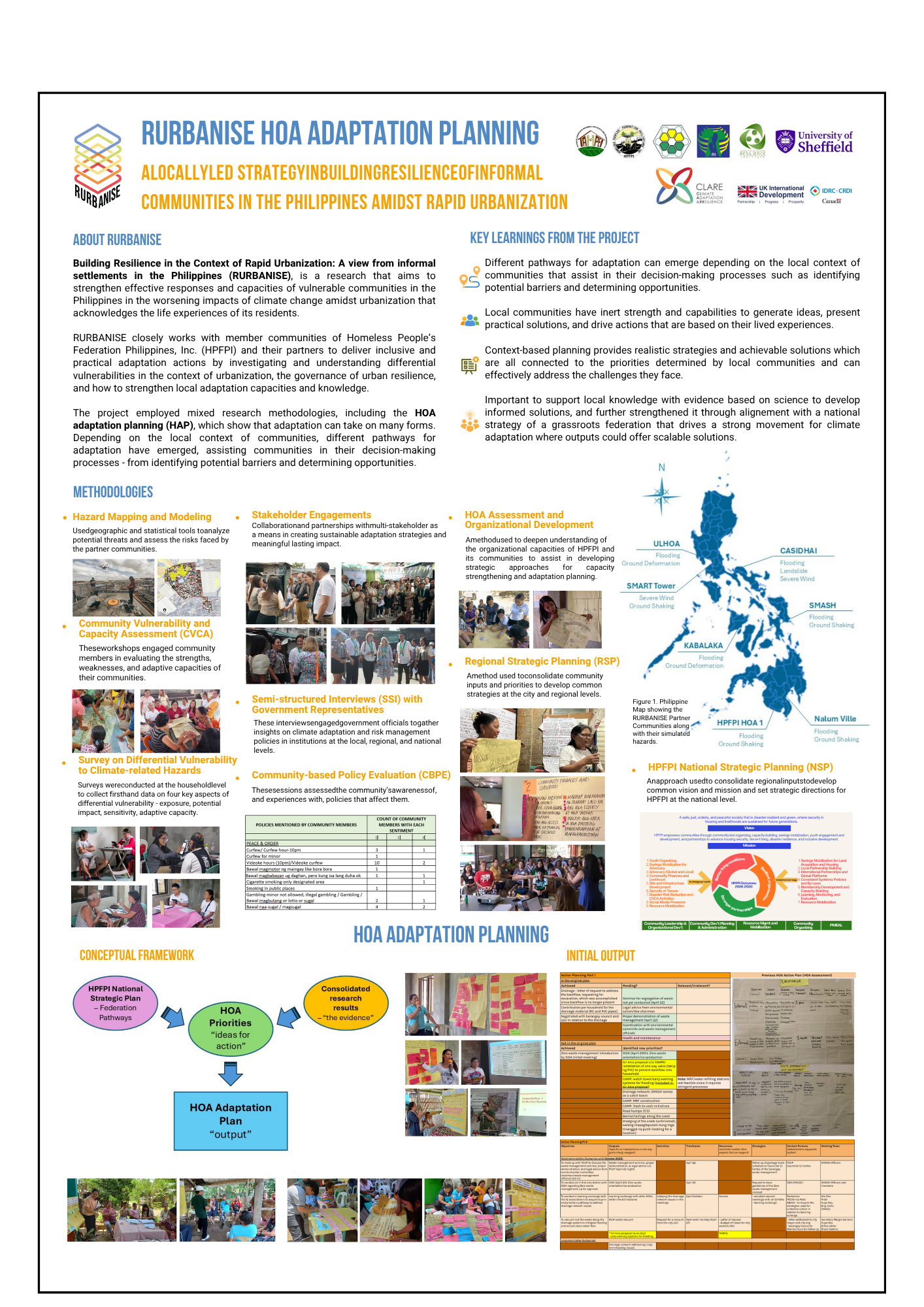
- TAMPEI Philippines: 'Rurbanise HOA adaptation planning' – highlighting locally-led resilience planning for informal communities in the Philippines amid rapid urbanisation.
Your voice expands and grows beyond the conference
CBA conferences are attended by delegates from a wide range of institutions from outside our community of practice, such as the UNFCCC, Least Developed Countries (LDC) Group, climate finance funders and LDC government ministries, which take our messages with them.
Representatives from global initiatives that are shaping adaptation policy and practice on an international level join CBA conferences to understand practitioner perspectives more deeply; the conference has been a catalyst for initiatives such as the LDC Group’s 2050 vision and the LLA principles, endorsed by over 130 governments and institutions.
CBA’s outreach spans continents and scales with messages taken to high-level platforms and global summits including the UN Secretary-General's Summit, the biodiversity and climate Conferences of the Parties and many others – driving real grassroots-led change.
Success stories captured in the CBA evaluation report range from grassroots-led agricultural centres in Kenya to Catalytic Grant Awards that connected participants across the globe, illustrating the tangible outcomes and collaborative spirit fostered by the CBA conferences.
Contact and updates
If you have any questions about the conference, please email [email protected].
Sign up to receive updates on CBA and the latest news on CBA.
About the organisers
CBA20 was co-hosted by the International Institute for Environment and Development (IIED), Manila Observatory and Philippine Action for Community-Led Shelter Initiatives, Inc (PACSII), with funding from Adaptation Fund, Adaptation Research Alliance, Asian Development Bank, Climate Justice Resilience Fund (CJRF), International Development Research Centre (IDRC), Mercy Corps, Ministry of Foreign Affairs of the Netherlands, Zurich Climate Resilience Alliance and with UK International Development from the UK government. With support from the International Federation of Red Cross and Red Crescent Societies (IFRC), the Philippine Red Cross and TEBTEBBA (Indigenous Peoples’ International Centre for Policy Research and Education).
If you’d like to become a CBA partner, please get in touch with Katherine Shepherd at IIED via [email protected].
Host partners


Funding partners
Contributing partners