Introduction to community-based adaptation to climate change
Communities at the frontline of climate change impacts such as floods, droughts and other extreme weather events have critical knowledge on how best to cope, and what is needed to enable this climate adaptation. For decades, IIED has worked to highlight and share knowledge developed by local communities, academics and project managers, and helps host a world-leading annual community-based adaptation conference that brings together local adaptation practitioners from around the world.

Floating fish and vegetable farming in Bangladesh as part of efforts to reduce vulnerability to extreme weather events (Photo: UNDP Bangladesh, via Flickr, CC BY-NC 2.0)
What is community-based adaptation?
Community-based adaptation (CBA) is a participatory approach that puts local people front and centre in climate and development action.
Key features of CBA include the involvement of communities in decision-making processes to ensure adaptation strategies reflect their needs and priorities, combining local/traditional knowledge with scientific data to develop comprehensive adaptation solutions, and strengthening communities’ ability to anticipate, plan for and respond to climate-related challenges.
For decades, IIED has been instrumental in promoting CBA through action research, capacity building and leading the organisation of the annual International Conference on Community-based Adaptation that facilitates knowledge sharing among practitioners, policymakers, researchers, donors and, increasingly, the private sector.
What is locally led adaptation?
In recent years, CBA has evolved and broadened beyond the scope of adaptation action to have a greater focus on society.
Locally led adaptation (LLA) places greater emphasis on climate justice to focus on the systemic drivers of inequality that restrict communities’ access to resources, power and decision making. LLA has a greater focus on systemic and policy-level changes at national or international levels and explicitly addresses power imbalances and structural inequalities.
Building on many years of research and work on climate adaptation projects supporting local climate resilience, a partnership of peers - including IIED – developed eight principles of LLA that recognise the importance of putting communities front and centre in adaptation solutions.
Already endorsed by more than 130 governments, development agencies, intermediaries, research institutes and local civil society organisations, the principles are gaining strong traction globally.
The community-based adaptation conference
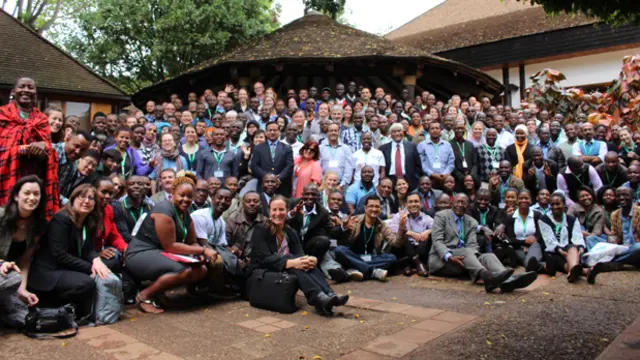
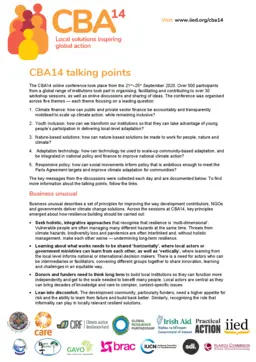
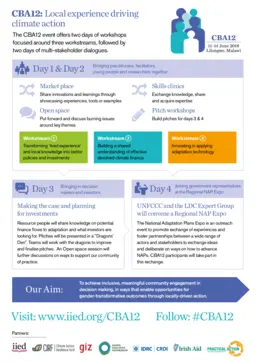
Launched in 2005, the annual community-based adaptation conference is the only global adaptation conference that brings together local practitioners to share their lived experiences and knowledge of adaptation.
True to the principles of locally led and community-based adaptation, CBA conferences recognise the importance of giving agency and voice to the most climate-vulnerable communities to discuss their adaptation priorities at the local level.
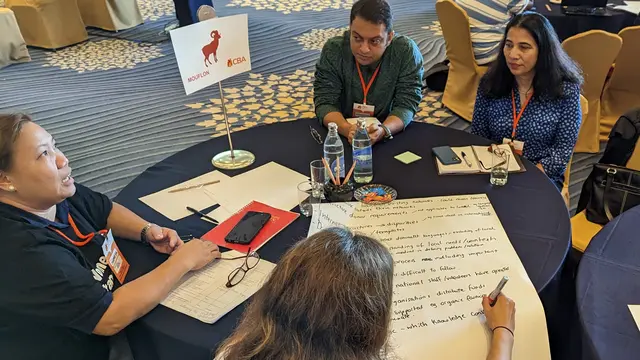
CBA events are a space for learning and sharing experiences. With a focus on acquiring new skills and connecting with peers, the conference offers participants room for discussion, debate, peer-to-peer ‘skill-shares’ and knowledge exchange, through an innovative, dynamic and interactive space, enabling participants to promote climate action.
The CBA conferences aim to:
- Share and consolidate the latest developments in CBA best practice, policy and theory across different sectors and countries
- Strengthen existing networks of practitioners, policymakers, planners and donors working on CBA at all levels, and
- Enhance the capacity of practitioners, governments and donors to help those most vulnerable to climate change.
The CBA community
Over the years a community of practice has emerged from the CBA conferences, which are attended by adaptation practitioners as well as institutions striving to promote LLA.
These include representatives of governments from the Least Developed Countries (LDC) Group, climate finance funders and LDC government ministries, who take key messages from the conference with them to share lessons learned and amplify the message of locally led adaptation within their networks.
In 2010, the Global Initiative on Community-Based Adaptation was launched to support CBA collaboration and was later taken over by the WeAdapt website.
There is also an active CBA LinkedIn group, managed by IIED, where the CBA community shares knowledge outside of the annual conferences, enabling continued discussion throughout the year.
Two decades of learning
For 20 years the CBA conference series has brought local adaptation practitioners and supporters together to use their own knowledge and decision-making processes to take action on climate change.
In 2023, an evaluation illustrated how the approach led by IIED and partners had had an overwhelmingly positive impact on the adaptation landscape. The findings demonstrated how CBA had shaped international processes, created practical tools for local action, and built bridges between local communities and the rest of the world.
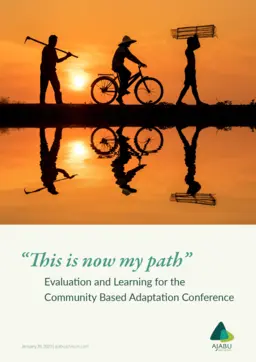
The CBA conference is now part of the locally led adaptation learning journey, along with the global Gobeshona conference, and Development and Climate Days (D&C Days), which takes place at the UNFCCC climate change conferences. These events are key milestones in the learning journey for sharing knowledge and promoting mutual accountability around commitments made on the locally led adaptation principles.
The events and the wider learning journey brings the network together to:
- Re-imagine solutions by challenging assumptions, and sharing and collaborating on good practices in LLA
- Enable transformative outcomes through community-driven climate action, and
- Facilitate a space for innovation and interactivity to drive global ambition for a climate-resilient future.
News and updates
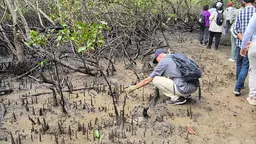
Publications
Additional resources
Ecosystem- and community-based adaptation: learning from community-based natural resource management (2015), Hannah Reid, Taylor and Francis Climate and Development Vol 8, 2016, Iss 1