Coping with extreme heat and menstruation in Mathare informal settlement, Kenya
As climate change brings rising temperatures to the world's cities, people living in informal settlements face the worst heat extremes, and for women, the heat brings a range of gender-based pressures. Michelle Koyaro Matengo and Marcelle Mardon look at how heat exposure affects women and their menstrual health in the informal settlement of Mathare Valley in Nairobi.

This aerial view of Mathare shows thousands of iron roofs packed closely together, with few green spaces, making the entire settlement a large heat trap (Photo: copyright KYCTV Kenya)
Mathare is one of the world's largest informal settlements, with 245,468 people living on low incomes in poor, overcrowded housing with limited access to affordable water and sanitation. In this situation, women's ability to protect themselves from heat and to manage their monthly menstruation with dignity is severely constrained, making the gendered impacts of heat a pressing issue.
Methodology
This case study was co-produced by Shack Dwellers International (SDI) Kenya and Muungano wa Wanavijiji, the national federation of slum dwellers and the urban poor, together with women in Mathare. It forms part of a broader study aimed at advancing gender-responsive climate data collection and knowledge and evidence-generation, and its ownership by grassroots movements.
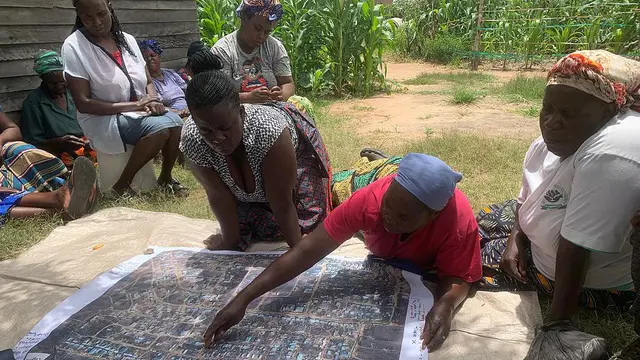
Our literature review found limited research on the effects of heat on reproductive or menstrual health, with most discussion confined to water and sanitation issues. For this case study, researchers organised a women-only focus group discussion and conducted three in-depth interviews with women in Mathare.
Background
The settlement of Mathare lies in a valley along the Mathare River. Homes are closely packed and high temperatures are the second most common climatic hazard, according to a 2021 climate vulnerability study by Muungano wa Wanavijiji and SDI Kenya.
Over the years, rising temperatures have affected residents' quality of life. This situation is worsened by the settlement's housing types, primarily temporary structures made of galvanised iron sheets. These materials conduct heat and radiate it to internal spaces that trap heat, raising indoor temperatures and causing discomfort. There is little ventilation or insulation and this makes daytime activities both inside homes and outside difficult, thereby affecting health.
It is a young place: 82% of the population is aged between 14 and 45. Approximately 28.5% of households are low-income and female-headed. Only 2% of residents have formal jobs; the rest depend on casual labour. Their low incomes mean there is little money to spare for additional costs.
Women and girls bear disproportionate physical, emotional and financial costs of coping with the heat. Poor housing, lack of infrastructure and rigid social norms compound the challenges of coping with monthly menstrual cycles.
The research found that because menstruation is stigmatised, women are left to cope with these challenges individually rather than collectively. As a result, women's difficulties are largely unrecognised by planners and policymakers.
Impacts
The extreme heat exposure affects women across physical, financial, psychological and social dimensions.
Physical health: high heat brings health challenges for everyone in informal settlements, and there are added burdens experienced by women, which are exacerbated by financial and social norms.
Women reported that menstrual flow is heavier and cycles are longer during hot weather, sometimes extending beyond seven days. They linked these changes to hormonal shifts that also worsen mood swings, fatigue and stress.
High heat also causes skin rashes, burning and itching in the genital area – issues are worsened by the poor quality sanitary pads, which are often all that women can afford.
Plus-size women face additional friction and sweating, intensifying genital discomfort. Women with pre-existing conditions such as hypertension and respiratory problems reported the most severe impacts. Some women require extra painkillers during hot periods, with one participant describing being unable to walk without them when temperatures are high.
Heat and menstruation together reduce women's concentration, both at home and at work, yet these effects are rarely recognised or accommodated by others.
Financial impacts: the average monthly income in Mathare is 10,000 Kenyan shillings (US$77). Good quality sanitary pads cost KSh180-200 per pack. For many women, cheaper brands, priced at KSh50-80, are the only affordable option, despite their poor quality.
Initially, a pack of sanitary towels used to cost maybe Kshs50. Then 80 Kenyan shillings. Then, right now, it is 120. And then you can't even use the seven, because they only pack seven pieces per packet, you have to buy two or three, depending on the days. In short, menstruation is very expensive, and it becomes extremely expensive during the heat period
– Mathare woman interviewee
Women described having to make trade-offs to manage the costs.
Extra costs of pads make our situation hard. When I know I'm going to use like three packs, that's around 300 plus money, and then I need to buy meat, so what do I choose? I'm menstruating, so I have to buy the pads, and then omit the meats, and cook vegetables alone
– Mathare woman interviewee
For those with significant menstrual health issues, gynaecology services are often inaccessible. Consulting a private specialist costs around KSh2,000, which is unaffordable for most residents.
Participants in the discussions also raised the problem of young girls unable to afford sanitary products asking men for money, often putting girls onto a path where they trade sex for money and increasing the risk of early pregnancies and early marriage.
Women described these compounding costs as a "poverty penalty", where those with the fewest resources pay the highest price, sometimes sacrificing food or education costs to maintain their menstrual hygiene.

A narrow, overcrowded corridor with single-unit houses squeezed together. The iron sheet houses trap and intensify heat, making these cramped spaces a major driver of the challenges women face while managing their menstrual cycles (Photo: copyright KYCTV Kenya)
Psychological impacts: Mathare has limited sanitation facilities, and access is subject to usage fees. This, plus safety concerns, means at night women must manage menstruation in their single-room homes using buckets.
The women report the lack of privacy is embarrassing and upsetting. Many women reported anxiety related to managing the costs related to menstruation.
You know you can't sleep even when you know you don't have enough pads? You can't even wake up, sit down, or stand. Like, if maybe you didn't know, and the periods eventually start, it's always embarrassing. So that happens, and you find that you are not better prepared. So, the anxiety is there, which is why you see a lot of advocacy for reusable sanitary towels. But again, the hygiene now comes in
– Focus group participant
Responses
Women reported that their coping strategies are largely individual and informal. There is a persistent stigma related to menstruation, which also prevents frank discussions about the problems. Where informational and awareness-raising activities take place, they are designed for school-age girls, leaving older women behind.
Some women delay changing pads because of the costs and limited toilet facilities, but this increases the risk of developing urinary tract infections, rashes and other problems.
When they can't afford disposable pads, some women use cotton wool, but it absorbs poorly and increases the likelihood of leaks and discomfort.
Reusable pads cost less, but women need to buy a jerrycan of water per day (KSh20) and soap to wash them. This adds KSh100-150 to their monthly costs. Additionally, overcrowded living conditions limit privacy for drying reusable pads, forcing women and girls to dry them indoors or in hidden spaces, which can increase infection risk and undermine users' dignity.
Some women said they reduce their sugar or food intake during menstruation, believing that this helps decrease blood flow and ease cramps and bloating.
Women reported their freedom to wear light or thin clothing in hot weather is constrained by fears of visible leakage and cultural expectations of modesty. Many women choose heavier, dark-coloured garments, trapping heat and exacerbating their discomfort.
Pathways to action
For researchers
Longitudinal research is needed to gain deeper insights into how heat exposure is affecting women's menstrual health and wellbeing in informal settlements.
At the community level
Within communities, we need to raise awareness about how heat can affect the menstrual cycle and women's comfort. Existing community health promoters should raise awareness during their door-to-door visits.
The already well-established climate resilience cafés within the settlement could serve as peer-to-peer counselling spaces to promote awareness and reduce the stigma surrounding menstrual health.
Another approach would be to increase women's participation in community efforts to implement nature-based solutions to improve local cooling, such as tree planting or urban farming initiatives.
For local government and policymakers
A policy to standardise the prices of sanitary towels for women would help improve the quality of sanitary towels available. Women suggested that this policy should be as prominent as the distribution of free condoms at health and education facilities.
Overall, the challenges and pressures for women coping with menstruation in informal settlements during high heat remain invisible to service providers and policymakers, and structural problems such as high-water prices, inadequate sanitation, poor housing quality and the affordability and safety of menstrual products are not systematically addressed, reinforcing the gendered burden of adapting to extreme heat.
Authors

Michelle Koyaro Matengo is an urban development specialist and researcher at Shack Dwellers International (SDI) Kenya, working with marginalised urban communities. Her work focuses on the intersection of climate change and urban health, advancing community-led and evidence-informed resilience strategies in informal settlements.

Urban poverty and informality researcher Marcelle Mardon is an architect with a passion for community-led sustainable urban development, and over the last decade has focused on urban infrastructure, housing, health, livelihood improvement and in particular their interlinkages with gender equality.
With thanks to the contributions of Muungano wa Wanavijiji, Karen Wong Pérez, Wayne Shand and Aarifa Muhammed (all IIED) to this case study.