Freetown: pioneering nature-based solutions for sustainable urban development and climate adaptation
Freetown is a rapidly growing city, whose population has increased tenfold in 50 years. This rapid urban expansion has exacerbated environmental vulnerabilities, such as flooding, landslides and extreme heat. This case study examines how, through its Transform Freetown agenda, the city is promoting pro-poor and participatory nature-based solutions to address climate risk and ecological degradation, and can offer practical lessons for other cities facing similar challenges.

Tree planting in Freetown (Photo: Know Your City Sierra Leone)
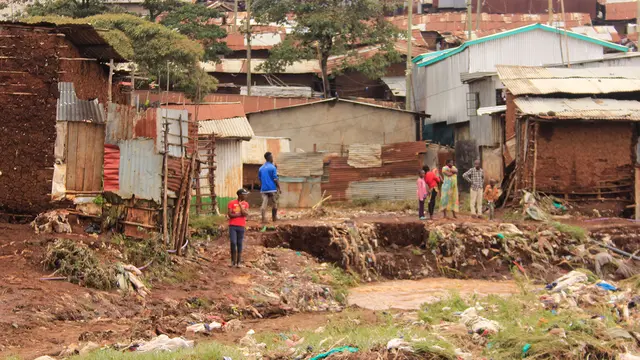
Freetown offers a compelling case study of a fast-growing African city confronting climate risks amid inequality and ecological degradation, while striving to promote more sustainable urban development. Its population has increased tenfold in 50 years, and is set to double again in the next two decades (PDF), with informal settlements expanding into flood-prone lowlands and steep slopes.
Urban expansion has driven extensive deforestation, with Freetown having lost roughly 70% of its tree cover. Deforestation increases flood risks by 28% for every 10% of canopy lost (PDF) and threatens water security, because forested catchments provide 90% of the city’s water supply. The loss of vital coastal and terrestrial forests has compounded environmental risks such as flooding, landslides and heat stress.
In response to these challenges, the city is pioneering a nature-based approach to resilience through its ’Freetown the Treetown’ initiative. Embedded in the broader Transform Freetown agenda, the initiative links reforestation with urban planning, ecosystem restoration and community engagement.
This case is significant not only for its ecological goals, but because it reflects a shift from top-down governance to a more participatory model involving the community, which offers practical lessons for other cities facing climate risk, land pressure and informal urban growth.
Restoring a risk landscape
Freetown’s rapid, unplanned expansion has come at the cost of its forests, and has resulted in increased flooding, landslides and heat stress.
Urbanisation and deforestation have often occurred in urban areas of extreme risk – because they are located either on steep slopes or below sea level.
Recognising the urgent need for action, the city launched an ambitious initiative to restore green infrastructure and transform Freetown into the world’s first ’Treetown’, with “a replicable blueprint for sustainable reforestation to be shared with other cities”.
An evolving urban ecology
Freetown’s planning landscape has shifted significantly in recent decades. Shaped by colonial-era zoning and post-war centralisation, urban planning was historically exclusionary and top-down. But the Federation of the Urban and Rural Poor (FEDURP), supported by the Centre of Dialogue on Human Settlement and Poverty Alleviation (CODOHSAPA) and partners such as the Sierra Leone Urban Research Centre, has helped democratise planning since the late 2000s.
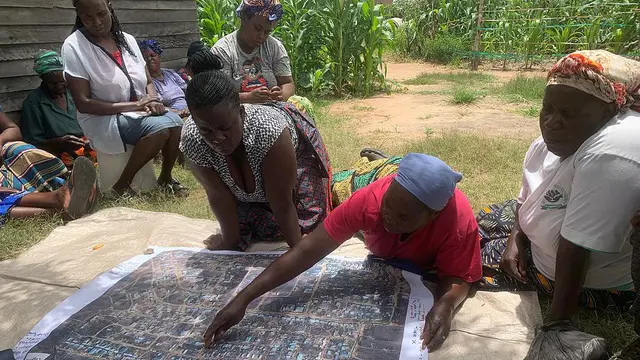
Community-led initiatives such as Community Area Action Plans (CAAPs), designed with the community to align local developments with city-wide planning, and City and Community Learning Platforms (PDF) reflect this new participatory direction.
This laid the foundation for the Transform Freetown agenda, which addresses resilience, human development, the healthy city and urban mobility.
The resilience cluster combines environment, urban planning and housing, and financing – and specifically promotes reforestation and settlement upgrading as parallel pathways to resilience.
Freetown the Treetown is our city's ambitious plan to plant a million trees over two rainy seasons, but we're not just planting trees, we're growing them… A million trees will not fix climate change. But it will reduce flooding and landslides. It will ensure that we bring back biodiversity into our cities. It will ensure that our mangrove areas where our fishes are spawned are restored. It will really make a significant impact
– Yvonne Aki-Sawyerr, mayor of Freetown
Targeted reforestation and trade-offs
Trees are planted strategically to deliver specific benefits. For example, mangroves are restored to reduce coastal erosion and flooding; canopy trees are planted along roads and public facilities to help combat extreme heat and improve air quality; and upland reforestation aims to stabilise slopes and protect water catchments. Moreover, 35% of the areas targeted are in informal settlements, where tree cover is lowest.
Informal settlements themselves are dense and space is limited, leading to trade-offs with housing or livelihoods. Land reclamation for housing (typically referred to as ‘banking’) and unsustainable livelihood practices, such as forest clearance, illegal logging, charcoal production and sand mining, compete with restoration efforts.
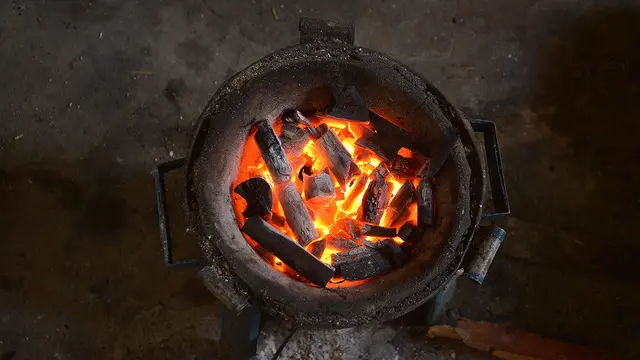
For example, ’banking’ in coastal settlements threatens restored mangroves. Freetown recognises that such drivers of deforestation must be addressed, even while new trees are being planted. To address the fact that 82% of cooking fuel is charcoal or wood, Freetown is promoting fuel-efficient stoves and alternative fuel sources, alongside alternative income sources.
We get different types of trees that we plant. We plant medicinal trees because we use these for illnesses and we also plant economic trees like the guava, the cashew; when students go to school they can pick fruit for lunch time and continue with the journey, and also we plant trees that help with water and water catchments. We are also planting mangrove on the slum side where we try to protect the people of the FEDURP. This is a unique project because we call it a productive social safety net for youth and women empowerment
– Zakiatu Sesay, team lead, catchment 3
Given these trade-offs, it is vital that nature restoration or risk narratives do not become a justification for forced evictions, as happened in 2015, when flood risk was cited as the reason for issuing eviction notices to 29 coastal settlements.
Freetown’s new zoning framework aims to guide decisions on upgrading versus relocation, based on hazard exposure and infrastructure deficits, but this could create grounds for future displacement.
Environmental improvements can also lead to increased property values and the arrival of wealthier residents, which in turn can result in displacement of low-income residents. Treetown’s participatory, community-centred approach is designed to help mitigate these risks.
Community participation
Residents are involved in site selection, preparation, planting, management, enforcement and monitoring, using tools like the ’Treetracker’ app to track trees, record growth and to receive small mobile payments accordingly. This ’pay-to-grow’ model is a key innovation of the campaign, creating a social safety net as part of the climate intervention.
More than 1,000 jobs have already been created, with plans for 15,000-20,000 by 2050. Local youth are employed through the Green Public Works programme, with many involved in growing seedlings in community-run nurseries. Targeted capacity building and support for women and youth leadership within the initiative helps to highlight their voices and needs.
Inclusive community dialogues have evolved over time. But in the early phases, limited community input meant some sites failed. Initial planning was driven by technical hazard maps and guidance, with little engagement on residents’ needs.
In addition, the short-term benefits may only accrue to those directly participating in tree planting. In places like Cockle Bay, mangrove planting initially failed because other residents lacked incentives and space was reclaimed for housing (see the photos below).

Images of Freetown showing disappearing mangroves and expanding settlements, including ‘banking’, in Aberdeen creek between 2005 and 2017. Source: World Bank (2019) Multi-city hazard and risk assessment report I (Google Earth Pro)

A map of Freetown showing disappearing mangroves and expanding settlements, including ‘banking’, in Aberdeen creek between 2005 and 2017

Images source: World Bank (2019) Multi-city hazard and risk assessment report I (Google Earth Pro)
In contrast, in sites like Ojuku, where communities selected sites and residents were widely employed by the scheme (with a focus on youth and women), trees fared better – and livelihoods, such as oyster farming, shifted to protect restored ecosystems.
This highlights that co-producing reforestation plans from the outset and pursuing a more equitable distribution of benefits – including through CAAPs or settlement upgrading processes – is key to success.
Currently, Treetown and settlement upgrading largely operate in parallel within the resilience agenda. Better integration of these agendas, alongside clear guidelines and capacity building for inclusive planning and benefit sharing, could further help to avoid unintended consequences, such as green gentrification.
Financing urban nature
Treetown has shifted from donor-backed pilots to a self-financing programme through ’tree tokens’. Each tree planted is geotagged and logged on the Treetracker app, which allows them to be monitored and tracked. This is verified every quarter, and growers are paid accordingly in mobile money. Each verified tree then generates digital tokens, which are sold on carbon and corporate social responsibility markets, with revenue ringfenced for related projects.
With 80% of resources already going to local communities, Freetown is well placed to expand this results-based financing model. This will require formalising the model within city and national climate finance frameworks to increase funding and replicability.
Tree tokens were primarily sold as carbon credits. However, although carbon credits monetise carbon sequestration, they do not adequately account for other ecosystem services or wider socioeconomic benefits. Implementation must be carefully monitored to ensure legitimate carbon accounting, transparent revenue sharing and clear community benefits.
The Treetracker platform is evolving to assess the different benefits – besides carbon sequestration – to help build a broader business case for urban nature restoration. This would enable impact investment that targets larger sustainable development outcomes, beyond carbon offsetting. Revenue from selling tree impact tokens could then be reinvested into integrated ecological upgrading, embedding green infrastructure within slum upgrading.
The involvement of the community has become very critical, and it has led to the ownership of these projects by the communities. Freetown City Council now partner with the National Protected Area Authority (NPAA) to ensure the enforcement of protected area regulations; they have been working together to ensure that the mangroves that have been restored are protected by the communities
– Francis Refell, CODOHSAPA NGO
Integrated climate action – and systemic barriers
Treetown is more than a tree-planting campaign. It is embedded in the city’s wider climate agenda, including the Climate Action Plan, which aims to restore 3,000 hectares of urban land; the Transform Freetown agenda, aiming for 50% vegetation cover by 2050; and the Heat Action Plan, which prioritises tree corridors in the most heat-exposed areas.
Additionally, it contributes to wider objectives, such as Sierra Leone’s Nationally Determined Contribution (PDF) and the global Race to Resilience (PDF).
However, restoration requires addressing systemic urban challenges, as well as drivers of degradation, especially in informal settlements. For example, plastic waste in mangrove zones smothers seedlings, forcing communities into constant clean-up efforts. Freetown currently leaves 65% of its 742 daily tons of waste uncollected, and without better solid waste management restoration efforts could be undermined.
Policy support for secure land tenure and protection from displacement can incentivise long-term community stewardship. This requires multi-sectoral, integrated planning, particularly as part of ongoing settlement upgrading, to ensure that greening complements infrastructure improvements and does not lead to exclusion.
More broadly, the city’s ambitious vision is constrained by wider dynamics. Urban land use and reforestation are governed centrally, limiting independent local action. For example, the Western Area Peninsula Water Fund, managed by national ministries, remains disconnected from city-led efforts, despite shared goals.
Empowering city governments and urban communities through decentralisation, clearer mandates and better vertical coordination could accelerate the scaling of nature-based solutions in Freetown and other cities facing similar challenges.
Looking ahead
Freetown’s Treetown model, designed for replication in other Sierra Leonean cities and through regional networks beyond, offers an example of locally driven, nature-based resilience in an African urban context.
Freetown works to shift narratives around urbanisation and deforestation. Its experience demonstrates the importance of community co-production of reforestation efforts to ensure tree-planting initiatives align with the realities of all urban residents, particularly low-income, majority populations.
Moreover, embedding nature-based solutions into urban resilience strategies also means tackling deeper structural issues, such as land pressures, unsustainable livelihoods and tenure insecurity.
Finally, Freetown’s innovative monitoring and financing mechanisms show how nature restoration could unlock new funding to be invested in greener, more resilient and equitable settlements and cities.
Further reading
- Empowering cities globally: four levers for transformative urban adaptation with nature-based solutions, Loan Diep, Timon McPhearson (2025), PNAS vol 122, no 29
- Tree planting for climate resilience in Freetown, Sierra Leone: an economic valuation of the “Freetown the Treetown” initiative (PDF), Ronja Bechauf, Edoardo Carlucci, Marco Guzzetti, Michail Kapetanakis (2025), NBI report
- Video: Sierra Leone launches project to address extreme heat in urban areas (2025),
CGTN Africa - Video: Inside Sierra Leone's tech-led tree-planting scheme (2024), RE-TV
- Building climate resilience through reforestation (PDF) (2025), UNDP case study
- Case study: Building low-carbon resilience into Freetown’s future, Karen Barrass (2024), IIED
- Nature-based green infrastructure: a review of African experience and potential, Mairi Dupar, Elvina Henriette, Eric Hubbard (2023), ODI research report
- Freetown’s highly replicable way of self-financing urban reforestation, Eric Hubbard (2022), C40 Knowledge
- The “slow anatomy of change”: urban knowledge trajectories towards an inclusive settlement upgrading agenda in Freetown, Sierra Leone, Joseph Macarthy, Braima Koroma, Camila Cociña, Stephanie Butcher, Alexandre Apsan Frediani (2022), Environment & Urbanization vol 34, iss 2
- The governance of nature-based solutions in the city at the intersection of justice and equity, Filka Sekulova, Isabelle Anguelovski, Bernadett Kiss, Panagiota Kotsila, Francesc Baró, Yuliya Voytenko Palgan, James Connolly (2021) Cities vol 112
Authors
Richard Bockarie is programme and technical manager at the Centre of Dialogue on Human Settlement and Poverty Alleviation (CODOHSAPA), the Sierra Leone affiliate of Slum Dwellers International (SDI). He is a data and software development professional specialising in community-driven research and climate resilience projects, who has led mapping and training initiatives across multiple African countries
Nina Schoonman is a researcher in IIED's Human Settlements research group. She is a multidisciplinary researcher with substantial experience in the climate change sector, with a focus on urban development in low- and middle-income countries