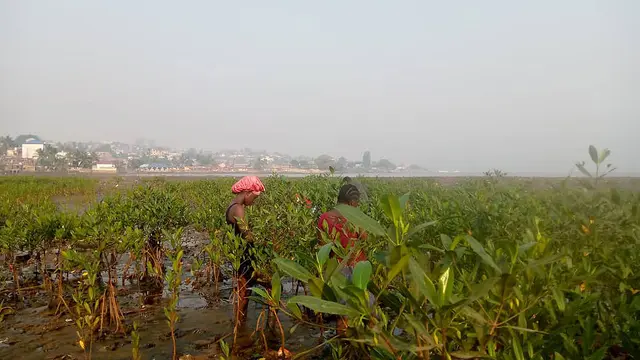
The invisible burden: heat amplifies gender inequality in Zimbabwe
This case study by Teurai Anna Nyamangara and Marcelle Mardon examines the intersection of gender, extreme urban heat and water insecurity in informal settlements in Kariba, Zimbabwe.

Women and girls carry water in Kariba in Zimbabwe. Collecting water during periods of extreme heat often leads to dizziness and near-fainting episodes (Photo: copyright KYCTV Kariba)
The Zimbabwean NGO Dialogue on Shelter Trust and IIED have co-produced this case study. It forms part of a broader study aimed at advancing gender-responsive climate data collection and knowledge and evidence-generation, and its ownership by grassroots movements.
Researchers used a mixed-methods approach, engaging community members in discussions and providing householders with 'iButton' heat sensors to gather evidence and insights on women's chronic heat exposure.
Background
The town of Kariba in northern Zimbabwe sits in a valley along the Zambezi River. It experiences some of the most extreme heat conditions in the country. Its geography creates a microclimate in which temperatures regularly exceed 40°C during the hot seasons.
This research focused on three informal settlements around Kariba, each facing unique vulnerabilities:
- Mahombekombe was constructed in the early 1950s to accommodate Kariba Dam workers. Today, it is severely overcrowded, with families living in single-room units with small windows and low roofs, and a lack of investment due to insecure tenure arrangements
- Batonga is a settlement still being developed, with both approved housing and temporary structures. It is located along animal corridors, thereby increasing human-wildlife conflict, and
- Quarry is an informal peri-settlement with entirely unapproved housing, no legal recognition and no basic infrastructure such as water, electricity or roads. Residents live in makeshift structures with no heat protection.
Extreme heat in Kariba arises from a combination of environmental, infrastructural and socio-economic factors, including prolonged dry spells, rising ambient temperatures, inadequate water infrastructure and informal settlements characterised by poor housing and limited basic services.
Access to safe and reliable water remains highly unequal, particularly in informal settlements such as Quarry, where residents experience persistent water shortages and must travel long distances to water sources.
Impacts
Heat impacts are not gender-neutral. Extreme heat is a critical amplifier of water-related gender vulnerability. When residents were asked which group is most at risk due to heat, the majority responded: women.
Daily pressures and safety impacts
Water collection and management in informal settlements are overwhelmingly gendered responsibilities. Women and girls are responsible for providing adequate water for all household needs, including cooking, cleaning, laundry, drinking, childcare hygiene and menstrual management.
These responsibilities are continuous and non-negotiable, regardless of heat levels.
During periods of extreme heat, water sources dry up rapidly, forcing women and girls to walk longer distances in high temperatures. Rising temperatures increase household water needs, creating a paradox in which women must collect more water, while access becomes increasingly difficult.
In Quarry, there is no formal infrastructure, and women walk 3-5km daily carrying containers holding 20-25 litres of water. Temperatures can reach 40°C, and many women opt to collect water early in the morning or in the evening.
However, this puts them at additional risks, including wildlife encounters (they share the water sources). Their daily coping strategies illustrate how heat can transform water collection into a significant safety concern.
Health impacts
Carrying heavy water containers puts women at risk of musculoskeletal injuries and accidents such as slipping and falling. Limited water availability undermines women's physical and reproductive health through dehydration, heat exhaustion, menstrual hygiene challenges and challenges to household hygiene.
During focus group discussions, women consistently described experiencing dizziness and near-fainting episodes while collecting water during periods of extreme heat.
One participant reported: "Sometimes I feel like I'm going to pass out", and many participants said they suffered regular headaches.
The headaches aren't just occasional, they're almost constant during the hottest months
- Focus group participant
Many women emphasised that these symptoms often persisted long after returning home, affecting their ability to rest or manage other responsibilities.
Severe dehydration emerged as a critical concern. Paradoxically, women responsible for securing household water frequently reported consuming insufficient amounts themselves.
I'm so focused on getting water for my kids and husband that I forget to drink enough myself
- Focus group participant
This pattern of self-sacrifice reflects deeply entrenched gender norms and heightens women's vulnerability to heat-related illness. Another impact is the normalisation of women's suffering as an unavoidable part of life.
Social and economic impacts
Women in Kariba say their traditional, unpaid caregiving responsibilities, such as cooking, cleaning, and caring for children and elderly family members, become significantly more difficult and time-consuming when temperatures soar.
Their resulting time poverty leaves them with few opportunities to earn an income to improve their economic situation.
Women's ability to access cooling centres or water distribution points can be limited by safety concerns or social norms, especially if these require travelling alone or at night.
Women reported that they often have little say in decisions about community adaptation strategies, despite being the primary water managers in their homes. Their practical knowledge and needs are frequently overlooked in planning processes dominated by men.
Taken together, the evidence highlights how water insecurity in extreme heat is a significant, yet often overlooked, public health risk for women in informal settlements, reinforcing the need for gender-responsive heat and water interventions.

Women and girls collect water in the Quarry settlement of Kariba. Accessing water becomes harder and more time-consuming in extreme heat (Photo: copyright KYCTV Kariba)
Responses
Local climate champions are organising regular community awareness sessions, including workshops, information sessions and hands-on demonstrations. Community groups, business owners and concerned citizens are engaging with Kariba Municipality, attending council meetings, arranging dedicated sessions with officials and making their voices heard.
This direct communication helps climate concerns reach the official agenda and get them incorporated into policy decisions.
There is also growing community representation in district disaster risk task teams, bringing valuable local knowledge into disaster preparedness and ensuring plans reflect the needs of the people they're designed to protect.
Several interconnected factors limit women's ability to take action:
- Women's time poverty leaves little opportunity to pursue adaptive strategies or participate in community planning
- Financial constraints mean that women don't have the money to upgrade their homes to protect against extreme heat
- Lack of tenure rights, particularly in Mahombekombe, means that women are reluctant to invest, knowing they might be forced to leave without compensation for any improvements
- Cultural expectations and social norms can restrict women's options. Some behaviours or activities may be considered inappropriate for women, limiting their ability to adopt new practices that could increase resilience, and
- Household power dynamics present another challenge: women said they often lack equal decision-making authority; their ideas and solutions may be dismissed or overruled by male family members who control household resources.
Finally, women are often excluded from municipal planning processes. Their voices, needs and perspectives are frequently missing from the forums where decisions about community adaptation are made, resulting in solutions that don't address their specific vulnerabilities.
These barriers interact and reinforce each other, creating a complex web that significantly restricts women's agency in adapting to climate change.
Pathways to action
To break the cycle of heat-water-gender vulnerability, women need gender-responsive, multi-scale interventions.
Strengthening women's agency through targeted financing, participatory planning and recognition of unpaid water labour as a form of climate exposure is essential.
At the community level
- Grassroots groups serve as powerful vehicles for change within communities. Supporting women-led collectives focused on water access, safety and household cooling solutions can create sustainable impact where it's needed most.
- Expanding existing collaborations between youth and women to document water scarcity and heat challenges can create powerful evidence for advocacy.
- Training women in data collection and monitoring delivers both data and empowerment. This includes using simple tools to track temperature variations, identify water-quality issues, map collection routes and report findings to the authorities. When women lead these efforts, the data reflects their reality and strengthens their voice in decision-making processes.
- Nature-based solutions, such as planting shade trees in marketplaces and along water collection routes, provide multiple benefits. Trees can reduce ambient temperatures, decrease water evaporation, reduce air pollution and create gathering spaces. Involving women in selecting planting locations ensures that trees serve their practical needs, such as shading areas where children play or women work.
At the local government level
- Micro-grants for women-led adaptation projects: micro-grants supporting women's innovative ideas could fund initiatives such as community shade structures, communal water storage tanks or improved home ventilation systems. Modest financial resources, when placed in women's hands, often stretch remarkably far because women typically prioritise solutions that benefit entire families and communities rather than individuals.
- Gender-responsive heat action planning: Kariba Municipality is expected to implement heat preparedness protocols that specifically address women's needs during extreme temperature events. The initiative recognises that women often face disproportionate impacts from extreme heat.
- Infrastructure investment: installing reliable water supply systems and creating additional public water points located near homes would reduce the time and physical burden of water collection.
- Heat-resilient design: urban planning policies should require designs that consider women's water needs and access challenges during high heat.
- Secure tenure: accelerating tenure regularisation would encourage residents to make permanent improvements to their homes and provide the security needed for community-led cooling initiatives.
Local and national government
Early warning systems: women's traditional, unpaid caregiving responsibilities, such as cooking, cleaning and looking after children or elderly family members, become significantly more difficult and time-consuming when temperatures soar. Authorities should ensure that timely extreme heat warnings reach women, including those without access to technology.
Channels could include WhatsApp notifications, radio announcements in local languages and community health workers checking on vulnerable residents who may have limited access to technology.
At the wider scale, the national health system should track heat-related illnesses, including gender-specific data. Climate adaptation frameworks should specifically address the interconnected challenges of heat, gender and water access. When allocating climate adaptation funding, governments should prioritise gender-responsive projects in informal settlements and ensure that these vulnerable populations are included in planning.
Access to water is a critical lens for understanding how extreme heat deepens gender inequality within Kariba's informal settlements. Approaches that prioritise women's experiences, guarantee reliable water access and tackle underlying structural inequalities will successfully advance both gender justice and climate justice.
Authors

Teurai Anna Nyamangara is a community-development specialist based in Harare, Zimbabwe. She works for Dialogue on Shelter for the Homeless Trust in Zimbabwe, which is affiliated with the civil society organisation Slum Dwellers International (SDI).
Urban poverty and informality researcher Marcelle Mardon is an architect with a passion for community-led sustainable urban development, and over the last decade has focused on urban infrastructure, housing, health, livelihood improvement and in particular their interlinkages with gender equality.
With thanks to the contributions of the Zimbabwe Homeless People's Federation (ZIHOPFE), Wayne Shand, Karen Wong Pérez and Aarifa Muhammed (all IIED) to this case study.