Interview: Improving women’s participation in global climate talks
New research from IIED examines the barriers to women’s participation in UN climate negotiations. Co-authors Fernanda Alcobé, Elaine Harty and Tracy Kajumba discuss the findings and why it’s vital to address the root causes of women’s under-representation in this critical space.
At IIED, senior climate change researcher Fernanda Alcobé (FA), senior climate change project manager Elaine Harty (EH) and director of the LIFE-AR interim secretariat Tracy Kajumba (TK) all work to support the least developed countries (LDCs) – including at the COP climate negotiations.
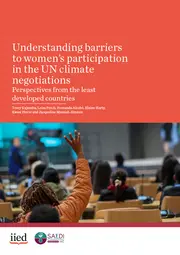
The trio are among the co-authors of a new study, ‘Understanding barriers to women’s participation in the UN climate negotiations: perspectives from the least developed countries’. Its publication coincides with the 90th session of the Committee on the Elimination of Discrimination Against Women, currently under way in Geneva.
Meanwhile next month, the 69th session of Commission on the Status of Women will review the implementation of the Beijing Declaration and Platform for Action, which turns 30 this year and is considered the most progressive global agenda for advancing the rights of women and girls.
However, despite significant strides in gender equality, progress remains slow, with gender gaps persisting in areas such as education and skills, digital access and investment in the care economy.
Against this backdrop, Fernanda, Elaine and Tracy discuss their research findings and the steps to achieving truly equitable climate talks.
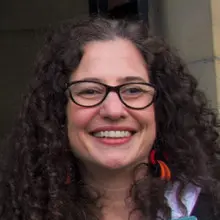
Fernanda Alcobé is an IIED researcher with over 13 years of experience working on climate change policy design and implementation
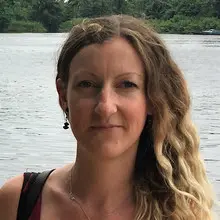
Elaine Harty is a senior project manager in IIED’s Climate Change research group
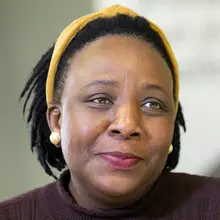
Tracy Kajumba is director of the interim secretariat of the Least Developed Countries initiative for Effective Adaptation and Resilience (LIFE-AR)
Q: You’ve just published a study on the barriers to women’s participation in UN climate talks. Why was this research needed?
FA: It’s been recognised that women and men need to be equally represented in the United Nations Framework Convention on Climate Change (UNFCCC) processes, and that climate action must respond to the intersectional needs and priorities of women, men and other excluded groups.
Over the years, the focus has been on improving the gender balance and increasing women’s participation in all UNFCCC processes, including in-country delegations and bodies constituted under the convention, the Kyoto Protocol and the Paris Agreement. Women’s representation in these climate spaces has been tracked by the UNFCCC Secretariat and the Women’s Environment and Development Organization, with reports published after every COP climate summit.
However, despite some progress over the years, representation hasn’t significantly improved for women – particularly those in LDCs – and some years have even seen a decline. This needs to change.
While the statistics have been useful, there hasn’t been enough analysis of the root causes of the gender imbalance. This can only be understood at country level, where COP nominations take place.
Working with an LDC advisory group, we commissioned new research to explore the root causes of the problem, rather than the symptoms; we wanted to ensure that the resulting recommendations would target those best placed to address the systemic barriers affecting women’s representation.
Q: Why does women’s representation matter within UNFCCC processes?
EH: Climate impacts aren’t gender neutral. Gender intersects with other forms of disadvantage to create multiple layers of discrimination for LDCs – some of the most climate-vulnerable countries worldwide.
Decisions made in multilateral climate spaces can have profound impacts on LDCs, and consequently on members of their populations most affected by climate change: women and girls in particular. And yet, women remain under-represented in climate decision-making processes and spaces, their perspectives and needs missed out.
With climate negotiations, it’s crucial to capture a diversity of views, priorities and solutions from across the spectrum of women, youth and other excluded groups like Indigenous women – and not just those within government ministries or those more experienced in climate negotiations.
For instance, the role many Indigenous women play in environmental stewardship is overlooked in UNFCCC processes, yet their traditional knowledge is key in challenging a system that monetises natural resources.
Q: What structural obstacles did you find contributed to the low participation of women from LDCs in climate negotiations?
TK: We analysed barriers from several angles, including governance, gender-based education, assets and skills, leadership and decision making, and gender-based rights.
Weak gender policy implementation was a key challenge identified. While policies exist in most countries, they’re not being adequately implemented within different international climate processes.
The lack of a criteria for nominating delegates was another major challenge. With no standard criteria across countries, there is no accountability, and nominations go to preferred individuals: mostly men. Indeed, women spoke of the difficulty of getting nominated. Standardising nomination with clear criteria would go a long way towards increasing women’s representation.

Negotiation takes place as part of the High-Level Roundtable on Ambition at COP28 in the United Arab Emirates (Photo: UNclimatechange, via Flickr, CC BY-NC-SA 2.0)
Gender roles and social responsibilities were also identified as a barrier. Childcare is one noteworthy issue. Women noted the challenges associated with accessing conference passes for babies and the lack of childcare services at UNFCCC summits – all of which makes it challenging for mothers, who must bear the costs of childcare support if they travel with children.
Meanwhile, patriarchal systems and social norms still favour men in selection processes and in assigning leadership or governance roles. Women reported that rather than being taken seriously or given leadership responsibilities, they’re assigned clerical roles, while technical leadership roles are occupied by their male counterparts.
Access to financial resources also emerged as a strong barrier. Most LDC governments don’t have enough resources to support their delegations, so depend on external support. The challenge is who gets selected to access these. Overall, women stated that they lacked travel funds to attend UNFCCC meetings, affecting consistency in participation and their ability to build their capabilities over time.
There were mixed responses on women’s capabilities to engage. Most respondents felt women had the required education and skills for participation – so it wasn’t a barrier. But others felt women needed more training to build their negotiation capabilities and more opportunities to participate in negotiation processes.
Unsurprisingly, gender norms and stereotypes also emerged as critical. Women still experience societal and family expectations to not leave home for long. Some male negotiators reported that negotiation processes were too “hectic for women in their high-heeled shoes’’, and suggested they didn't want to participate because it was tiring and also meant being away from their families for too long. While we didn’t ask women about these perceptions, it was nonetheless noted that UNFCCC processes are lengthy.
Q: Based on your findings, what changes are needed to redress the gender imbalance?
FA: Our paper offers several recommendations:
- National governments of LDCs should implement their gender policy commitments on representation, to support women’s participation at local, national and international levels, including in UNFCCC processes.
For instance, they could develop criteria to guide the nomination and selection of delegations and could track the national gender composition, using the data to influence better representation of women nationally.
Education is key: LDC governments or other actors must provide training to improve both women’s and men’s understanding of UNFCCC processes, especially how to make it gender responsive.
- Donors can increase and target funding, specifically to women and youth negotiators, and those from underrepresented groups. This would support initiatives focused on capacity building and training for women negotiators (particularly those from climate-vulnerable regions), and also support travel and logistics – ensuring they have both the skills and resources to participate effectively and consistently.
- The UNFCCC secretariat can support by refining session logistics, publishing agendas in advance so participants can plan for travel, and expediting visa processes for UNFCCC COPs and subsidiary bodies. It can also consider providing free childcare support for negotiators with caregiving responsibilities, so those unable to pay for these services don’t miss the opportunity to participate.
- Countries that haven’t yet appointed a gender and climate change focal point within their national delegation must be encouraged to do so, and to establish or strengthen a network of gender focal points across delegations.
As well as facilitating information sharing, peer support and collective problem-solving on gender issues, this would also increase the gender and climate change focal points’ national leadership on gender equity, when they would otherwise be ignored.
Meanwhile, the UNFCCC Secretariat could do more to inform national focal points of any gender-related mandates, to help raise awareness.
If taken, these steps would strengthen policy and practice, promote gender equity and enhance women’s meaningful participation in climate processes.
Q: How will you take these recommendations forward?
EH: We hope the recommendations will be implemented well before COP30 in Brazil, in November. So we plan to share the findings as widely as possible, with the support of the LDC advisory group that we established to guide us through the research: they’ve pledged to champion the recommendations within their countries and sectors, whether at government level or in civil society.
We’ll also share recommendations with the chair of the LDC Group, negotiators and national gender focal points.
Going forward, we’ll expand IIED’s training and mentoring support so that more women delegates from LDCs can build their capabilities to participate actively and effectively in UN climate negotiations.
We’re keen to hear from any donors interested in funding further research and implementation of relevant recommendations, so that together we can address the barriers to participation in climate decision making.