Items tagged:
Climate change negotiations
-
The climate crisis and the fastest societal change, ever
‘Keeping 1.5 alive’ is going to take a monumental effort. Clare Shakya and Andrew Norton discuss factors that could drive the political ambition desperately needed for governments to keep the Paris Agreement’s most critical target in sight and deliver on climate finance promises ] ‘Keeping 1.5 alive’ is going to take a monumental effort. Clare Shakya and Andrew Norton discuss factors that could drive the political ambition desperately needed for governments to keep the Paris Agreement’s most critical target in sight and deliver on climate finance promises long overdue
-
Bringing youth’s energy from the streets to the climate negotiating table
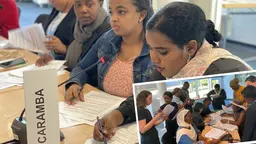
Guest blogger Yared Abera shares how he navigated the steep learning curve to becoming a climate negotiator and the valuable guidance he received along the way
-
Why COP26 was worth it
Eva Peace Mukayiranga describes challenges and highlights from the negotiating rooms in Glasgow and shares how she’ll be taking forward skills she learnt to COP27
-
COP27 and the important year ahead
Just over a week on from the end of COP26 in Glasgow and the dust is settling. But as Andrew Norton reflects, any gains made from the event will require ongoing work and citizens demanding more radical action
-
D&C Days 2021: five pathways for adaptation, resilience and action
-
COP26 debrief: where do we go from here?
-
Climate-induced migration illustrates loss and damage already being felt by communities
As global warming bites, vulnerable communities are being pushed from their homes by disasters and longer-term pressures, and desperately require financial help
-
Can COP26 reach ambitious outcomes for LDCs?
Ambitious, inclusive and equitable outcomes at COP26 are vital. Will major emitters commit to significant carbon cuts? Will countries honour their climate finance pledges? And how will finance reach those most in need? Anna Schulz sets out four outcomes for COP26 to be labelled a success for the Least Developed Countries and Small Island Developing States.
-
Where to find IIED and partners at COP26: event listing
What IIED and partners did at COP26
-
Inclusive negotiations: are hybrid meetings the answer?
As the organisers of COP26 face the complex challenges of getting 10-20,000 delegates to Glasgow for in-person negotiations during the ongoing COVID-19 pandemic, what are the pros and cons of hybrid formats for making negotiations more inclusive
-
Financing long-term strategies: are least developed countries and funders aligned?
This event on Tuesday, 19 October explored whether expectations from LDCs are being met for climate action in the form of long-term strategies and climate-finance delivery
-
Can COP26 lay firm foundations for an ambitious new climate finance goal?
With negotiations for the post-2025 climate goal due to commence at COP26, we ask what lessons can be learned from the previous – unmet – target and explore the priority issues for least developed countries (LDCs), who will be seeking changes to both the volume and nature of the climate finance they receive
-
How the digital divide threatens the success and legitimacy of the COP26 talks
The digital divide is in danger of stifling the voices of those representing some of the communities likely to be worst affected by the impacts of climate change
-
IIED at COP26
Our key research, commentary, analysis and events from the 2021 UN climate summit
-
Reviewing climate action: the hidden key for greater ambition
As countries prepare to negotiate the last components of the Paris Agreement’s enhanced transparency framework, Fernanda Alcobé looks at the review process, explores some significant challenges ahead and provides recommendations for designing a more efficient and inclusive system
-
New briefing supports greater ambition for countries’ NDCs
New or updated NDCs have been submitted by 110 out of 191 Parties to the Paris Agreement. For those remaining, IIED has unpacked the Paris Agreement guidance to show they can enhance climate ambition
-
Sounding the alarm: new IPCC report reinforces urgency for G20 to take stronger climate action
The science in the new IPCC report paints a clearer picture than ever before – the climate crisis is here, and we must act fast. With COP26 looming, Andrew Norton calls on G20 leaders to listen to the report’s findings and step up their climate action
-
Understanding the challenges faced by LDCs in COVID-19 recovery
This online event on Tuesday, 27 July examined the range of issues LDCs have to deal with in their efforts to build back better
-
COP26 hangs in the balance if G20 fails to show solidarity with climate-vulnerable countries by delivering action
This week, G20 ministers come together for two major meetings. Following commitments they made to climate-vulnerable countries at the Climate and Development Ministerial in March, Alex Scott and Ebony Holland reflect on progress to date and how critical it will be for the G20 to maintain momentum and fill the gaps left by the G7
-
Delivering an inclusive COP26 in the age of COVID-19 requires more than vaccines
The UK government announced last week that it would make vaccines available to people attending COP26 in Glasgow. But even vaccinated, negotiators from vulnerable nations face logistical and financial barriers to travel to Glasgow amid border closures and quarantine measures
-
Policymakers take note: climate displacement is driving millions into slavery
Many factors force people into slavery; but climate change as a driver is largely ignored in policy and planning
-
It’s got to be virtual and in person – key steps for a successful COP26
In a moment of reflection, with the first round of virtual climate negotiations and the G7 Summit all concluded, Anna Schulz asks where are we now and what steps can be taken to ensure success at COP26?
-
IIED at London Climate Action Week, June/July 2021
IIED and partners participated in London Climate Action Week, a week-long series of digital events from 26 June to 4 July 2021. This page lists the key events
-
“We need a stronger taskforce”: pushing for better access to climate finance for vulnerable countries
The UK and Fiji governments are initiating a new Taskforce on Access to Climate Finance, and vulnerable countries have high hopes it will finally deliver improved climate finance access. Guest bloggers Carlos Fuller and Dhendrup Tshering discuss how to avoid failure and ensure the taskforce is set up for success
-
Reporting greenhouse gas emissions: LDCs’ 20-year journey
As the least developed countries (LDCs) prepare to meet the demands of a more stringent climate reporting framework, an IIED report examines the LDCs’ reporting history and distils recommendations for meeting the new requirements
-
A new COP26 decision for long-term strategies: what’s in it for LDCs?
After months of delay, the formal UN climate negotiations are resuming and countries face a packed agenda. Gabrielle Swaby sets out why the least developed countries (LDCs) should make long-term strategies central to the discussion
-
Sleepwalking into COP26 collapse – why the UK must drop its aid cuts
Britain's decision to trim its aid budget sends entirely the wrong message to world leaders – that under-delivering for vulnerable countries is OK
-
Practical guide helps negotiators put equity at the heart of the new global biodiversity framework
Conservation efforts, while critical to reducing biodiversity loss, often fail to treat people fairly. This undermines the sustainability of these efforts and can further marginalise already vulnerable people. A new guide offers negotiators practical steps for embedding equity in the new global biodiversity framework
-
Biden’s climate summit needs to show leadership for the most vulnerable – here’s how
As US President Biden hosts a virtual climate leaders summit, Andrew Norton focuses on adaptation, resilience and loss and damage challenges and how the summit can continue the momentum for solutions
-
Towards COP26: can the Adaptation Committee progress in time?
After a year of virtual meetings, the Adaptation Committee – the principal body set up under the UNFCCC to provide guidance on adaptation – is zeroing in on a series of key inputs for COP26. Consensus among members is vital and inclusive processes are critical. Can it deliver all key adaptation items in time?
-
Archive of completed 'Global ambition for climate action and justice' projects
Through compelling evidence and by supporting capacity building in vulnerable developing countries, IIED works to keep the world below a 1.5°C rise in global temperatures. This archive page links to past projects aimed at strengthening global climate ambition
-
UK aid cuts threaten climate leadership role of COP26 president
Cuts to the overseas aid budget risk not only undermining the UK’s reputation for progressive development action, but also the chances of the UK presidency delivering a successful outcome to COP26. Sustainable development must be climate resilient: a lower aid spend is in real terms a blow to climate finance and ambition
-
When public finance shrinks, what are the priorities for climate action?
Cuts to UK overseas development aid raise critical questions for future climate action, not least whether the promised balance of support for adaptation and mitigation can be maintained. We suggest reforms to the climate finance system that could deliver stronger adaptation results for climate-vulnerable people
-
Challenges for climate diplomacy during a pandemic
International decisions taken this year will shape outcomes for climate, nature and people. COVID-19 challenges the processes for making these decisions, with virtual engagement presenting fundamental barriers to vulnerable countries’ abilities to participate
-
Can the Adaptation Committee find opportunity in adversity?
The COVID-19 pandemic has forced a pause in climate negotiations, but it need not be time wasted. Binyam Gebreyes and Emilie Beauchamp consider how the Adaptation Committee is seizing the moment to tackle existing challenges, and how it could go further
-
Loss and damage – research, policy and lived experience in least developed countries
On Tuesday, 8 September, IIED and ICCCAD hosted a webinar featuring least developed countries' national experts sharing their research and lived experience of loss and damage. The discussion aimed to ensure that loss and damage remains a priority issue in the lead up to COP26
-
Five years of building climate negotiators’ capacity: lessons from the field
A review of the past five years of work to build and sustain capacity among developing country climate negotiators, and foster trust between both developed and developing country negotiators
-
Training developing country delegates to engage in climate negotiations
Through regional workshops, IIED and partners build capacity to engage in international climate decision-making processes, so delegates are better equipped to negotiate
-
Tailored publications
A series of guidebooks produced by ecbi and bespoke dissemination practices support the training of UN climate negotiators from developing countries
-
Fostering regional collaboration and national implementation
Joint climate negotiation workshops allow country delegates to collaborate and exchange regional knowledge, so climate issues become an integral part of policymaking across government ministries
-
Building our regional partners’ capacity
ecbi collaborates with organisations in developing countries to train participants from the region. Our longest partnership is with Enda Energie, which has organised workshops in East and West Africa
-
Targeting support to women
The ecbi training and support programme aims to increase female participation in training workshops, support more women to attend the UN climate negotiations and track participants’ involvement in the negotiations themselves
-
Mentoring women to become climate leaders through a joint initiative
To help address the gender gap at the UN climate negotiations, ecbi developed a mentorship programme that supports women negotiators to engage in high-level decision-making
-
Experience sharing on long-term strategies (LTS) in least developed countries
IIED hosted a webinar to explore the experiences of least developed countries as they develop their long-term strategies to address climate change. The event showcased the opportunities coming out of the process and provided a space to discuss challenges and concerns among participants
-
What does the Paris Agreement’s transparency framework mean for LDCs?
The Paris Agreement offers a global framework to work together to avoid the worst impacts of climate ch
-
LDCs and the Paris Agreement: moving from international commitments to national implementation
A series of webinars will bring together participants from least developed countries to discuss their strategies to implement the Paris Agreement and share their diverse experiences and lessons learned
-
Supporting LDCs to develop long-term strategies
IIED is providing research and dedicated support to help least developed countries design long-term strategies for low-carbon, climate-resilient development, in line with international commitments
-
Coronavirus and climate change are two crises that need humanity to unite
IIED director Andrew Norton looks at some of the emerging impacts of the coronavirus outbreak, and discusses the possible longer-term effects of the pandemic
-
Supporting more than equal numbers in international climate debates
For International Women’s Day, Brianna Craft and Samantha McCraine detail efforts to bring more women to the UN climate change negotiations
-
COP25 policy and activism: we deserved better
In the first of a new series considering the important role social movements play in prompting climate action and protecting nature, Sejal Patel reflects on COP25, both as a researcher seeking to influence policy and as an individual passionate about climate justice
-
COP25: the morning after
Ahead of this week's IIED-hosted event discussing what COP25 outcomes mean for the climate crisis, Subhi Barakat highlights stepping stones for more ambitious climate action that emerged from these negotiations, where delays and denial frustrated progress
-
How can we avoid another ‘lost decade’ in the climate fight?
As 2020 begins, IIED director Andrew Norton considers what it will take to galvanise meaningful action on climate change against a ticking clock and political reticence
-
D&C Days 2019: five pathways to a climate-resilient future
Over the last decade, Development & Climate Days (D&C Days) has built a reputation for providing stimulating and interactive debate on topics and issues at the interface of development and climate change during the middle weekend of the UN climate change talks
-
D&C Days 2019: Illumination amid ‘a sea of warnings’
The Red Cross Red Crescent Climate Centre reports from the 2019 Development & Climate Days event, where IIED director Andrew Norton highlighted that "every year the remaining carbon budget for a safe world declines"
-
Politics at play at the UN climate talks? The LDCs don’t have time for games
There’s one year left before countries are formally held to account to their pledges under the Paris Agreement. From the COP25 climate talks in Madrid, Gabrielle Swaby sets out what the least developed countries – the poorest nations with most at stake – need from these crucial negotiations
-
COP25 must ensure help for the countries most affected by the climate crisis
Ahead of COP25, IIED is calling for urgent climate action along with focused support for the most vulnerable
-
IIED and partner events at COP25
This page summarises the activities of IIED, its researchers and partners during the UN climate change talks (COP25) in Madrid, Spain, from 2 to 13 December 2019
-
Real climate ambition means switching to 'business unusual'
Leadership at the UN Climate Action Summit came from least developed countries and grassroots communities. Clare Shakya argues that supporting their efforts requires a shift away from business-as-usual
-
Least Developed Countries launch 2050 Vision for a climate-resilient future
The world’s least developed countries have launched a long-term strategy for climate resilience and net zero emissions by 2050
-
Taking stock: how the LDCs became masters in climate activism and optimism
As Achala Abeysinghe moves on to a new role at the Global Green Growth Institute, she reflects on her time at IIED and shares how – as legal, technical and strategic adviser to the Least Developed Countries – she has seen this dynamic group turn climate diplomacy on its head
-
CBA13: bringing key messages to the global stage
The 2019 international conference on Community-Based Adaptation saw more than 300 practitioners, policy makers and researchers discussing how to build a climate resilient future. The key messages from CBA13 have been published today: they present a vital opportunity to get local-level climate change adaptation onto the international agenda.
-
Climate action: let’s be bold in Bonn
As the UN climate change conference kicks off in Bonn on Monday (17 June), Subhi Barakat calls for negotiators to be bolder and braver with an emphasis on action
-
The Paris Agreement always needed Extinction Rebellion and Greta Thunberg
Extinction Rebellion’s climate protests signal a moment of hope, writes IIED director Andrew Norton. Big shifts rarely happen without a major challenge from people demanding action
-
Women in the UN climate negotiations: are we tipping the balance?
Ahead of International Women’s Day, Brianna Craft and Samantha McCraine take a closer look at how well women are represented in spaces where international decisions on climate change are made
-
Reflections on Katowice – where does the Paris Agreement stand now?
IIED's director Andrew Norton reflects on the outcomes of the UN climate talks in Katowice
-
The sharp learning curve of an LDC negotiator
Fatima Athoumani describes the fast-paced journey to representing her nation of Comoros at the UN climate talks
-
"Follow the science": Least Developed Countries Group lead negotiator
The chair of the UNFCCC Least Developed Countries Group, Gebru Jember Endalew, called for climate action to be guided by science when he spoke at the closing of Development and Climate Days 2018
-
"Half a degree matters" – D&C Days focuses on IPCC special report on global temperature-rise scenarios
The 2018 Development and Climate Days opened with a stark warning: "We don’t have 12 years to save the world; in fact we probably have 12 minutes"
-
IIED and partner events at COP24
This page summarises the activities of IIED, its researchers and partners during the UN climate change talks (COP24) in Katowice, Poland from 2-14 December 2018
-
Governments must move to formal negotiations in Bangkok and start shaping the final rulebook
Achala Abeysinghe says this week’s UN climate talks need to make progress on agreeing the operational guidelines or ‘rulebook’ for the Paris Agreement – a vital step towards putting the climate deal into practice
-
Climate diplomacy in the age of Trump: updating our theory of change
We're incorporating feedback to sharpen our theory of how the Least Developed Countries can extend their influence in international climate change decision making
-
Supporting least developed countries on climate technology transfer
In March, experts on technology development and transfer gathered in Copenhagen and Bonn to take forward the work of the UN climate negotiations. IIED supported representatives of the Least Developed Countries to present proposals that would work for them
-
Building the capacity of LDCs to engage in the UNFCCC negotiations
Our efforts to strengthen the capabilities of the Least Developed Countries (LDC) Group in the UN climate talks involved participating in training workshops and strategy meetings, informing the negotiations through research, and developing toolkits for new delegates
-
Facilitating better representation of LDCs in the UNFCCC process
Our participation support helps least developed countries in their efforts to increase their representation and engage fully and meaningfully in the UN climate talks
-
Changing landscapes: key issues for action on sustainable development in 2018
As we face up to the challenges of the coming year, how does the global landscape for sustainable development look? IIED director Andrew Norton offers his thoughts on the key debates and changes we may see during 2018, and what they might mean for IIED's work
-
Missing voices: let's hear women's experience of climate change
There was plenty of discussion at the global climate talks about how working directly with women in the global South is essential. But when it came to listening, those very voices were marginalised
-
COP23 outcomes call for faster action and higher ambition to keep Paris on track
Achala Abeysinghe reports back from COP23 and asks whether the outcomes of this year's UN climate summit will be enough to keep the Paris Agreement on course
-
LDCs approach Fiji COP with high expectations
When COP23 starts next week, the least developed countries will again be in the spotlight. In a special guest blog, LDC Group chair Gebru Jember Endalew outlines the group's detailed preparation and hopes for Bonn
-
Least Developed Countries Group sets out priorities for COP23
The chair of the Least Developed Countries (LDC) Group has issued the group's key priorities at a high-level preparatory meeting for the next UN climate talks
-
Asian and Pacific officials to build their climate negotiation skills
Junior climate negotiators from Asia and the Pacific region will develop their climate negotiation skills at a training workshop in Sri Lanka this month
-
Author Q&A: Climate Justice in a Non-Ideal World
Saleemul Huq discusses a new book exploring the thorny and highly topical issue of climate justice. The book includes a chapter he co-authors with Achala Abeysinghe
-
Book summary: Climate Justice in a Non-Ideal World
IIED's Achala Abeysinghe and Saleemul Huq co-author a chapter in the book Climate Justice in a Non-Ideal World, exploring the different viewpoints from leading experts on what would be a just outcome to the climate change problem. Book summary includes: a Q&A with one of the authors
-
US Paris withdrawal: where now for climate action?
President Trump's decision to withdraw from the Paris Agreement elicited a collective sigh of despair from the environmental community. But his action creates opportunities as well as challenges
-
Building climate negotiation skills for African officials
Officials from African countries will have the opportunity to increase their climate negotiation skills at two training workshops in Dakar this June.
-
Marching into May talks: LDCs lead the way on climate change
The world's poorest countries champion long-term, emissions-neutral development strategies, and several are leading by example. Ahead of the UN climate talks, the LDC Group chair reflects on recent marches
-
LDC women in world climate talks: building a cohort of champions
The Least Developed Countries Group will be at the table when next week's UN climate conference plans how to step up its 'gender agenda'.
-
How can the poorest increase the influence of their climate diplomacy?
We've developed a theory of change to better understand how the Least Developed Countries can influence international decisions on climate action. Is our theory up to the job? We want to hear from you
-
The new Trump index: how much does one individual threaten the planet?
An index from 2001 needs updating to reflect how policies championed by US President-elect Trump threaten global ecological sustainability
-
Climate denial and the populist right
In the face of increasing links between a populist nationalist agenda and climate denial, IIED director Andrew Norton calls for a better political offer, and more effective leadership and mobilisation, to face up to the grave climate action challenge.
-
Local voice must take pride of place: D&C calls for 'inside-out COP'
Make COP for the practitioners who are actually implementing climate change action on the ground, says Saleemul Huq
-
Digital data trumps paper in Marrakech
It wasn't just the US election result causing upset among COP22 participants on Wednesday. Matt Wright highlights a slick new way of sharing data, creating a stir at this year's climate negotiations
-
Women in the poorest countries lack leadership opportunities in the UN
Achala Abeysinghe walked out of an event after challenging the lack of women among 17 male speakers. The legal expert highlights why women's leadership is needed in global climate change negotiations
-
Q&A: Key decisions needed at COP22
The rapid entry into force of the Paris Agreement raises a challenge for climate negotiators at COP22 in Marrakech, Morroco. Senior climate researcher Subhi Barakat talks to IIED about what is happening at the COP and what decisions need to be made
-
Watch now: daily video updates from COP22
Get daily video updates from the UN climate summit in Marrakech from IIED senior fellow Saleemul Huq, with a special focus on the issues affecting the Least Developed Countries
-
Poorest must be heard on climate action to deliver Paris Agreement’s success
The Paris Agreement on climate change enters into force today. IIED director Andrew Norton argues that the voices of the world's most vulnerable must be heard if the treaty is to be effective
-
Lessons in climate diplomacy from Ethiopia and Bhutan
IIED has been examining how two of the world's poorest nations are playing a leading role in the climate diplomacy needed to define the rules for implementing the Paris Agreement
-
Q&A: Steps to enforcing the Paris Agreement
IIED's principal climate change researcher and leading expert on legal issues in climate change negotiations, Achala Abeysinghe, explains the key steps needed to bring the Paris Agreement into force
-
Climate change negotiation skills: training for LDC negotiators
In a recent workshop, participants from Least Developed Countries learned about the mechanics of climate negotiations, tackled complex terminology and discussed how to resolve conflict situations that can arise during multilateral talks
-
Taking the Paris Agreement forward: what to expect in Bonn?
As discussions get under way in Bonn on the next steps for the Paris Agreement on climate change, Achala Abeysinghe looks at what needs to be achieved
-
An opportunity for LDC leadership
As Christiana Figueres stands down as executive secretary to the UN Framework Convention on Climate Change, IIED director Andrew Norton argues the time is right for an LDC representative to take the reins
-
A diplomatic approach to raising climate ambition
Veteran climate negotiator and Gambian Minister Pa Ousman Jarju reflects on the Paris Agreement and the continued need for diplomacy and ambitious climate action
-
Briefing: After Paris – what's next for the LDCs?
IIED hosted a high-level briefing on the outcomes of the Paris Agreement on climate change
-
The Paris Agreement, SDGs and simple local monitoring
How can we minimise monitoring costs and make sure that money intended for local "development" ends up with the people who need it?
-
2016 – when global meets local in climate action
Building on the historic agreement forged in Paris, IIED's director Andrew Norton looks at the opportunities to ensure global agreements on the need for sustainable development reach the local level
-
What does the Paris Agreement mean for LDCs?
A video draws on the expectations of the Least Developed Countries ahead of last month's climate deal and looks at what the Paris Agreement will mean for them
-
A historic agreement in Paris
A historic agreement on climate change in Paris must drive ambition for climate action post-2015, says IIED director Andrew Norton
-
Zero carbon – costs and opportunities for Least Developed Countries
The zero carbon, zero poverty agenda at Development & Climate Days is challenging for all countries. For the Least Developed Countries the costs are high, but the opportunities may be even greater
-
Least Developed Countries create pressure for climate shift
As climate talks in Paris move into the final hours, the Least Developed Countries are fighting for their right for support and protection, and more and more countries are recognising the need to limit global warming to 1.5 degrees
-
Climate finance is vital to secure a future worth having
A key issue dominating the landmark climate summit in Paris is that tricky subject of climate finance: who pays, how much, for what? Some elements of the global discourse on the sums required to tackle the urgent climate change threat seem to think there is a simple distinction to be drawn between choosing to spend money on climate or other development issues. But this simplistic rhetoric is damaging and puts lives at risk
-
COP21 side event discusses how to unlock climate finance for developing countries
-
LDC climate action plans estimated to cost US$93.7 billion per year
A report by IIED has estimated the cost of all 48 Least Developed Countries implementing their post-2020 climate action plans to be around US$93 billion per year
-
REDD+ in Paris – what could be in it for people and forests?
Curbing climate emissions means managing and using existing forests, and land sustainably. An IIED workshop in Paris will look at how the programme to reduce emissions from deforestation and forest degradation (REDD+) can be made more effective, while also supporting local communities
-
Q&A: Building zero carbon emission economy in a decade
In the seventh of our interviews with representatives from the Least Developed Country Group, Negash Teklu from Population, Health, Environment Ethiopia talks about Ethiopia's ambitions for a zero carbon economy by 2025
-
A champion for the most vulnerable
Ahead of next week's UN climate talks in Paris (COP21), IIED principal researcher Dr Achala Abeysinghe has been named as one of the top 15 female climate champions in the world
-
IIED at the UNFCCC Conference of Parties (COP)
The Conference of the Parties (COP) is the supreme decision-making body of the the United Nations Framework Convention on Climate Change (UNFCCC). IIED participates and reports on this annual event
-
French lead drive for global climate agreement
There is much debate as to whether the Paris climate summit can deliver an adequate response to the challenge of climate change. In the wake of the tragedy of last Friday's attacks in the French capital, Andrew Norton pays tribute to France's efforts to secure an ambitious agreement and hopes for success
-
Message to Secretary of State John Kerry: a legally binding treaty in Paris is essential
In response to comments from the US Secretary of State, Achala Abeysinghe sets out nine key reasons why the Paris climate agreement must be legally binding
-
Road to Paris video series: the Least Developed Countries' perspective (episode 4)
Hear from a series of experts as they provide an insight into the perspectives of the Least Developed Countries on key aspects of the UNFCCC process ahead of the UN climate talks in Paris in December 2015
-
The Road to Paris: how can the world's most vulnerable countries be heard?
With a month to go until the start of COP21, Saleemul Huq provides an insight into the perspectives of the Least Developed Countries ahead of the Paris climate talks, as part of a new series of video interviews for IIED
-
Climate negotiations: the last stop before Paris
As climate talks ahead of COP21 start in Bonn, Achala Abeysinghe says the draft on the table is not strong enough to address climate change, and identifies 11 ways in which it can be strengthened
-
Climate diplomacy: a beginner's guide
While COP21 in Paris is the crucial summit where a climate change agreement could be reached, it will be the culmination of ongoing climate diplomacy between different states. Brianna Craft looks at what's involved
-
The tough journey on the road to Paris: addressing the needs of the most vulnerable
With the latest round of climate negotiations under way in Bonn, Achala Abeysinghe reports on concerns that the burden for an ambitious and equitable agreement falls disproportionately on the backs of the poorest and most the vulnerable
-
A papal message reaching out to everyone
The papal encyclical expected this week is a welcome call to action in the fight to protect the poorest in our societies from the impacts of climate change
-
Next steps for climate negotiations on the road to Paris
Some progress was made at the Bonn climate negotiations in June, but much remains to be done
-
Cameron can assure a lasting legacy
A constant feature of David Cameron's premiership has been as champion of international development, including unwavering support for Britain's overseas aid contribution
-
Paris Agreement must stand on three pillars
As UN climate negotiations resume in Bonn (1-11 June), momentum is building for a new climate agreement in Paris this December
-
How to measure a global goal for adaptation?
Climate negotiators are discussing how to set a global goal for climate change adaptation. It's important for the negotiators learn from experiences and evidence gained at country level – so they can develop a goal that reflects differing national realities
-
How do we measure adaptation?
How do we effectively measure and enhance adaptation? Saleemul Huq looks at possible answers which will be discussed at the 9th International Conference on Community Based Adaptation (CBA9)
-
Developing nations strengthen ability to demonstrate effective climate change adaptation
A tool for developing countries to provide evidence of effective adaptation to climate change, allowing them to access international climate funds, will be launched today (27 February) after three years of development by IIED and partners
-
On the road to Paris: departing Geneva with expectations high
Progress in Geneva has meant a good start to the climate negotiations on the road to Paris, with elements in the text offering the possibility of a fair deal for developing countries
-
Helping poorest nations engage in climate diplomacy
Reaching equitable outcomes for the poorest countries through international decision-making processes involves more than attending formal negotiations. IIED works to support least developed countries (LDCs) increase the influence of their climate diplomacy.
-
Least developed country leaders say "follow us" to tackle climate change
The unsung heroes of the UN climate summit were the Least Developed Countries (LDCs), says Achala Abeysinghe
-
Q&A: Helping the poorest nations with development goals
The Least Developed Countries (LDCs) want their voices heard at climate and development talks. They will need a range of support to build their capacity to meet their development goals
-
Letter to America: Gambia envoy asks Obama directly for US climate leadership
Pa Ousman Jarju, Minister of Environment of Gambia and former chair and special envoy on climate change for the 48 Least Developed Countries, has written an open letter to US President Barack Obama
-
Urgent action needed says leader of the Least Developed Countries Group
Ahead of the latest UN climate negotiations in Bonn, the Least Developed Countries Group Chair points out that while science tells us that we can limit global temperatures to save the world's poorest countries, we need the will to do it
-
If you care about the 21st century, vote for Europe!
People across the European Union are going to the polls on 22 May. But why does Europe matter?
-
Risky business: assessing potential impacts of REDD+ in Nepal
Nepal has begun to assess the potential harm and benefits of the compensation scheme for protecting forests
-
Climate diplomacy can build the trust needed to secure our common future
Pa Ousman Jarju explains how diplomacy can overcome the distrust between rich and poor countries at the UN climate change negotiations.
-
The least developed countries, equity, and a brave new world
For the first time, all of the world’s major carbon emitters – including China, the US and India – will be legally bound to a new global climate agreement that reduces emissions. But, HOW?
-
Helping parliamentarians drive national climate change policy
Members of parliament can help break the international stalemate on climate change action by ‘domesticating’ global decisions, using national legislation. But to do that they often need long-term capacity-building programmes to catalyse the process: programmes that have support within the government and across parliaments
-
Providing on-demand legal, technical and strategic advice to the Least Developed Countries Group
IIED works to strengthen the position of least developed countries (LDCs) in international climate negotiations and related global forums. We do this by providing real-time legal, technical and strategic advice and research support to the LDC Group in the UNFCCC process. We collaborate directly with the LDC chair and members of the LDC Group's core team of negotiators in delivering our work.
-
Workshops that build climate negotiators' capacity: European Capacity Building Initiative training and support programme
As part of efforts to create a more level playing field for government delegations taking part in global climate negotiations, IIED led a training and support programme that focused on building the capacity of UNFCCC negotiators from vulnerable developing countries, including the LDCs
-
Introduction to our work on global climate law, policy and governance: supporting LDCs in and outside of the UNFCCC process
IIED supports the least developed countries (LDCs) and other vulnerable developing countries to achieve equitable and ambitious outcomes in global climate decision-making. We also help individual countries prepare for the effective implementation of these decisions through national policy and legislative strengthening
-
COP18 Q&A: outcomes of the Doha climate talks
What are the major outcomes from the climate talks and what does it all mean for developing countries most vulnerable to the effects of climate change? We spoke with Saleemul Huq, senior fellow with IIED's Climate Change research group, for his analysis.
-
Seven ways to reignite climate action after dismal Doha
The latest round of UN climate change negotiations – the COP18 conference in Doha – made only modest progress. Set against the elephantine size of the global climate problem, this achievement looks like a mouse.
-
COP18 Q&A: Latest from the Doha climate change conference
What is happening at the climate negotiations in Doha and what might the developments mean for countries most vulnerable to the impacts of climate change? We spoke with Saleemul Huq, senior fellow with IIED's Climate Change research group, for his analysis on recent developments.
-
People power critical for tackling climate change
As understanding of the severity of climate change rises, it’s increasingly clear that a negotiated global agreement on climate change is not enough – civil society has a central role to play too.
-
An American predicament that threatens the Green Climate Fund
In the context of the multilateral climate change negotiations, this global realization has slowly, but inexorably led to the conclusion that for the foreseeable future, it would be vain to expect
-
Development and Climate days at COP17
The 2011 Development and Climate (D&C) Days event focused on “evidence-based adaptation planning”.
-
-
COP16: United Nations climate change negotiations
IIED researchers undertook a range of activities at the 16th Conference of the Parties of the United Nations Framework Convention on Climate Change (COP16)
-
Moving climate talks forward: new parliamentary group consider the options
Last week (Tuesday 23 November), the Development and Environment Group of Bond launched a new All-Party Parliamentary Group (APPG) for international development and the environment.
-
Storm watch for Cancun climate talks
Striking a deal at this month’s UN climate talks in Cancun, Mexico will largely depend on negotiators’ ability to settle stormy disputes, particularly between the developed and developing world, over six key issues.
-
Tianjin climate begotiation through the CLACC lens
In their last meeting before the UN Climate Change Conference in Cancun, Mexico at the end of November, the Ad Hoc Working Group on Further Commitments for Annex I Parties under the Kyoto Protocol (AWG-KP) discussed emissions reduction commitments for the 37 developed countries that have ratified the Kyoto Protocol beyond 2012.
-
Development and Climate Days COP16
The 2010 Development and Climate (D&C) Days focused on supporting the production and dissemination of scientific knowledge by practitioners and researchers from developing countries
-
2009 Development and Climate Days film festival highlights
The film festival that was held as part of the 2009 Development and Climate (D&C) Days was a popular feature of the four-day event.The short films represented the work of amateur and independent film-makers. Many of the films demonstrated the impacts of climate change on vulnerable regions and population groups, as well as adaptation and action measures. Numerous film makers were present at D&C Days and participated in discussions about their work.
-
COP 15 - Review and analysis
Review and analysis of the aspirations and outcomes of the conference - What were the results? What comes next?
-
Least Developed Countries
Least Developed Countries (LDCs) are the poorest countries in the world. A number of criteria determine this status. As of May 2009, LDCs number 50. Roughly 65 per cent are in Africa; a number of others are known as Small Island Developing States (SIDS). Many SIDS are low-lying and located in parts of the world already prone to extreme weather events, factors that make them highly vulnerable to climate change impacts such as sea level rise and fiercer and more frequent tropical storms.
-
Q&A: climate negotiations
Interview with IIED's Dr Saleemul Huq on what the upcoming negotiations mean for the Least Developed Countries (LDCs), what funding options for adaptation will look like with the advent of the global economic recession, why media coverage from a LDC perspective is so crucial and what we can expect to see from the big hitters at the climate conference in Copenhagen.
-
Capacity Strengthening in Least Developed Countries for Adaptation to Climate Change (CLACC)
Through CLACC, IIED works with researchers in 15 least developed countries to generate knowledge, strengthen capacity and encourage action on climate adaptation