LandCam: securing land and resource rights and improving governance in Cameroon
Cameroon initiated the reform of its land and natural resource laws over a decade ago. Over the course of six years, this project supported this effort by piloting approaches to improve resource governance in rural areas and by helping citizens participate in the policy reform process.
Amaelle Seigneret was a researcher on IIED's law, economies and justice programme until November 2025


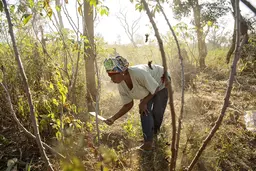
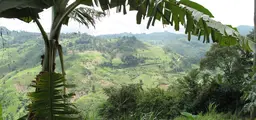
A water connection project built to link the Lobé river to the Kribi harbour, South Region, Cameroon (Photo: copyright Thierry Berger)
Insecurity of land tenure is a topical challenge for many African countries, exacerbated in the last decades by waves of large-scale investment in natural resources for extractive industries and environmental conservation projects, which take up considerable amounts of land.
Cameroon is no exception. While investments are often promoted as vehicles for poverty reduction, this rarely materialises due to important governance challenges in the country, including a legal system in flux, poor legal compliance with existing standards and weak regulatory action.
Faced with this situation, the promotion of good practice in land governance is increasingly on the agenda of political and legislative reform programmes. This includes greater reflection on how to secure the land rights of rural populations, who are often marginalised from decision-making structures, have few resources to defend themselves, and are generally the most affected by the new large-scale land uses that restrict their daily activities.
In 2008, the Cameroon government launched a series of reforms in the natural resources sector to update land, forest, mining and environmental laws. But the process has been too sectoral, both between ministries and non-governmental bodies.
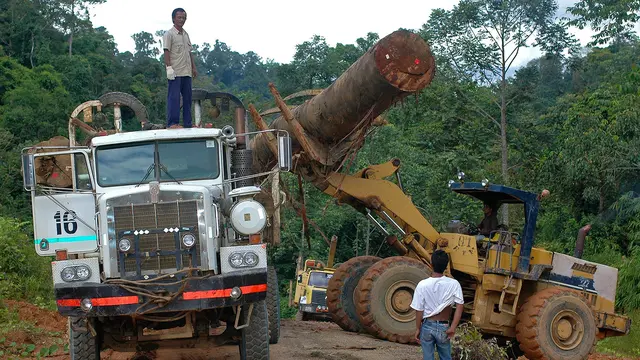
Meanwhile, land under customary tenure (some 85% of Cameroon's land) is becoming increasingly insecure. Investors have been seeking extensive areas for developing concessions. Mining, forestry and agribusiness concessions continue to overlap with one another and with protected areas and community lands, leading to conflicts.
A major coordination effort was needed to ensure that the voices of all stakeholders could be heard in reform processes, and that all stakeholders are well informed of both challenges to sustainable natural resource management facing rural communities and of good practice in securing rights and improving governance.
What did IIED do?
The LandCam project lasted for six years, from February 2017 to January 2023. Over this period, project partners worked with key stakeholders across Cameroon to improve land and resource governance by testing innovative approaches in rural areas and using the evidence base to propose workable legal reforms.
A detailed description of its activities, strategies, outcomes and lessons can be found in a dedicated research report (also in French).
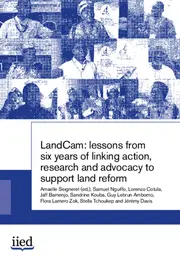
LandCam intervened at all levels (local, national, international) and engaged with the widest possible range of actors.
The aim was to bring together all the stakeholders in the land issue in order to reach a consensus that would enable the reform to move forward in a direction that would guarantee effective protection of the land rights of rural populations.
Pilot approaches aimed at securing rights to land and natural resources were tested in selected sites, and partners supported an inclusive debate at national level on reforms to the relevant laws.
Six years on, although the new law has not yet been adopted, the momentum generated by LandCam has enabled many advances to be made in the reform process.
The project and its local partners have supported the documentation of challenges concerning land, resources and the rights of rural populations in different areas of the country. This has generated a rich database and greatly advanced knowledge on the diversity of situations existing in Cameroon. This research has been published in a variety of formats, many of which can be accessed on the LandCam website.
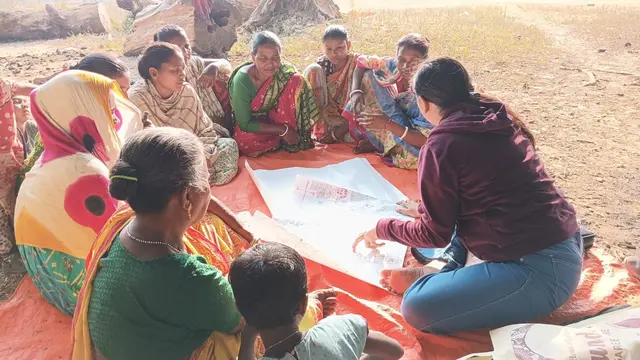
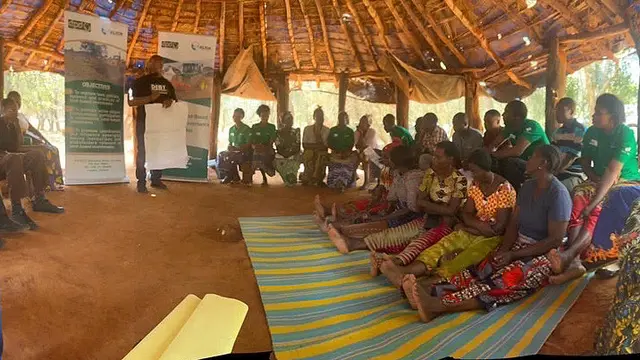
The project has also facilitated the creation of spaces for dialogue by bringing together civil society players, representatives of rural communities and Indigenous populations, various sectors of the administration, parliamentarians, the media, academia, traditional chiefs and the private sector.
They are all stakeholders in the land issue, and since 2017, have been discussing a wide range of subjects in order to learn from each other's perspectives, strengthen our shared knowledge, and feel better equipped to think about appropriate solutions.
IIED’s key role was to ensure overall project coordination, working closely with partners in Cameroon and internationally. We also provided technical support, enabling the experiences to be documented and shared.
News and updates
Publications
Additional resources
LandCam: lessons from six years of linking action, research and advocacy to support land reform LandCam, Amaelle Seigneret, Samuel Nguiffo, Lorenzo Cotula, Jaff Bamenjo, Sandrine Kouba, Guy Lebrun Ambomo, Flora Lamero Zok, Stella Tchoukep, Jérémy Davis (2024), Research report, IIED | en français
Civil Society Proposals for Land Reform in Cameroon : Assessment of the existing legislation, Wouri Consulting, Samuel Nguiffo (2019), Research report, CED | en français
Tracking changes in land governance to inform law reform in Cameroon: Methodology note (2019), Research report, CED | en français
The right to (im)proper housing of indigenous peoples: between insecurity and a quest for dignity, Romuald Ngono, blog (2019) | en français
From the farm to the plate: why land insecurity contributes to food insecurity, Sandrine Kouba (2019), blog | en français
Donors
International Development Research Centre (IDRC)
This project was produced with the financial support of the European Union, the Arcus Foundation, IDRC and ILC. Its contents are the sole responsibility of IIED, CED and RELUFA, and do not necessarily reflect the views of its funders.