Drought unmasks structural failures and systemic inequalities in Mazyopa informal settlement
Climate-induced drought in Lusaka's informal settlement of Mazyopa highlighted infrastructural failures that fuelled cholera outbreaks and gendered violence. With these failures exposed, Mazyopa’s residents called on city authorities to invest in infrastructure to support adaptation to climate hazards in the longer term.



In Zambia, community members have to walk long distances to collect water communal boreholes (Photo: Boundless Southern Africa, via Flickr, CC BY-ND 2.0)
In 2024, Zambia experienced its most severe drought in four decades. Cholera spread rapidly, leading to one of the country’s worst health crises in recent history.
The informal settlement of Mazyopa in Lusaka experienced devastating impacts from the drought and became a cholera hotspot. This inner-city neighbourhood of 5,000 or so residents, largely ‘invisible’ to authorities, was suddenly in the national spotlight.
Systemic failures exposed
As with many informal settlements, Mazyopa is considered ‘unorganised’, having grown without formal planning or regulation. Lack of basic infrastructure leaves residents without adequate drainage, water supply or sanitation.
Lack of clean water and proper waste disposal combined with high population density allowed cholera to take hold and spread unchecked.
The climate-induced drought and water-borne disease that followed unmasked deeper, pre-existing infrastructural failures in Mazyopa.
Drought’s gendered impacts
The impacts of these failures caused widespread devastation throughout Mazyopa. But it was women who suffered the greatest impact.
As part of a project exploring responses to drought in urban areas, the People’s Process on Housing and Poverty in Zambia (PPHPZ), the University of Zambia (UNZA) and IIED examined how women and girls in Mazyopa experienced the drought.
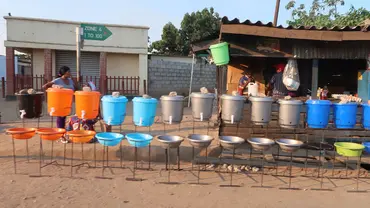
Mazyopa relies on just two boreholes and nine water kiosks. As the drought intensified, the boreholes dried up and water supplying the kiosks became increasingly unreliable.
One immediate fallout was the need to walk longer distances to water sources – sometimes up to 5km for one trip. On top of the physical demands of covering these distances, women were exposed to physical harassment and attacks on these journeys. Even carrying a mobile phone put them at risk of being mugged.
The lack of water also led to exploitation and abuse in the workplace. As part of the research, women in focus groups described incidents that took place while working in the affluent neighbourhood of Roma in northeastern Lusaka. Male gardeners working there would coerce women into sexual activity in exchange for water, or for money – with which women could buy water. Unplanned pregnancies led to an upswing in forced early marriages.
Our research found such incidents were widespread. Of the 480-plus households surveyed, 60% of the respondents reported a rise in gender-based violence linked to water shortages.
The toll on livelihoods
Drought in Mazyopa put livelihoods under greater strain. Women working in Roma noted higher competition for cleaning jobs, usually carried out by older women. This created tension between older and younger generations.
Crop gardening provides a common income source for women, but without enough water to maintain production, women were pushed into poorly paid alternatives such as manning water kiosks or being stationed at isolated taps. This posed significant safety risks: women would need to reach the water points in the early hours or leave after dark. Muggings and abuse were common.
Physical health, mental health, dignity
Women tried to manage the impacts of the drought by rationing their own water consumption, prioritising domestic chores and the water needs of others in the home.
The research showed drought taking a heavy toll on women’s mental health. Mental health is a taboo subject in the community and suffering is often disguised. Women reported high blood pressure, headaches, anxiety and feelings of hopelessness. Sixteen per cent of survey respondents, of which 72% were women, reported high stress levels during the drought had impacted their mental health.
Women’s personal hygiene suffered: they would go without water to wash themselves and sacrifice menstrual products due to the financial pressures in the household.
How crisis catalysed the demand for long-term change
Emergency responses from local government fell short. 'Cash for work' programmes and emergency cash transfers that provided immediate income support were geared towards at-risk residents that included women, children, elderly and disabled persons. Uptake was low with only 37% of residents enrolled and 14% receiving the cash transfers.
A quarter of residents were entirely unaware the support existed, suggesting a breakdown in outreach and mechanisms to ensure all residents were included.
But for the community of Mazyopa, drought is not a temporary crisis to be addressed through emergency response.
The research evidenced how structural failures were the underlying causes of the drought’s debilitating effects.
This catalysed a community response to highlight the urgent need for greater investment in mechanisms and infrastructure to support Mazyopa’s adaptation to climate impacts over the longer term.
The community were invited to participate in a quarterly-run city-level management meeting. The meeting was attended by representatives from the city’s council, and water and sanitation company; from ministries of water and sanitation, and green economy; and by ward councillors and NGOs.
Residents called on local authorities to take urgent action around water access, sanitation, tenure, livelihoods, gender inequality – all issues exposed by the drought. They also demanded to be included in the city development planning going forward.
To formalise their ask, the community produced the Mazyopa Community Manifesto, developed with the findings of the research. This included a bold demand for a permanent water and sanitation system alongside secure tenure and women's ownership rights. The manifesto was produced through an entirely inclusive process with inputs from all Mazyopa residents; voices and priorities of women, young people and displaced people were all heard.
The manifesto’s call was simple: “We are not asking for charity. We are demanding partnership, dignity and structural transformation”.
The community later reported back that the local authority had begun to put in place structures towards recognising Mazyopa as a regularised settlement. Mazyopa’s water utility company and water trust have recognised the need for greater investment in infrastructure to enable residents to access household connections, and to make water access via the kiosks more reliable.
The community’s manifesto drawn from the co-produced research is a strong first step towards making Mazyopa and its residents visible, represented and heard in future development plans for the city of Lusaka.
With thanks to Teresa Corcoran for contributions to this insight.