Breaking the ‘research aristocracy’: why climate resilience must be co-produced
For decades the international climate change discourse has been dominated by what can only be called a ‘research aristocracy’, with prestigious journals and elite academic institutions and their funders dictating what constitutes valid knowledge. The voices of those with daily, lived experience of climate change must be heard.


In Marsa Alam, Indigenous women are documenting their knowledge and ecosystem-based adaptation practices to inform better gender-responsive adaptation planning (Photo: UNDP Climate, via Flickr, CC BY-NC 4.0)
The most glaring examples of this restricted view are the reports prepared for the Intergovernmental Panel on Climate Change (IPCC). Authors commissioned by the IPCC were instructed to base these only on articles in peer-reviewed academic journals.
This means that they provide a useful shared (and trusted) resource for governments and academics. They also help discredit the outputs of climate change deniers.
Limited views and limited action
But the reports’ authors are limited in what they can draw on. There is a large and relevant literature on ‘Impacts, Adaptation and Vulnerability’ (the focus of IPCC Working Group II) that cannot be included because it is not published in a peer-reviewed academic journal.
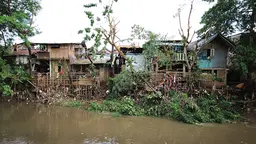
It means little attention to the work and writings of those who do not, or cannot, write for these journals.
Member governments of the IPCC also demanded that its assessments should not be policy prescriptive. So we have a large, diverse and relevant literature on climate change that cannot be used or cannot recommend what actions governments should take.
For this to change will need new methods of engagement. All too often vulnerable people and their communities are treated merely as data points or passive recipients of expert advice.
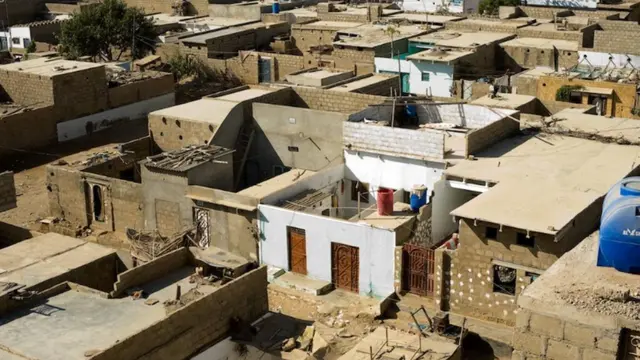
As extreme climate events intensify, the real experts on urban climate survival are not sitting in lecture halls, they are the women living in informal settlements who manage the daily realities of heatwaves, floods and storms.
To build true structural resilience – resilience embedded in the fabric and governance of the built environment – we must invert the conventional architecture of dialogue. Resilience cannot be delivered, it must be co-produced.
Moving beyond the ‘isolated pilot’
Traditional climate change adaptation measures frequently rely on isolated pilot projects – highly subsidised, tightly controlled experiments that look brilliant in a report but crumble the moment the funding ends.
They rarely scale because they ignore the organic socio-economic structures already operating on the ground.
Instead of rigid pilots, the Roof Over Our Heads (ROOH) campaign relies on ‘learning labs’. These are active, community-embedded spaces where women’s collectives, local artisans and young professionals work together as peers to test localised solutions.
Rather than treating a neighbourhood as a testing site, a learning lab uses a ‘spine’ of standardised data tracking – while allowing complete freedom for local experimentation. What works in one lab is shared peer-to-peer across a global network, creating an exponential multiplier effect rather than a slow, linear rollout.
Grounded innovation: the power of lived experience
When you give women the tools to map their own settlement’s vulnerabilities, the focus shifts immediately from theoretical carbon metrics to practical, lived realities. In ROOH labs across different climate zones, adaptation is measured by everyday breakthroughs such as:
- Micro-climate materials: testing breathable ‘Vedic plaster’ in the hot, dry climate of Surat (India), or using solar-reflective roof coatings in Pimpri (India) to cut indoor heat
- Tangible comfort: in upgraded homes internal temperatures drop significantly, reducing ceiling fan usage from 12 to just two hours per day
- Livelihood protection: a secure, climate-resilient roof means a home remains a safe space for women to run home-based businesses, secure from monsoon rainwater leaks or blistering summer heatwaves.
We used to sleep outside in the summer because the heat inside was unbearable. Now, after the upgrades, we host guests. This is no longer just a shelter – it's a home
– Anita Sathe, Mahila Milan leader, Pimpri
Financial reality check
The greatest disconnect of the academic approach is finance. High-level adaptation funds expect neat, multi-year bankable assets. But for a household in an informal settlement, the financial reality is to enable an annual refurbishment cycle – such as patching up the roof with tarpaulins or scrap metal sheets ahead of every monsoon season.
These informal borrowing mechanisms cannot be dislodged overnight. The goal of a learning lab is to work with existing community savings networks, such as Mahila Milan, to introduce blended financing models.
By combining small community savings, non-cash contributions, and targeted climate finance, we can transition families from the financial drain of yearly survival patching to long-term, incremental structural upgrades.