Items tagged:
Intergovernmental Panel on Climate Change (IPCC)
-
Why the UK parliamentary committee recommendations on international climate finance are so important
The International Development Committee recently published its findings on UK aid for combating climate change. Clare Shakya, IIED’s director of climate change, gave evidence at the parliamentary inquiry and writes what the UK needs to do to make sure money reaches where it matters most
-
The IPCC’s report on global warming of 1.5˚C spells out the urgency of action
IIED director Andrew Norton looks at the new report on climate change
-
Can we transform our cities?
Can cities prosper while meeting their responsibilities for acting on climate change? This is the focus of a new book by IPCC authors, co-edited by IIED's David Satterthwaite
-
Hundreds discuss rewriting the narrative on Africa and climate change
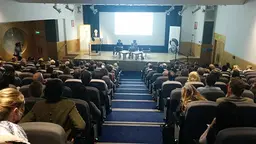
Hundreds of policymakers, researchers and academics gathered for the 2014 Barbara Ward Lecture where climate expert Fatima Denton called for the narrative on Africa and climate change to be rewritten
-
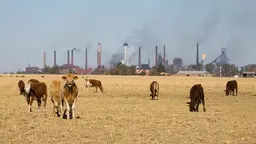
If the coal industry really cared about helping poor countries, it would shut itself down
Coal companies are in complete denial — the developing world doesn't need more pollution or expensive new grids, but renewable energy sources
-
The IPCC and an urbanising planet
The IPCC's Fifth Assessment gets the importance of understanding and acting on urbanisation
-
IIED responds to IPCC climate change report
The Intergovernmental Panel on Climate Change has released its Fifth Assessment Report, issuing the starkest warning yet on the perils of continuing with 'business as usual'
-
2014 IIED lecture: Let's rewrite the narrative on Africa and climate change
IIED is delighted to announce that the 2014 Barbara Ward Lecture will be delivered by renowned climate change specialist Dr. Fatima Denton
-
A week that may change the world
It's been a busy week for IIED senior fellow Saleemul Huq, with plenty of action unfolding on the climate change front in New York. Here he provides an inside look into what transpired, and some reflections on how the recent events may impact upcoming climate negotiations
-
Letter to America: Gambia envoy asks Obama directly for US climate leadership
Pa Ousman Jarju, Minister of Environment of Gambia and former chair and special envoy on climate change for the 48 Least Developed Countries, has written an open letter to US President Barack Obama
-
Urgent action needed says leader of the Least Developed Countries Group
Ahead of the latest UN climate negotiations in Bonn, the Least Developed Countries Group Chair points out that while science tells us that we can limit global temperatures to save the world's poorest countries, we need the will to do it
-
Finally, the US gets serious on climate change
President Obama's declaration on limiting emissions of carbon dioxide by a third from coal-fired power plants in the US marks the tipping point in US engagement in tackling climate change
-
Risky business: assessing potential impacts of REDD+ in Nepal
Nepal has begun to assess the potential harm and benefits of the compensation scheme for protecting forests
-
The IPCC rings the warning bell louder. Is anyone listening?
IIED Senior Fellow Saleemul Huq, one of the co-authors of the latest IPCC report on climate change, highlights the key findings of the publication and what policymakers need to do next
-
Climate change and religion in flooded Bangkok
I have been attending a meeting of around forty Archbishops and Bishops from all over Asia for several days now at Assumption University on the outskirts of Bangkok, Thailand surrounded by flood waters approaching the country’s low-lying capital city.
-
“Protecting and promoting the rights of indigenous people benefits us all”
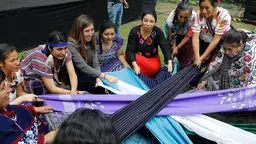
He gave the example of indigenous peoples in Peru who are responding to climate change by reintroducing native potato varieties and so are “helping to conserve the earth’s biodiversity”. “Indigenous peoples have been living a ‘green economy’ for centuries,” he added — economists should look to old practices in indigenous communities for new ways to achieve sustainable development.
-
IIED Insights: Q&A with Hannah Reid on community based adaptation
Climate change is set to significantly impact people and the environment. Rising temperatures will change crop growing seasons and impact food security. Changing rainfall patterns will cause water shortages or flooding in some areas. And rising sea levels means a greater risk of storm surges, flooding and wave damage for coastal regions across the world.
-
Less erosion, less warming
I recently met with a Member of the Bangladesh Parliament to discuss the potential for mitigation in the agricultural sector under IIED’s work on the economics of climate change in the agricultural sector. Agriculture produces 10–12 per cent of total global emissions but also has considerable mitigation potential — 70 per cent of which is in developing countries — and I expected the Honourable Member, a well known climate change champion, to back the cause. But he did not seem entirely convinced. Why should decision makers listen? What’s in it for them?
-
Least Developed Countries
Least Developed Countries (LDCs) are the poorest countries in the world. A number of criteria determine this status. As of May 2009, LDCs number 50. Roughly 65 per cent are in Africa; a number of others are known as Small Island Developing States (SIDS). Many SIDS are low-lying and located in parts of the world already prone to extreme weather events, factors that make them highly vulnerable to climate change impacts such as sea level rise and fiercer and more frequent tropical storms.