Items tagged:
Indigenous knowledge
-
Decoloniality and the new ethics of climate and nature
"How many planets do we need if everyone on earth were to live just like you?"
-
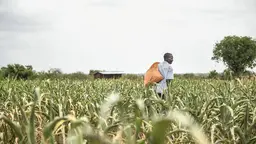
Indigenous food systems prove highly resilient during COVID-19
Indigenous Peoples’ local agroecological food systems bring valuable lessons of resilience for policymakers heading to next month’s UN Food Systems Summit
-
Indigenous Peoples’ food systems and COVID-19
In the run up to the UN Food Systems Summit in September 2021, the International Network of Mountain Indigenous
-
Why traditional knowledge and Indigenous Peoples’ rights must be integrated across the new global biodiversity targets
Biodiversity policymakers negotiating the new international framework at the upcoming global biodiversity summit (CBD COP15) must ensure traditional knowledge and the rights of Indigenous Peoples and local communities (IPLC) are integrated across all post-2020 targets aimed at saving the world’s biodiversity
-
Supporting a nature positive, equitable Global Biodiversity Framework
IIED is keen to ensure that the final post-2020 Global Biodiversity Framework that is negotiated by Parties to the Convention on Biological Diversity is not just good for nature, but good for people too
-
Indigenous knowledge, people and nature – all crucial to Kunming: Make Change Happen podcast episode 11
In this episode of Make Change happen, we explore the concept of 'biocultural heritage', which comes from the lived experience of Indigenous Peoples, and is critical to the success of the new Post-2020 Global Biodiversity Framework
-
Here's why Indigenous economics is the key to saving nature
Mainstream Western economics is destroying the environment - and the Indigenous knowledge that has conserved nature for millennia
-
Devolved Climate Finance (DCF) Alliance
An alliance of government and non-government organisations is promoting a mechanism for delivering climate finance to the local level for inclusive climate adaptation
-
Indigenous food systems, biocultural heritage and agricultural resilience
IIED is working with partners in the UK, China, India and Kenya to establish a new partnership and network for interdisciplinary research on indigenous food systems. The aim is to link humanities academics, agriculture researchers and indigenous peoples to design new interdisciplinary research on indigenous food systems past and present, from farm to plate, and enhance evidence on the role of indigenous crops in agricultural resilience
-
How can we incorporate local knowledge into climate planning and policy? …Maps!
In Kenya, participatory mapping makes it possible for indigenous knowledge to be included in planning and policy where for too long it was excluded, showing technology can bring people’s voices to power
-
International Network of Mountain Indigenous Peoples (INMIP)
The International Network of Mountain Indigenous Peoples (INMIP) brings together mountain communities from 11 countries as they seek to revitalise biocultural heritage for climate-resilient and sustainable food systems. IIED provides communications, advocacy and capacity support for INMIP.
-
Indigenous biocultural heritage for sustainable development
IIED and partners in four countries explored how the traditional knowledge, biodiversity and landscapes of Indigenous Peoples can contribute to sustainable development
-
Mountain communities stress the importance of biocultural heritage for global food security
Ahead of an intergovernmental forum on biodiversity and food security, the International Network of Mountain Indigenous Peoples has published a report highlighting the importance of biodiversity and indigenous knowledge for climate adaptation
-
Three ‘E’s to guide the post-2020 biodiversity roadmap
Joji Cariño sets out three key principles that could underpin a new biodiversity deal where humans and nature work in harmony – and explains why indigenous peoples and local communities will be key in shaping this deal
-
Mountain indigenous peoples call for support for biocultural landscapes to achieve the SDGs
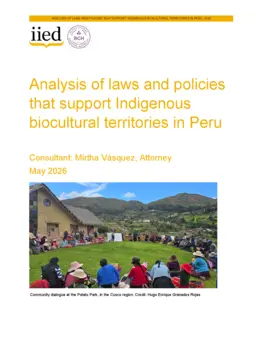
The International Network of Mountain Indigenous Peoples has called for support and legal protection for biocultural heritage landscapes and community conserved areas following an event in Peru
-
Designing a biocultural heritage labelling system: survey results
Our survey found broad support for a labelling scheme for biocultural heritage-based products. Now we need to get a pilot project off the ground
-
Biocultural heritage territories film now in Spanish
A visually stunning photofilm that profiles three biocultural heritage terriritories and their role in biodiversity conservation and locally determined development is now available in Spanish. Biocultural heritage territories protect indigenous and traditional land tenure and use land management to preserve fragile ecosystems and promote locally determined patterns of development
-
The Paris Agreement – a framework for local inclusion
The Paris Agreement commits governments to climate action. To deliver this agenda successfully, they must engage with all sectors of society, including indigenous peoples, and recognise traditional knowledge
-
Consultation: designing a new biocultural heritage indication
How can indigenous people benefit more from their biocultural heritage? A new project wants to hear your feedback on how a labelling scheme for biocultural heritage-based products could work
-
New film highlights mountain communities' climate workshop
The International Institute for Environment and Development (IIED) has released a film showcasing an event where mountain communities discussed the impacts of climate change and how to respond using their biocultural heritage
-
'Guardians of Diversity' film in Spanish and Chinese
A film documenting an international meeting of indigenous farmers in Peru's Potato Park to discuss adaptation to climate change is now available in Spanish and Chinese
-
Sustaining local food systems and agricultural biodiversity
How and under what conditions can decentralised governance, capacity building and participation by farmers promote food systems that adapt to changing conditions and climates and maintain agricultural biodiversity?
-
Voices and flavours of the earth: Food sovereignty in the Andes
Voices and flavours of the earth: Visualising food sovereignty in the Andes is a multimedia publication that uses video, audio, images and text to describe how indigenous communities are drawing on their knowledge and cosmovisions to rethink the priorities and governance of food and agricultural research in the Andean Altiplano of Bolivia and Peru.
-
Learning to value Mother Earth
Making informed choices about eating foods that have less of an environmental impact is increasingly important. We can all learn lessons from local communities living in the Andes
-
With food and climate change, policymakers risk betting on the wrong horse
Governments are ignoring a vast store of knowledge - generated over thousands of years - that could protect food supplies and make agriculture more resilient to climate change, says a briefing published today by IIED.
-
New website shows how nature plus culture equals resilience
Nature and culture are deeply linked. Together they are central to the lives and livelihoods of hundreds of millions of marginalised people around the world, and will be critical to how they respond to climate change and other environmental challenges.
-
International farmers exchange for mutual learning: Privatisation of knowledge and seeds
In February 2007, ahead of the Nyéléni Forum for Food Sovereignty, IIED and its partners from India, Indonesia, Iran and Peru facilitated a preparatory workshop for farmers from Mali and neighbouring countries