Items tagged:
Green Economy Coalition
-
China, ecological civilisation, and green economy vision: 2021 and beyond
This IIED Debates event on Monday, 1 March explored the role of ‘eco-civilisation’ in China’s environmental leadership and what is required for China to become a global force for green economic transition in 2021 and beyond
-
Why inclusion matters for a green post-COVID recovery
This IIED Debates event, hosted in partnership with the Green Economy Coalition, on 27 November, brought together partners from Peru and India to discuss how citizen-led dialogues can generate more effective policy and accelerate the green recovery
-
How to get the most out of dialogue
A new IIED-commissioned review seeks to deepen understanding of what makes effective dialogue and why
-
Allyship not ownership: how NGOs can back social movements
The Green Economy Coalition's Ben Martin continues our series exploring the importance of public climate movements and what this could mean for organisations working on sustainable development. He argues that NGOs are best placed to take a supportive back seat role, not to be backseat drivers
-
Time to turn the PAGE?
The Partnership for Action on Green Economy is an international alliance of UN agencies, partner organisations and governments working together for a transition to a green and sustainable economy. The alliance's third ministerial conference aimed to showcase innovation and experience, but IIED's Laura Kelly felt a key ingredient was missing
-
Leading experts set out their vision for a green economy
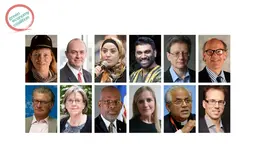
To mark the launch of its new website, the GEC asked leading green thinkers to set out their personal vision of a green economy. Politicians, activists and industry leaders from around the globe responded. Now the GEC is asking: "What does 'a green economy' mean to you?"
-
IIED at ministerial green economy conference
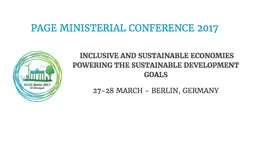
IIED researchers spoke at the international ministerial conference of the Partnership for Action on Green Economy (PAGE) from 27-28 March, discussing how best to support countries making the transition to inclusive and sustainable economies
-
Why social inclusion matters for green growth
From wetland protection in South Africa to scrapping fossil fuel subsidies in Indonesia, the best climate policies are pro-poor
-
Does green growth miss the majority?
On 25 February IIED is hosting an event on the informal sector – we want to better understand how it can contribute to creating a greener and more inclusive economy
-
Sustainable goals for a sustainable green economy
The Sustainable Development Goals set the priorities for a more sustainable, green economy, but that means that how we assess and measure that economy needs to change, argues Oliver Greenfield
-
Mainstreaming green economies: pitching to people and power
The Green Economy Coalition, which includes IIED among its members, hosted its annual meeting on 1 and 2 September, and coverage of the event is available here
-
Ten ways to secure social justice in the green economy
IIED and CAFOD have published guidelines that policymakers can follow to improve the social outcomes of green economy strategies
-
Support for green economy surges but crucial gaps remain
Governments, businesses, investors and others are embracing the ‘green economy’ idea, but differences in the way they interpret it pose barriers to sustainable development, according to a report published today by the International Institute for Environment and Development and the Green Economy Coalition.
-
Mainstreaming nature and biodiversity into wider planning and policy
Biodiversity conservation, climate change and economic development must be tackled together by the institutions that drive policy, rules, plans, investment and action – a process known as ‘mainstreaming’. We aim to ensure this happens through research, capacity building and partnerships with key organisations, communities and other actors
-
Nigerian subsidy crisis shows the road to a green economy isn’t smooth
The photos coming out of Nigeria over the last two weeks speak for themselves.
-
Green Economy Coalition gives Rio 2012 text a Grade B
Twenty years on from the first summit on sustainable development, yesterday the United Nations Conference on Sustainable Development Bureau released th
-
Green economics – surviving the trial
“Neoliberal, capitalist economics is bankrupt, morally and intellectually, but nothing changes,” were the opening words of Neal Lawson from Compass at a debate Putting the Green Economy on Trial. He described the infrastructure of consumerism and marketing that has developed under the current system as difficult to escape; a seductive new vision of what it is to be human is needed, he said.
-
Glimpse of a green new future
Picture this. Petrol driven cars have long been phased out worldwide. They all have been replaced by electric vehicles. Noise and air pollution has largely been eliminated. As a result, cities are now quieter, calmer, cleaner. Properties along motorways and busy arteries of major cities have once again become desirable places to live. Petrol stations have now been replaced by a network of charge points where users can charge their vehicles for long-haul trips across the country. The charging stations are powered by renewable energy sources.
-
Three angles on 'green growth'
How can you marry environment and development? Over the past two years, governments and businesses have begun to trumpet ‘green growth’ as one way of boosting economic growth without compromising environmental sustainability.
-
Green Economy Coalition
The Green Economy Coalition (GEC) brings together environment, development, trade union, consumer and business sectors from the North and South. The GEC is committed to a common cause: accelerating a transition to a new green economy
-
Green economy – learning from the Caribbean
Since the recent global financial crises, the phrase ‘green economy’ has appeared liberally in newspaper headlines, and politicians’ and CEOs’ promises. They usually mean ‘low-carbon economy’, the idea of shifting energy and infrastructure towards clean, high-tech systems. Green economy is seen as an answer to financial problems – G20 stimulus packages included ‘green’ components, hoping to improve national competitiveness and create new jobs through green technology, and wean economies off insecure and expensive fossil fuels. And it is seen as a practical way to supplement climate change conventions – you don’t need an international agreement to change economic practices that cause climate change. All very good news for Danish wind farm installers, Japanese hybrid car manufacturers, and Chinese solar panel factories. But what does the green economy mean for the developing world?