Protecting local communities against involuntary displacement in Guinea: a lack of political will?
For more than two years, Guinea has had a regulatory framework to protect the rights of communities affected by development projects. Despite widespread agreement, communities are still awaiting the implementing decree. Mamadou Alpha Diallo and Amadou Bah look at why it urgently needs to be officially adopted.



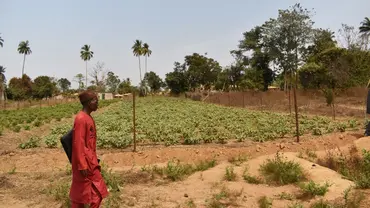
CODEC media campaign with communities in Boffa prefecture (Photo: Mamadou Alpha Diallo/CODEC)
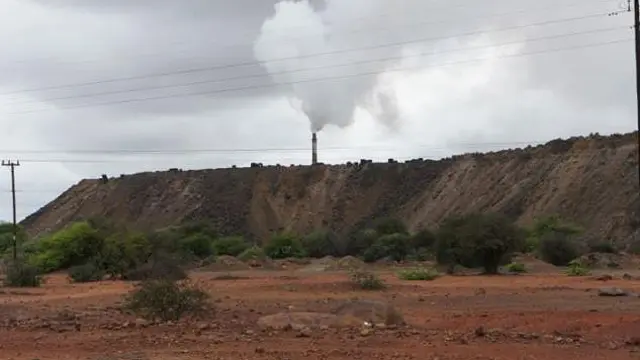
A country rich in natural resources, Guinea is witnessing numerous large-scale investment projects designed to exploit these resources, notably mining bauxite in the northwest corridor, gold in the northeast and iron at Mount Simandou in the southeast.
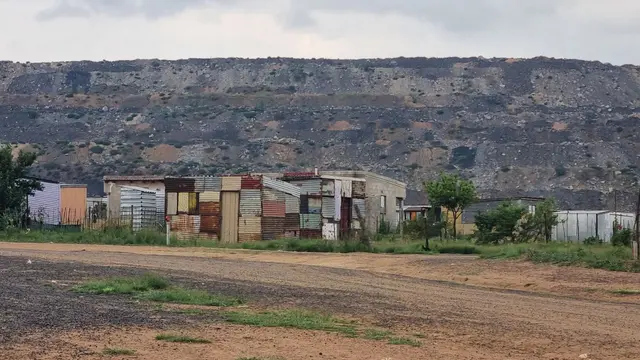
While these projects may bring economic benefits to the country, they have a large land footprint and have a considerable impact on local communities. Communities find themselves faced with involuntary displacement, losing their land and their livelihoods, often without adequate prior compensation. The involuntary displacements take place in a context marked by the absence of national regulations governing compensation processes for persons affected by development projects.
Lack of regulation of involuntary displacements
At present, companies generally do not comply with international good practice governing involuntary displacements. They can develop their own mechanisms for compensating populations affected by investments, including deciding the amount of compensation paid to them.
For example, in 2019, 13 villages in the Boké region, whose inhabitants claim they are victims of land grabbing and the destruction of their environment and livelihoods due to the expansion of a bauxite mine, filed a complaint against Compagnie de Bauxite de Guinée with the International Finance Corporation (IFC), the World Bank’s private sector arm. The process is still ongoing.
In 2024, AngloGold Ashanti's subsidiary reached a financial settlement with 360 families forcibly displaced to make way for its gold mine in the Siguiri prefecture in late 2015 and 2016, concluding a six-year mediation process before the IFC.
The Simandou mega-project, which seeks to exploit the world's largest untapped iron ore deposit (content in French), could impact at least 450 communities and raises many concerns (in French). The state and investors are also planning numerous hydroelectric projects (in French) in Guinea, some of which have already been built, including the Souapiti dam, which has displaced about 16,000 people.
This situation is increasing food insecurity and causing deteriorating relations between the affected communities, state actors and companies.
Developing a regulatory framework for resettlement and compensation
In 2018, the Guinean government made a commitment, with the support of the German Development Agency (GIZ), to regulate involuntary displacements caused by development projects by drawing up a “national reference framework on the resettlement and compensation of populations impacted by projects in the Republic of Guinea” (the reference framework).
The document aims to provide a normative framework to guide the management of any involuntary physical and economic displacement resulting from public or private projects in Guinea. It aims to ensure that all resettlement projects are carried out in accordance with international principles for the protection of human rights and legitimate tenure rights, including those specific to women, national legislation and international good practice, all of which present a real challenge.
The reference framework, therefore, helps the state and investors manage any cases of involuntary displacement of populations impacted by development projects, whether public or private. It provides them with practical advice on how to comply with Guinean law and international good practice on key issues such as consultation and just and prior compensation.
It also contributes to the private sector obtaining a social licence to operate because it promotes a peaceful climate within communities during and after displacement processes.
Affected communities are anxious to see the framework implemented, and have said that it "will reduce problems between the communities and the mining companies in relation to their livelihoods" (in French).
Despite the agreement of all stakeholders on its content in 2022 and the subsequent requests from communities and civil society, the framework has still not been formally adopted.
An inclusive and consensual process
The framework is the result of years of consultations. In 2018, the Guinean government invited private sector players, mining companies and civil society players, including CODEC, a consortium of eleven Guinean civil society organisations, to participate in a study on expropriation and compensation processes in the country's bauxite areas.
CODEC supports legal and institutional reforms undertaken by the government as part of development projects that have a direct or indirect impact on the lives of communities in the areas of mining, land, agriculture, energy, infrastructure and water. The study results highlighted the disparate practices of mining companies in terms of compensation and resettlement of communities impacted by mining projects.
In January 2020, an interministerial committee shared the first version of the reference framework. CODEC as member of the technical committee responsible for drafting the document, in collaboration with IIED, organised consultations to identify the needs of local communities whose concerns had not been effectively taken into account.
This led the technical committee to revise the document. CODEC also called for the scope of the reference framework to be extended to all development projects, not just those in the mining sector.
In September 2022, the Ministry of Mines organised a workshop at which representatives of the state, private and public sector players, including the Chamber of Mines, CODEC and technical and financial partners, agreed on the content of the reference framework, recommending that it be adopted by regulation.
A lack of political will to adopt the reference framework?
Local communities around Guinea continue to be at risk of displacement and loss of their livelihoods because of large-scale investments. The situation is increasingly urgent, given the growing flow of investment, particularly in the mining sector: many projects, notably Simandou, have a considerable land footprint.
Between 2022 and 2024, CODEC organised media campaigns (in French), regular talks with state actors, and community mobilisation campaigns in Guinea's four natural regions, including a national workshop on 7 May 2025 (in French), to encourage the government to fulfil its commitment to adopt the framework.
CODEC's many meetings with decision-makers indicate that, in principle, the government is not against adopting the framework. However, to date, this has not been enough to make it a reality, and CODEC does not know the reasons for this blockage. This apparent lack of political will is leading to repeated violations of communities' legitimate tenure rights, exacerbating the precarious situation of households affected by development projects.
Although its plea has had no effect so far, CODEC will continue to lobby state actors until the reference framework for involuntary displacement processes in Guinea comes into force.