Phasing out transport fuel subsidies in Mexico
Despite Mexico phasing out transport fuel subsidies in 2018, they were reinstated in 2022 due to the global energy crisis. Nevertheless, the Mexican case remains one of the most ambitious and successful examples of subsidy reform, demonstrating that the process can benefit both people and climate.

Oil rig being serviced by a supply ship in Mexico (Photo: J.f Manzanero, via Unsplash)
Why was subsidy reform needed?
In Mexico, a gradual phase-out of transport fuel subsidies for petroleum, diesel and liquid petroleum gas (LPG) began in 2013, as part of former president Enrique Peña-Nieto’s package of institutional reforms Pacto por México (Pact for Mexico).
By 2015, the country had succeeded not only in eliminating these subsidies but implementing taxes on transport fuel. This was done by opening the market to foreign oil companies to introduce more competition, and through the introduction of a new carbon tax and amendments to existing excise taxes.
Prior to the subsidy reform process in 2013, Mexico had been subsidising the costs of fuels such as petroleum, diesel and LPG for over a decade, using public funds to decrease fuel costs for consumers. The main objective was to protect consumers from international price rises, but they also served to control inflation and prevent social unrest.
Mexico has also historically been one of the largest exporters of oil in the world (ranked the 15th largest oil exporter globally in October 2026), and its oil industry is dominated by state-owned oil company Petróleos Mexicanos (Pemex). Prior to the reforms, Pemex was the only company responsible for producing and refining crude oil in Mexico, and the government was heavily reliant on income from oil sales.
During these years of subsidising transport fuels in the decade prior to 2013, the government aimed to smooth the impact of international price rises on the domestic market by adding subsidies and introducing gradual, phased monthly price increases for consumers.
However, in the first decade of the 2000s, these gradual increases in domestic prices were not able to catch up with the much faster and higher increases in international prices of petroleum products, and so government revenues started to fall. In 2008, the peak year of subsidising fuel, Mexico spent US$20 billion (PDF) subsidising the consumption of gasoline, diesel and LPG.
Subsidies were positive for consumers as domestic fuel prices were kept low in comparison to international costs. However, some studies suggest only higher-income groups benefited from the subsidies as they were more likely to have a private vehicle and be able to purchase transport fuels.
The subsidies were also a significant drain on government money, and encouraged consumption of transport fuels, meaning they had a negative environmental effect by enabling higher consumption of fossil fuels and therefore more carbon emissions and air pollution.

What did the reform achieve?
The objective of the reform was threefold: to generate increased revenues for the government, reduce its reliance on income from oil exports, and tackle the environmental impacts of increased fuel consumption, largely attributed to the fuel subsidies.
The reform was carried out through the liberalisation of the market (by opening up to foreign producers and distributors and ending the state monopoly of Pemex), by raising consumer prices, and by introducing new environmental excise taxes and a carbon tax on fuel prices. The reform was largely successful and by 2015, Mexico had succeeded in phasing out transport fuel subsidies completely.
However, there is no clear information about how the money saved from subsidies has been repurposed. One report (PDF) mentions the revenues have enabled targeted assistance to be given to the poor, but no further details are given in this regard. It is therefore difficult to quantify any net social or environmental benefit from the reform.
There is contradictory evidence as to whether the subsidy reform produced positive social outcomes overall. Some studies suggest the reforms disproportionately impacted lower-income households, especially since they occurred alongside similar price hikes for electricity costs.
However, other studies indicate that while consumer prices are now higher, the subsidies generally only benefitted higher-income households in the first place, so the impact for lower-income households is minimal.
Similarly, while it is assumed the subsidy reform had a positive environmental benefit by removing the cost incentive for consumers to invest in transport fuels, its impact could not be quantified in the literature.
A reduction in the consumption and use of transport fuels would mean a reduction in carbon emissions and air pollution, and some studies do suggest that LPG and gasoline consumption decreased from 2014-18 following the increase in prices.

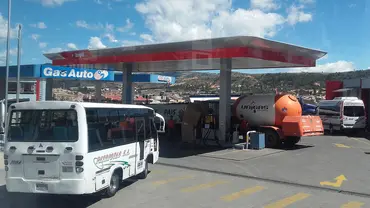
A Pemex petrol station in Mexico. The country phased out transport fuel subsidies during the 2010s to reduce public spending and discourage fossil fuel consumption, but reinstated support in 2022 amid rising global energy prices (Photo: Michael Rael, via Flickr, CC BY 2.0)
Lessons from Mexico
The Mexico example is unique in that it showcases the experience of an extractive country with a high degree of dependence on income from oil exports and a long history of subsidisation, utilising the public administration (through a wholly owned public oil company) as a vehicle to employ the price support mechanism.
It therefore shows that even in the most extreme circumstances, subsidies can be successfully reformed when reduced gradually, combined with tax reforms and liberalisation of the market. However, the social and environmental impact of the subsidy reform is unclear and warrants further research.
While there is evidence the subsidy reforms have produced positive environmental outcomes by reducing consumption of carbon-intensive fuels, some reports (PDF) highlight that by contrast, the carbon tax may be creating a perverse incentive to continue using carbon-intensive fuels such as coal and natural gas, since the taxes applied are not proportional to the carbon content of each fuel.
Ensuring the price paid is commensurate to the environmental impact of these fuels would increase the environmental impact of the overall reform package and also allow Mexico to more effectively meet its commitments to reduce greenhouse gas emissions under the United Nations Framework Convention on Climate Change.
Furthermore, Mexico could consider targeted social cash transfers (PDF) to poorer households, to mitigate the impact of subsidy reform. This is a strategy which has been effectively used in other countries as a way to replace subsidies with measures that specifically aim to aid the poor, without creating an incentive to invest in fossil fuels or other environmentally harmful products.
Mexico already has an established anti-poverty programme, Oportunidades, which could be leveraged to deploy a service like this.
What happens next?
Despite successfully phasing out fuel subsidies in 2018, they were reinstated in 2022 owing to the war in Ukraine and the resulting global energy crisis. Nonetheless, the Mexican case remains one of the most ambitious and successful examples of subsidy reform, demonstrating that when done carefully, the process can bring benefits for both people and the climate.
In 2025, Mexico submitted an ambitious new Nationally Determined Contribution (NDC) to lower emissions dramatically by 2035, so quantifying the impact of subsidy reform and applying taxes commensurate to the environmental impact of different transport fuels will be key to monitoring progress against this target.
Mexico will be expected to track the progress of its carbon emissions at upcoming international climate negotiations, such as the 2026 climate change conference (COP31) in Turkey. In addition, Mexico should consider alternative ways to alleviate the impact of subsidy reform on lower-income households, including through social cash-transfer programmes.
Further resources
Statement: Mexico announces strong new climate commitment (2025), World Resources Institute
Relationship dynamics in social service delivery: a look at the Oportunidades/Progresa conditional cash transfer program in Mexico, Alev Kayagil (2019), The Public Sphere: Journal of Public Policy, journal article
The environmental tax and subsidy reform in Mexico, Johanna Arlinghaus, Kurt van Dender (2017), OECD working paper
Mexico’s efforts to phase out and rationalise its fossil-fuel subsidies (2017), G20 Germany Peer-Review Team
The 2013 Mexican energy reform in the context of Sustainable Development Goal 7, Maria Guadalupe Garcia-Garza, Jeyle Ortiz-Rodriguez, Esteban Picazzo-Palencia, Nora Munguia, Luis Velazquez (2013), Energies, journal article
Getting prices right: addressing Mexico’s history of fuel subsidies, Amy Jordan, Michael Plante (2013), Federal Reserve Bank of Dallas, journal article
Oil exports by country 2026, World Population Review
Author

Nicola Sorsby ([email protected]) is a researcher on locally led action for nature and climate