Egypt: reforming fossil fuel subsidies to support social and economic priorities
Egypt has repurposed its fossil fuel subsidies to address social and economic pressures with additional climate benefits, while targeted social assistance programmes have mitigated risks created by subsidy reform. Egypt’s experience provides a foundation for further aligning fiscal and social policy with climate objectives.

Minibuses on the streets of a busy city in Egypt. Bus drivers were among key groups affected by the subsidy reform due to diesel prices (Photo: Roland Denes, via Unsplash)
Why was subsidy reform needed?
In 2014, Egypt began to reform its fossil fuel subsidies which had become fiscally unsustainable, consuming more than one fifth of the government budget in 2013.
The reform was introduced in a context of slow economic growth and high unemployment, including particularly high levels of youth unemployment and civil unrest following the Arab Spring.
These conditions increased the need to create fiscal space to support the economy and address unemployment. Simultaneously, the political conditions resulted in a high awareness of the negative pitfalls of socioeconomic inequality and a willingness to implement changes.
Egypt introduced fossil fuel subsidies in the 1950s as part of broader social welfare and economic stability policies. The subsidies were intended to augment the real incomes of lower-income and middle-class households through access to low-cost energy services.
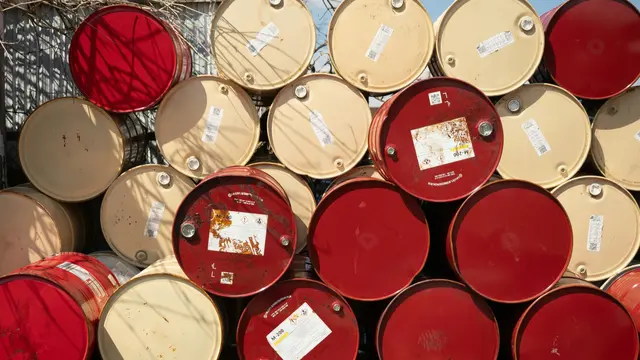
The government had maintained low consumer prices for petroleum products, including gasoline, diesel, kerosene and natural gas. However, the subsidy system created perverse incentives: low energy prices encouraged the overconsumption of fuel, distorted commodity markets, and contributed to poor-quality and unreliable services. The subsidy system also contributed to high CO2 emissions.
Additionally, the benefits of the subsidies were poorly targeted and distributed unevenly across households. The wealthiest 20% of households received 46% of the benefit, while the poorest 20% received only 9%. This difference was even more pronounced in urban areas, where the wealthiest 20% received eight times more subsidies in absolute terms than the poorest 20%.
In 2013, fossil fuel subsidies in Egypt cost US$21 billion, equivalent to around 22% of the government budget or 6% of GDP. The fiscal cost of the subsidy framework was substantial, impeding key government investment in sectors such as education and healthcare.
What did subsidy reform and repurposing aim to achieve?
The government’s main objective was to free up fiscal space to address slowing economic growth and rising unemployment, and allow greater investment in healthcare, education and infrastructure. Along with changes in subsidies policy, the government also introduced measures to protect households from the effects of higher energy prices.
The Sisi government implemented the reform (PDF), with technocratic government officials playing an important role. The reform was supported by an informal coalition of businesses, industry, academics and experts which had encouraged Egyptian political leaders to undertake energy subsidy reform, despite the fact some industry and business groups benefited from the status quo.
It practical terms, this meant the subsidy reform was accompanied by a number of supporting programmes intended to reduce the impact of higher energy prices on households, as well as new taxation to address economic disparity.
One measure was the extension of the food subsidy programme to 20 new products, including bread, rice, sugar, flour and oil. This was introduced one month before the fossil fuel subsidy reform to proactively mitigate rising food prices cause by higher input (fuel) costs.
Two stimulus packages, introduced in August 2013 and January 2015, complemented the social assistance programmes and were used to increase the public sector’s minimum wage. Gulf countries also provided substantial external support, including $3 billion worth of fuel supplies and a $12 billion support package.

What were the challenges?
Subsidy reform measures affected different groups in different ways. Those eligible and able to access social protection schemes were among the ‘winners’ of the new approach, though a systematic study of how this compared to rising household costs has not been conducted.
Wealthier groups were among those that lost from the reduction in energy subsidies, including fossil fuel businesses that benefited from previous subsidies and wealthier groups that now faced larger capital gains tax.
However, the wealthy elite had also experienced conflict fatigue and in some cases pushed for reform as they wanted inequality to be addressed.
People working in transport were another group affected by the reform, including private minibus drivers in urban areas (PDF). Mitigating the impact on transport was considered a major risk because diesel was – and continues to be – important for transport, and following reform its price increased by 64%.
In response, the government offered free transport on army buses for lower-income households. Clear communication plans also helped to reduce public opposition to reform, which was relatively limited.

A wind turbine farm at Zaafarana in Egypt. The country's fossil fuel subsidy reforms have freed up public resources to support social and economic priorities, while offering opportunities to align energy policies with climate goals and the transition to cleaner energy (Photo: Hatem Moushir, via Wikimedia Commons, CC BY-SA 3.0)
Subsidy reform in Egypt: key lessons
Egypt provides a case of subsidy reform combined with social protection: the subsidies were repurposed to address social and economic pressures, with additional benefits for the climate, as CO2 emissions were lowered, at least in the short term, due to a reduction in fossil fuel consumption following the reform.
A key lesson from the Egyptian case is the importance of targeted social assistance that directly mitigates the risks created by subsidy reform. The new subsidy policy is linked to social protection and assistance, as well as new taxation. Its objectives include improving social equity, reducing inequality, and preventing further conflict and civil unrest.
The extension of food subsidies and measures to support lower-income households have helped address some of the effects of higher energy prices, while increasing the minimum wage of workers helped to maintain purchasing power during the transition.
Egypt’s experience shows engaging businesses and other groups that may be negatively impacted by reform can also help build support for government action. In Egypt, an informal coalition of businesses, industry, academics and government experts encouraged political leaders to undertake energy subsidy reform, including groups from industries that had benefited from the existing system.
Direct communication with groups affected by the reform also helped mitigate political pushbacks and potential protests. For example, transport workers, including private minibus drivers, were directly affected by the increase in diesel prices (PDF).
Communication programmes targeted at groups, through formal channels such as unions, helped inform them about the changes. In parallel, measures such as free transport for lower-income households mitigated some of the costs associated with reducing the diesel subsidies.
Having regional support from other Gulf countries to help cover transition costs, as well as complementary stimulus packages, allowed the government to take a holistic approach and mitigate the short-term economic risks to achieve longer-term targets, such as decreasing youth unemployment.
What happens next?
Egypt’s experience with fossil fuel subsidy reform provides a foundation for further aligning fiscal and social policy with climate objectives. Egypt’s updated Nationally Determined Contribution (PDF) aims to reduce greenhouse gas emissions. However, all targets are conditional on external financing.
Egypt may consider how further subsidies reform could fund its NDC or be co-invested with external funding to have compounding positive impacts for climate action and people.
Further resources
Energy subsidy reform for growth and equity in Egypt: the approach matters, Clemens Breisinger, Askar Mukashov, Mariam Raouf, Manfred Wiebelt (2019), Energy Policy, journal article
News: Egypt business pushes Sisi for energy subsidy cuts (2014), Reuters
Egypt: guiding reform of energy subsidies long-term, Peter Griffin, Thomas Laursen, James Robertson (2016), World Bank working paper
Energy subsidy country update: assessing Egypt’s energy subsidy reforms (PDF) (2014), IISD
News: Worse than Mubarak: Abdel-Fattah al-Sisi has restored order in Egypt, but at great cost (2015), The Economist
Egypt: transitioning away from subsidizing fossil fuels (2021), World Resources Institute
Real people, real change – strategies for just energy transitions, Philip Gass, Ivetta Gerasimchuk, Anissa Suharsono, Tom Moerenhout, Yuliia Oharenko (2018), IISD
Author

Anna Ducros ([email protected]) is a researcher of nature and climate finance at IIED