Phasing out diesel and gasoline subsidies in Colombia
Despite challenges including having a transport sector resistant to change, Colombia still leads the way globally on fossil fuel subsidy reform. The Colombian experience offers lessons to other countries, especially throughout Latin America where dependence on diesel and truck transportation is high.

Why was subsidy reform needed?
In 2022, the Colombian government under the former Gustavo Petro administration embarked on a process to phase out gasoline and diesel subsidies, proposing to replace them with carbon neutral investment. But while gasoline subsidies were effectively removed in 2024 by incorporating monthly price rises, the diesel subsidy removal process remains ongoing.
Subsidies for diesel and gasoline in Colombia are a heavy fiscal burden and stem from the Fuel Price Stabilisation Fund (FEPC). Established in 2007, the FEPC aimed to protect Colombian society from fuel price volatility by covering retail price disparities for gasoline and diesel compared to the international market.
The FEPC has kept fuel prices systematically low even when international prices rise, meaning there have been consistent deficits to the government budget since 2011. In 2022, subsides represented 2.5% of the national GDP (PDF).
These subsidies are not just a heavy burden on the national fiscal budget: they are also environmentally damaging, encouraging consumers to invest in carbon-intensive fuels.
To reduce the fiscal burden, then-President Gustavo Petro initiated the subsidy reform process in 2022. And with the money saved from fossil fuel subsidies, the government aimed to invest in cleaner energies and new technologies, such as electric and hydrogen-powered vehicles.
To assist the transition, the government planned to offer tax exemptions and low-interest loans as well as establish a fund for technological advancement in the transport sector.

What are the key challenges?
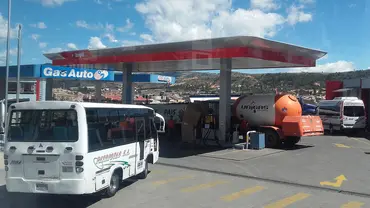
Despite these intentions, the subsidy reform process has faced many challenges and these plans remain speculative. The diesel subsidy phase-out is particularly contentious, since diesel-powered vehicles move 96% of goods in Colombia, due to the lack of trains or water-based transport.
As a result, the sector is uniquely dependent on diesel and resistant to the removal of diesel subsidies. Stakeholders in the transport sector, especially self-employed truck drivers, benefit from the diesel subsidy and have therefore protested the proposed reform. They also argue plans for subsidy phase-out are not feasible and will lead to disproportionate impacts and price rises in the sector.
Since the subsidy reform process began in 2022, the government has engaged in extensive negotiations with the transport sector, including the transport-sector association UNIDOS and the Colombian Truckers Association.
However, the sector has argued the government has no clear plan for the energy transition and removing the subsidy could cause inflation and increase the cost of other goods. According to this report, three key challenges have complicated the discussions:
- Structural challenges in the freight sector: a high proportion of self-employed truck drivers use their own vehicles for work and offer services on a demand basis. Many are dependent on the subsidy to reduce diesel costs.
- The role of Ecopetrol: this state-owned enterprise covers the costs of the budget deficit before being reimbursed by the government. Alternative cost options would require Ecopetrol to absorb the costs that the government currently covers, causing the company to incur substantial losses.
- Lack of confidence in the cleaner energy transition plan: the transport sector argues the plan is unfeasible since it relies on expensive technologies not currently readily available in Colombia. It also lacks confidence in the government due to historically unfulfilled promises.
Some studies suggest reframing the need for subsidy reform around environmental priorities could help to improve public perception of the reforms and increase support. However, the impact on low-income households and the wider transport sector remains a major barrier.
What progress has been made?
In September 2024, an agreement was reached between the government and the transport unions which ended the protest. They agreed to raise the per-gallon cost of diesel in two 400-peso increments, one in September and the second in December 2024.
The government also introduced a cross-subsidy mechanism whereby gasoline prices are kept artificially high, in order to generate surpluses to fund the diesel subsidy and mitigate impacts on the diesel-depending transport sector.
Although this still accrues a deficit on public finances that amounted to 3.8 trillion Colombian pesos in 2025, this is the lowest deficit since 2020, indicating government efforts to gradually align prices with the international market are paying off.
In January 2026, the government announced it would no longer subsidise diesel for private vehicles, but would keep them for public transport and cargo that fulfil a social function. It was also able to pay off in full the debt accumulated in the FEPC. Combined with favourable peso to US dollar conditions, this enabled the government to begin reducing gasoline costs again without introducing a new subsidy.
Despite these positive advances, the government has still subsidised both diesel and gasoline in 2026, with some reports suggesting the FEPC incurred a new deficit of US$7-8 billion in the first half of the year.
It is also expected the El Niño phenomenon will drive up demand for diesel by 30% in the second half of this year, putting further pressure on public finances and the FEPC.
Also, in September 2026, the government announced a freeze on price rises for both diesel and gasoline in response to the earthquake which hit Western Colombia the previous month.
The decision was made to alleviate financial pressure on earthquake victims and ensure humanitarian aid could reach affected areas, illustrating starkly the trade-off and tension between achieving environmental goals through subsidy reform while also meeting the basic needs of the population, especially when hit by the devastation of natural disasters.

Tropical plants in a botanical garden in Colombia. The country's efforts to phase out gasoline and diesel subsidies aim to reduce public spending and support a transition towards cleaner energy, balancing environmental goals with the needs of transport workers and local livelihoods (Photo, Anna Ducros, IIED)
What impacts have subsidy reform had?
In terms of environmental impact, it is difficult to quantify the impact of reducing subsidies on carbon emissions, and no specific study was found which has attempted to do this.
It can be assumed, however, a reduction in subsidies has led to a reduction in fossil-fuel consumption and therefore in carbon emissions and air pollution. Indeed, there is evidence phasing out diesel subsidies has led to an increase in electric vehicles in urban areas, as it makes electric vehicles more affordable by comparison and therefore contributes to a reduction in carbon emissions.
However, the socioeconomic impacts of the subsidy reform are still under debate. There has been no specific social objective as part of the subsidy reform process, which is primarily driven by the need to save the government money and invest in cleaner energy.
Some government officials argue low-income and vulnerable households have not been affected by the phase-out of the gasoline subsidy. But others say (PDF) even marginal changes may have profound economic impacts.
To mitigate socioeconomic risks, the government could consider social programmes such as cash transfers or further investment into existing programmes such as the general participation system (through which the national government transfers resources to regions for basic services including health, education, water and sanitation).
Creating a gradual timeline for the price rises has also proved helpful to avoid sudden impacts and make the transition more manageable for those affected.
What is clear is the deep impact the proposed diesel subsidy reforms have had on the transport sector, which is uniquely dependent on this fuel. This impact has prevented a full phase-out of subsidies for gasoline and diesel, although many positive steps have been made.
The agreement reached between the government and the transport sector to introduce gradual price rises for diesel, as well as the cross-subsidy mechanism, have both been effective steps towards phasing out subsidies while mitigating impacts on the most affected social groups.
Other studies (PDF) have suggested additional steps the government could take to help truck drivers, such as finding ways to make savings on other costs or trainings on reducing fuel usage, restructuring the transport sector, and considering a cooperative model for truck drivers.
In addition, the government should develop more robust plans for the energy transition, by engaging in dialogue with necessary stakeholders and backing up claims with concrete action plans to maintain livelihoods where possible and support upskilling and career transitions where needed.
What happens next?
In August 2026, Petro came to the end of his term as president and his successor, Abelardo de la Espriella, is now in post. Early signals indicate the new administration will maintain the commitment to reforming fossil-fuel subsidies, and time will tell what happens next.
Nonetheless, and despite the challenges it has faced, Colombia is leading the way globally on subsidy reform and more broadly on the global energy transition. In April 2026, Colombia co-hosted the First International Conference on Transitioning Away From Fossil Fuels with the Netherlands.
Even so, the country’s own experience demonstrates how difficult the transition away from environmentally harmful subsidies can be, and highlights how important it is for countries to work together to collectively reduce carbon emissions through processes like subsidy reform.
The Colombia experience offers lessons to other countries, especially throughout Latin America where dependence on diesel and truck transportation is high.
Further resources
News: ‘We won’t give up, we’ll keep fighting’: activists in Colombia vow to resist far-right push for fossil fuels (2026), The Guardian
Reforming fossil fuel subsidies with citizens’ approval: the case of Colombia, Charlotte Sophia Bez, Jorge A. Bonilla, Brigitte Castaneda Rodriguez, Jorge H. García, Leonard Missbach, Farah Mohammadzadeh Valencia, Jan Christoph Steckel (2026), SSRN working paper
Phasing out diesel subsidies in Colombia: a social contract perspective on stakeholder consultations, Mauricio Böhl Gutierrez (2026), Energy Research & Social Science
Phasing out diesel subsidies in Colombia: a social contract perspective on stakeholder consultations (2026), Climate+Tech, research paper
News: End of diesel subsidies in Colombia: why the TCO is starting to favor electric fleets (2026), Mobility Portal
News: Colombia convenes climate ‘coalition of the willing’ to break global fossil fuel deadlock (2026), The Guardian
Colombia removes private vehicles from diesel subsidy program (2026), Hydrocarbons Colombia paper
Blog: Colombia as a leader in climate and energy policy, Jule Könneke (2026), German Institute for International and Security Affairs
News: El Niño will boost diesel demand by 30% during the second half of the year (2026), La República
News: Colombian fuel prices continue upward trend despite declining Brent and dollar; diesel subsidy adjustments raise fiscal and economic pressures (2026), Nyland Energy
News: Colombia to lower gasoline prices following FEPC debt repayment and peso appreciation (2026), Nyland Energy
Article: Bancolombia projects 14-trillion-peso deficit in Colombia’s fuel fund (2026), The Watt
Blog: Breaking free from fossil fuels is urgent but hard – Colombia shows why, Pierre Wokuri, Daniela Soto-Hernandez (2026), Global Government Reform
A strategic phase-out of Colombia’s diesel subsidy to support the energy transition, Mauricio Böhl Gutierrez, José Vega Araújo, Elisa Arond (2024), IDOS policy brief
News: Colombian truckers end protest after reaching agreement with government (2024), ColombiaOne
Blog: SGP: what it is, how it differs from royalties and other key aspects of the reform project, Jessika Rodríguez M (2024), Portfolio
News: Colombian truckers block highways in main cities in protest over increases in fuel prices (2024), AP News
Author

Nicola Sorsby ([email protected]) is a researcher on locally led action for nature and climate