Intersecting crises and women’s responses in Colombia
Afro-descendant and Indigenous women in Colombia’s rural areas are responding to land dispossession, conflict and environmental degradation by defending their territories and their culture.

Women undertake clearing work on a collective banana plot (Photo: copyright ASOM)
For nearly half a century, Colombia pursued a neoliberal development paradigm, based on the expansion of mining and industrial agriculture as engines of economic growth.
This extractive and low regulation model led to ruthless exploitation of natural resources, exacerbating existing inequalities and undermining the resilience of communities and ecosystems. In this context, Indigenous, Afro-descendant and peasant women have borne the greatest burden of these pressures, and in doing so, have become leaders of resistance, building collective power, reviving ancestral knowledge, restoring ecosystems and claiming their rights.
This case study explores how Indigenous and Afro-descendant women in northern Cauca have developed strategies to strengthen the resilience of their communities and defend their territories.

The region of northern Cauca, in southwestern Colombia, features a diverse mountainous terrain with steep slopes, valleys and high plateaus. About 25% of the department’s people are Indigenous Indians. Afro-Colombian communities, whose roots go back to colonial times and African peoples forcibly brought to the territory, make up around 20% of the population, while Mestizos (people of mixed Indigenous and European descent) comprise about 50%.
Most communities depend on agriculture. Sugarcane cultivation, controlled by sugar mills, has dominated the northern Cauca landscape for centuries.
For Indigenous, Afro-descendant and peasant communities, land is not only vital for subsistence but also deeply tied to their cultural identity and community life.
Long struggle for land rights doesn't achieve full protection
Indigenous, Afro-descendant and peasant communities have long fought for legal recognition of their territories. Partly as a result of their efforts, Colombia adopted a progressive constitution in 1991, which formally recognised the country as a pluriethnic and multicultural nation.
Subsequent laws expanded these protections:
- Law 21 in 1991 granted Indigenous and tribal peoples the right to own and occupy the lands they inhabit
- Law 70 in 1993 recognised the territories historically occupied by Afro-descendant communities, established collective land ownership rights and created Community Councils for the management of collective territories, and
- Law 160 in 1994 created the National System for Agrarian Reform and Rural Development, recognised communal Indigenous land ownership through the resguardo system and enabled Indigenous and Afro-descendant communities to participate in allocations of land that had been acquired by the state.
These measures provided a legal framework for the protection of land and natural resources, as well as rights to cultural preservation and autonomous governance.
Yet decades later, these protections are not fully implemented. Even when communities have legal land titles, they often lack the administrative and financial capacity to govern and defend their territories effectively.
Fertile lands remain highly concentrated in the hands of large-scale industrial actors, while Indigenous, Afro-descendant and peasant communities are left with fragmented plots, undermining their territorial autonomy.
Interwoven pressures
Rural communities in northern Cauca continue to face the impacts of a deeply entrenched extractivist system. Mining and agribusiness concessions are still granted without effective consultation, undermining local governance and fragmenting territorial control.
In many cases, the state retains rights over subsurface resources and allows mining companies to operate within collective territories.
Industrial agriculture and mining are degrading local ecosystems. Sugarcane monoculture requires vast quantities of water, depleting groundwater reserves and drying up streams. Mining has polluted rivers with mercury and other chemicals, further reducing access to clean water and damaging health.
We also have the Teta river, which is also a significant place for us, because it is where we used to practice and carry out activities such as outdoor cooking by the river with family and friends, family gatherings, meetings between friends. But this has been changing due to the high levels of pollution caused by the use of chemicals in mining
– Johana Bastidas, participant in the first social mapping workshop, ASOM (2023)
Riverbanks, once important community and social spaces for women, are now inaccessible. In some communities, people struggle to access clean drinking water.
Native forests are being destroyed by burning and herbicides, while the enclosure of large tracts of land for monoculture has accelerated the loss and fragmentation of land and ecosystems, leading to the disappearance of birds, medicinal plants and other biodiversity essential to traditional knowledge and food systems.
The flora, fauna and medicinal plants have been wiped out by glyphosate and everything they use to fertilise their cane fields. We no longer see the traditional birds of the area
– Nancy Vergara, 2023
Climate change acts as a threat multiplier: increasingly irregular rainfall, prolonged droughts and intense storms undermine food production and intensify water scarcity.
Women defending natural resources and building livelihoods also face violence from armed groups. Northern Cauca is a strategic corridor connecting Colombia’s interior to the Pacific and Cali. Armed groups, including dissidents from the Revolutionary Armed Forces of Colombia (FARC), paramilitary forces and criminal gangs, compete for control over drug routes and illicit crops.
This decades-long violence has led to displacement, threats against community leaders and an overall weakening of governance.
Gender inequality as a crisis multiplier
Due to their central role in land-based livelihoods and care work, Indigenous, Afro-descendant and peasant women are among those most affected by land dispossession, environmental degradation and climate change. When access to water, firewood or fertile land is limited, women’s labour burden increases, leaving them less time for education, civic participation or income-generating activities.
Although the law guarantees equal land rights for men and women, in northern Cauca, traditional discriminatory social norms undermine women’s ability to access, own and govern land. Inheritance and land governance favour men, leaving many women landless, especially if they are separated or widowed.
These dynamics not only undermines women’s personal autonomy but also erodes the resilience of their communities.
Sometimes you work on your husband's land, and sometimes women separate from their husbands and are left with nothing because it's an inheritance. And that's patriarchy: the land is inherited and titled in the husband's name, and you don't come in as a spouse
– Johana Bastidas, participant in the first social mapping workshop, ASOM (2023)
Women also face widespread gender-based violence, including domestic abuse and threats from armed groups, especially when they take on leadership roles or publicly defend their land and environmental rights.

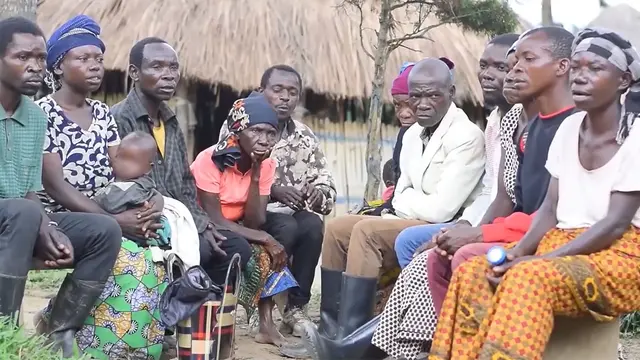
Participants at an ASOM workshop discuss climate impacts (Photo: copyright ASOM)
Women emerge as land and environmental defenders
Indigenous and Afro-descendant women in northern Cauca have emerged as key defenders of their territories, ecosystems and cultural heritage.
To address biodiversity loss and ensure food sovereignty, women are leading initiatives that integrate traditional land-use practices such as rotational agriculture, organic farming, reforestation, recovery of native seeds and soil and water conservation practices.
Women are also increasingly leading efforts to secure collective land titles and challenge illegal dispossession, filing lawsuits and participating in legal proceedings to formalise control over their ancestral territories.
This study is important because it makes visible the different strategies that women are implementing in their territories to mitigate in one way or another the climate effects that are occurring... Also, the autonomous initiatives that women are carrying out, such as the recovery of water sources. Also, the decontamination of the slopes of the rivers and some other initiatives that have to do with the management of agro-environmental practices
– Diana Angulo, researcher for the Interlinked Crisis Analysis project, ASOM
...we have organised ourselves through associations, women's networks, collectives, consultative councils… to seek mechanisms to regulate land use. Not only so that agroindustry doesn't dominate, but so we can continue with our traditional crops and ensure that women participate more effectively
– María Elsa Zapata, ASOM (2023)
ASOM has joined broader international movements, including the Women of the Global South Alliance (WiGSA) for Land Tenure and Climate Change, and the Rights and Resources Initiative (RRI), which has helped bring visibility to the struggles of Indigenous and Afro-descendant women and secure support for their grassroots work.
The experiences of women in northern Cauca illustrate how extractivism, environmental degradation, patriarchal land governance and systemic discrimination converge to undermine the rights of Indigenous and Afro-descendant communities.
In the face of these pressures, women are protecting their ecosystems and mobilising for legal recognition of their rights. But this resistance is not a substitute for systemic change. Supporting these women requires holding institutions, governments and corporations accountable. It means creating enabling environments where their leadership is supported and embedded in broader shifts toward ecological and social justice.
This case study was co-compiled by IIED and the Association of Afro-descendant Women of Northern Cauca (ASOM). ASOM works to improve the lives of Afro-Colombian women in northern Cauca, in southwestern Colombia, by defending their human and ethnic-territorial rights. This research is part of a joint effort with Rights and Resources Initiative and the Women of the Global South Alliance (WiGSA) for Land Tenure and Climate Change, of which ASOM is a member.

This series of case studies is published in partnership with Rights and Resources Initiative and the International Land Coalition.