One million voices, one vision: strengthening governance for grassroots producer organisations
Drawing on the experiences of the Ghana Federation of Forest and Farm Producers (GhaFFaP), Stephen Mwangi explores how strong internal governance in apex-level forest and farm producer organisations can drive inclusive leadership, accountability and resilience across grassroots organisations serving millions of smallholder farmers.


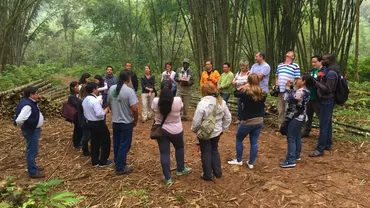
Farmers walk through their farm in Nosgua, Ghana (Photo: CIFOR-ICRAF, via Flickr, CC BY-NC-ND 2.0)
Strong internal governance is the cornerstone of any successful forest and farm producer organisation (FFPO). FFPOs exist to serve their members – smallholder farmers, forest users and rural entrepreneurs – and operate across multiple levels, from grassroots producer groups and associations or federations of cooperatives to apex-level FFPOs.
Apex-level FFPOs are national or regional umbrella bodies that represent and support local groups and networks. They give members a collective voice and the means to access services, markets and policy processes.
FFPOs have three core purposes (PDF):
- To speak with a more powerful voice, advocating for policies and negotiating with buyers
- To reduce transaction costs by offering shared services and infrastructure, and
- To adapt strategically to new opportunities and challenges.
These goals are only achievable through strong internal governance – anchored in clear roles, transparent finances and democratic decision-making.
When apex-level organisations commit to strengthening their internal governance, it sets a precedent that can cascade to affiliated FFPOs and ultimately benefit millions of smallholder farmers.
GhaFFaP’s governance journey
As an apex-level FFPO, GhaFFaP represents over 1.2 million smallholder farmers. The federation recently underwent a cooperative assessment by Agriterra that focused on business incubation, financial governance and organisational strengthening.
This confirmed that the federation is broadly on the right trajectory: GhaFFaP scored well in strategic vision, member relations and ethical governance. Its agenda 2030 strategy (PDF), developed through participatory planning, also reflects a shared vision for inclusive rural development.
Despite its strengths, GhaFFaP’s assessment revealed areas that need improvement – particularly in election processes, youth engagement and the functionality of oversight bodies such as its supervisory board. These gaps are not uncommon in growing organisations but addressing them is essential for long-term sustainability.
Earlier this year, I had the privilege of witnessing GhaFFaP elect its new national executive committee at its 4th annual general meeting (AGM). The event brought together over 100 participants, including FFPO leaders as well as development partners, government institutions, civil society actors, traditional authorities and the media.
The process was free, fair and transparent, and was preceded by a 21-day notice that ensured full participation. This smooth transition of leadership was more than symbolic: it was a powerful demonstration of democratic governance in action and reaffirmed GhaFFaP’s commitment to member-led decision making.

The newly elected national executive committee of GhaFFaP (Photo: copyright Sophie Grouwels/FAO)
Building ownership, trust and inclusion
One striking insight from the AGM was the importance of member ownership. While GhaFFaP enjoys strong trust and pride among its members, its financial sustainability is at risk due to complete reliance on donor funding. Members do not contribute capital, which limits their sense of ownership and long-term commitment.
To address this, GhaFFaP is working to introduce orientation sessions on cooperative principles, structured feedback mechanisms and financial literacy programmes. These efforts aim to deepen member engagement, enhance its internal governance and build a culture of shared responsibility.
GhaFFaP’s governance structure now also includes dedicated seats for youth and women, but more needs to be done. The lure of illegal mining (illegal mining is commonly known as ‘galamsey’) continues to draw youth away from agriculture. GhaFFaP’s youth strategy, which includes livelihood interventions and mentorship programmes, is a promising step toward reversing this trend.
Women’s participation is also being strengthened through targeted leadership development and business mentorship. These initiatives are vital for ensuring that governance reflects membership diversity.
Why strengthening internal governance matters
As someone who has followed GhaFFaP’s journey closely, I’ve seen first hand how internal governance can make or break a producer organisation. Governance is not a box to be ticked, but a living system that evolves with the organisation.
GhaFFaP’s AGM was a powerful reminder that transformation begins from within and demonstrated GhaFFaP’s willingness to evolve into a cooperative apex-level organisation. This openness to change shows a maturity that many grassroots organisations aspire to.
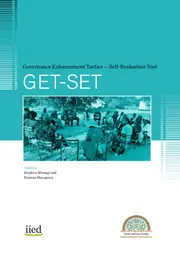
This momentum aligns with the Forest and Farm Facility’s launch of the Governance Enhancement Tactics — Self-Evaluation Tool (GET-SET), a practical tool for FFPOs to self-assess and improve their internal governance.
The tool is based on insights from six case studies (including a case study on the Kokoo Pa Farmers Association (PDF), a GhaFFaP member, demonstrating how grassroots leadership can drive reform from the bottom up.
Final thoughts
GhaFFaP’s experiences show why it is vital for FFPOs at all levels to enhance internal governance. Working together and with donors and other FFPO partners, this will enable them to tackle shared challenges, secure resources and foster climate-smart partnerships.
Better internal governance will help to unify advocacy efforts to influence policies on land, climate and forest governance, amplifying the voices of millions of smallholder farmers.
It will also help to empower youth and women through leadership, digital tools and enterprise support to build resilient, locally rooted value chains.
As GhaFFaP moves toward establishing a new business incubation centre, its governance foundation will be key to ensuring inclusive, resilient and sustainable rural transformation.