COP30 is the moment to show the world why climate adaptation must be locally led
COP30 president Brazil has been explicit that the priorities of local communities must be central to action plans for adapting to climate change. The upcoming summit in Belem presents a huge opportunity to spotlight the power of locally led adaptation, and show world leaders why climate adaptation is most effective when driven from community level




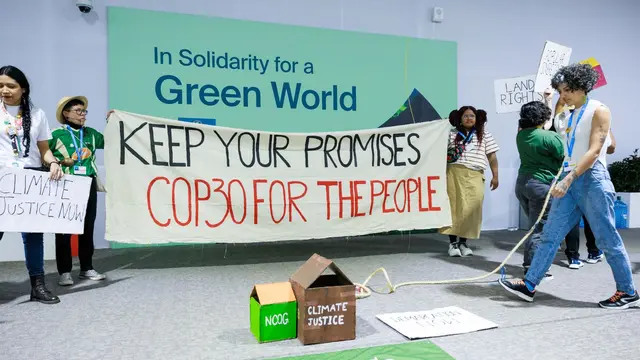
A civil society sit-in demands climate justice and better climate finance outside plenary rooms at COP21 (Photo: John Englart, via Flickr, CC BY-SA 2.0)
The fast-approaching UN climate negotiations (COP30) have been dubbed the ‘adaptation COP’. Hosts Brazil are demonstrating strong commitment to delivering collective, concrete action on adaptation. And they have been explicit about the importance of integrating knowledge and experience from local communities and marginalised groups into the decision making.
The presidency putting weight behind the role of local and vulnerable communities in shaping action on adaptation presents an opportunity to showcase the power of locally led adaptation (LLA).
In anticipation of COP30, the 19th International Conference on Community-Based Adaptation (CBA19), held earlier this year in Recife, Brazil, featured LLA as one of the event’s three key tracks.
Dynamic debates highlighted rich examples of what adaptation looks like when it is owned, driven and sustained by those at local level and on the frontlines of climate impacts.
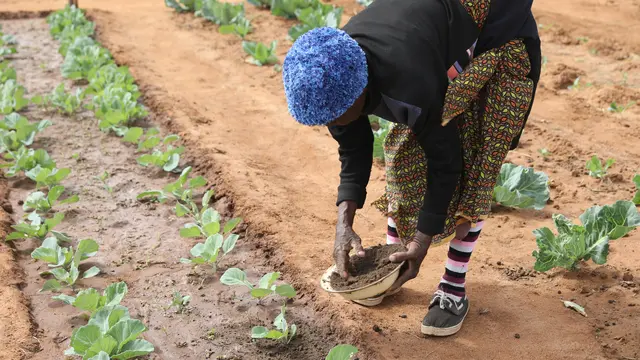
Examples included women in rural communities who are using adaptation techniques to reshape water governance, and Indigenous leaders safeguarding cultural knowledge, ensuring that traditional practices and locally grounded solutions are carried forward to guide adaptation in their communities.
In terms of finance for adaptation, participants heard how local governments are experimenting with more flexible, shorter reporting requirements, using participatory monitoring and evaluation methods such as photos or verbal reports in place of lengthy written submissions; and promoting the use of Indigenous and local languages in their processes.
These stories underline a central lesson: adaptation is most effective when it is driven from community level. In fact, it shows that putting local leadership at the centre of adaptation is not optional; it is key to delivering meaningful and effective adaptation.

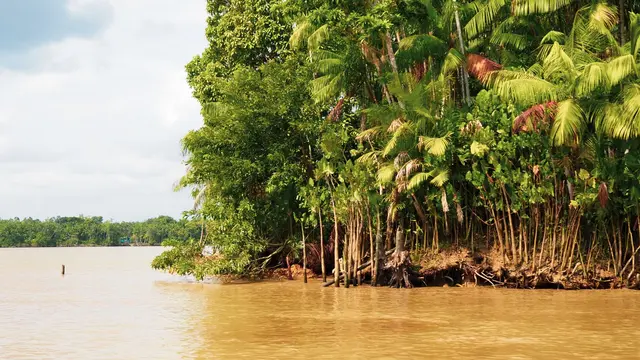
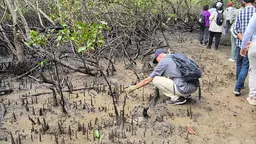
CBA19 participants visited the Quilombola community of Engenho Siqueira in Rio Formoso where they saw how community members use their traditional knowledge to conserve mangroves (Photo: Nicola Sorsby, IIED)
Moving LLA from the margins to centre stage
Launched in 2021, the principles for locally led adaptation were developed to shift power to local communities and put resource into local hands.
Local actors are hit hardest by the impacts of climate change. Adaptation is a matter of survival, not a policy choice. Experiencing the impacts of climate first hand, it is local people – in households, in communities – who know how to adapt in the fastest and in the most effective way.
Despite strong global support for these principles, progress has been slow in terms of putting the principles into practice, and funders are still directing only limited financing towards LLA.
Local communities still do not have the power or resource to lead on their own adaptation efforts: funding is scarce, local knowledge is sidelined and decision-making structures still emphasise upward accountability rather than giving agency to communities themselves.
CBA19 sessions highlighted some examples of how to address these barriers including:
- Equitable partnerships, rooted in trust, where local actors not only participate in decision making processes but assume power to make decisions linked to adaptation
- Participatory governance structures that link local voices to decision making at all levels, supported by feedback loops, grassroots monitoring, co-creation of solutions and robust mutual accountability mechanisms, and
- Improving access to climate funds by aligning institutional requirements with community contexts in a simple and flexible manner, and ensuring that any intermediaries play an enabling – not gatekeeping − role, so that local agency is not diluted.
Championing the power of women
The Brazilian presidency has been unequivocal that women and girls must be at the forefront of climate solutions. Its fifth letter to the international community celebrates how women and girls “embody inspiring examples of climate response − of bold action in place of reaction”.
Many CBA19 sessions highlighted the critical role of women in LLA. Sessions underscored that meaningful inclusion is more than inviting women into the room − it requires creating conditions for them to speak, to be heard, and to lead.
One participant from the Brazilian Amazon rainforest explained how Indigenous and local women hold vital ancestral knowledge about the forest. This knowledge is fundamental in developing local adaptation solutions to protect the Amazon.
Funding the “unfundable”
Blockages persist around local organisations accessing climate finance and the associated risks. Communities have repeatedly called for more direct and regular access to climate funds that would give them greater power and decision making in how adaptation projects are run.
Yet, as one participant put it, local adaptation projects are often still deemed “unfundable”, because local organisations are perceived to lack the experience, institutional structures or technical capacity to manage large funds. Funders need to be willing to take risks and support local solutions, working collaboratively with networks of local actors and allies to build capacity and trust.
Participants urged funders to go beyond conventional criteria of projects they typically fund – to support community-led initiatives that may be small, unconventional or rooted in traditional systems.
This requires funders to step up and be flexible, and be willing to learn from peers and governments about successful local partnerships. Local adaptation projects have thrived when provided with adequate financing for capacity-building, transparency and trust at the community level, which is just as important as financing infrastructure or technology.
Flexibility and trust from funders will be essential in Belem: if COP30 is to deliver on the UNFCCC’s commitment to ensure local communities have more direct access to climate finance it must prioritise funding models that reach communities directly.
Our call to COP30: Recife showed solutions, Belem must act
CBA19 gave a powerful reminder that adaptation is not just about managing climate risks – but about transforming relationships, systems and power dynamics.
We urge negotiators to take up the key messages from CBA19 and carry them forward to COP30. Adaptation cannot succeed unless decision making and resource shift to the local communities.
The agenda of the Brazilian presidency is based on mutirão, a word derived from the Indigenous Tupi-Guarani language referring to a group coming together to work on a shared task. Their call is for unity and collective action to achieve a common goal.
The CBA community urges negotiators to come together, to raise their voices for local leadership on climate adaptation. To call for the resources, allies and platforms that local leaders need to shift LLA to the centre of climate action.
As one CBA voice, speaking on behalf of those in the room in Recife, said: “We are 400 leaders. We know what works for our communities. But we can’t do the work on our own.”
Development and Climate Days (D&C Days)
Locally led approaches to climate action will be one of the three key areas at the 2025 Development and Climate Days (D&C Days) event, held annually alongside the climate COP. Voices from around the world will come together in advance of the climate negotiations to create a set of key messages and asks to be taken to COP30 to influence climate decisions – recognising the most vulnerable people on the front lines of climate change.
This year’s D&C Days will be held on 30 October and will be online enabling practitioners, negotiators, scientists and policymakers worldwide to join – even those who are unable to attend COP30 in person.
With thanks to Victoria Matusevich, programme coordinator at Fundación Avina, for contributing to the development of this insight.