UN Food Systems Summit: reasons for hope but more work to do
Reflecting on the recent UN Food Systems Summit, Duncan Williamson sets out why taking a systems approach, with greater country collaboration, could help fix our broken food systems.



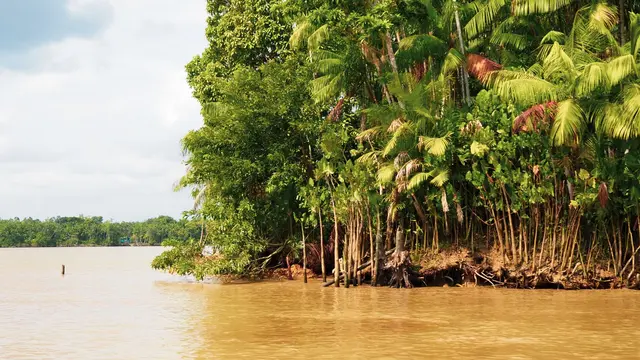
Local people of Gede Pangrango, Dadin, Indonesia, fishing in the lake using a traditional net (Photo: CIFOR-ICRAF, via Flickr, CC BY-NC-ND 2.0)
The first UN Food Systems Summit (UNFSS) was held in 2021 in New York at the UN General Assembly. Its vision was to “launch bold new actions, solutions and strategies to deliver progress on all 17 Sustainable Development Goals (SDGs), each of which relies on healthier, more sustainable and more equitable food systems.”
Last month, and four years on, the UNFSS+ 4 Stocktake was held in Addis Ababa. It was a chance to assess if and how the world is making progress to towards the vision.
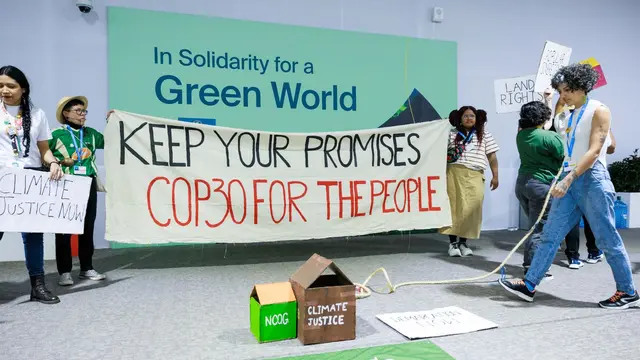
The summit came hot on the heels of the UN Ocean Conference (UNOC), the 4th International Conference for Financing for Development (FfD4) and will inform discussions at the UN global climate summit (COP30) in Belém, Brazil – where food systems have been earmarked as a focus area.
The good and bad of the summit
There has been sustained criticism of the summit, with some organisations saying it has suffered from corporate capture, that its programme fails to take account of current geopolitics and hunger crises, nor mentions how food is being used as a weapon of war. They called out lack of representation from Indigenous communities, artisanal fishers and farmers.
On a more positive note, numbers shared in the opening address point to progress: 130 countries (PDF) have committed to comprehensive plans to address the challenges within their food systems; national climate action plans set out by 168 countries reflect the critical role of food and agriculture in reducing greenhouse gas emissions; and more than 169 countries now implement school meal programmes to support child nutrition.
Food systems are now on the agenda of all the big UN summits – UNOC, FfD4, COP30 and the UN Environment Assembly – and it is UNFSS that links them all.
State of food security and nutrition in the world
UNFSS+4 marked the release of the annual State of Food Security and Nutrition in the World (SOFI), a report measuring progress on food and nutrition security, and on achieving zero hunger.
Hunger is on a downward trajectory in many places. However, progress was not consistent across the globe and continued to rise in many sub-regions of Africa and in western Asia. Women continue to bear the brunt of food insecurity and go hungry first.
While the progress on reducing hunger in many places is positive, it is not happening fast enough to meet the SDGs or ambitious enough to overcome challenges such as water shortages and the climate crisis. Food systems are increasingly threatened by conflict as the world becomes a more volatile place.
Indeed, hunger appearing to be on a downward track might be a blip, as food systems are under more pressure than ever before.
A systems approach
We know food systems need to change. They are not just about food production; they are complex and messy. Published ahead of the event, the FAO’s report 'transforming food and agriculture through a systems approach' demonstrates the pathway to achieving better production, better nutrition, a better environment and a better life, while leaving no one behind.
There are six core elements of a systems approach:
- Applying systems thinking
- Building systems knowledge
- Enabling systems governance
- Integrating actions through systems doing
- Securing systems investment, and
- Fostering systems learning.
Blue food is still missing
One criticism of the UNFSS has been that it focuses primarily on land-based food systems and value chains. This is slowly changing.
An IIED paper, with a focus on the UK, argues that seafood has clear connections to the broader food system, and should play a more prominent role in debates about food systems transformation.
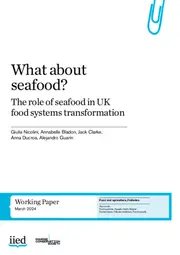
A truly systemic approach to food transformation presents multiple opportunities, with a more central role for blue foods. As demonstrated by our work at UNOC in June, there are many overlapping issues. For example we can learn lessons around how to promote sustainable production to incentivise better stewardship.
Another theme of the summit was the need to look at finance and to reorientate subsidies. These finances are a visible problem in blue foods. The fishing sector receives significant subsidies, around US$35.4 billion, with the majority supporting industrial fishing practices.
IIED has recently joined the Aquatic Blue Food Coalition, set up following UNFSS in 2021. The coalition was set up to “promote understanding, acceptance, and integration of sustainable aquatic/blue foods in food systems and food value-chains thinking and decision making, at all levels”.
The coalition was present at several events at the UNFSS+4 and had a booth in the exhibition hall to highlight progress made since its inception. It shared details of IIED's work on blue food with attendees.
The future: we can fix our food systems
Food systems are failing. When food systems fail, rural communities face rising poverty, hunger and exclusion, while urban populations struggle to access healthy food. For the world's 44 least developed countries (LDC)s, the cost of transforming food systems is 40% of their GDP: no country can, or should have to, bear that burden alone.
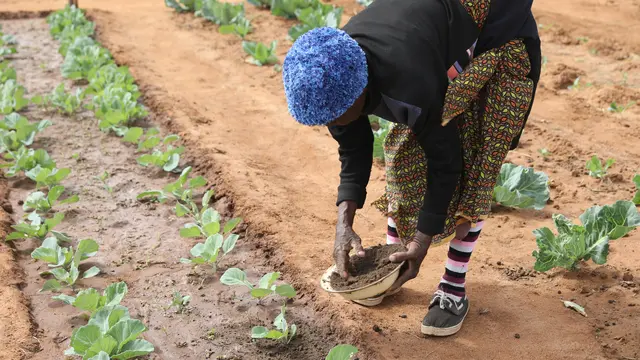
When food systems function well, they are climate smart and locally rooted. They create jobs and stable market for small holders and artisanal fishers.
The solutions are there. The finance is available, though often misplaced and tied up in harmful subsidies. When we fix food systems, we step towards fixing many other social and environmental crises. If countries redirected subsidies towards supporting LDCs and producing healthy diets, this would be both transformative and affordable, and would benefit us all.
We can start with more collaboration. For organisations and countries to work together more effectively and with more transparency. Only through working together, making unusual partnerships and stepping out of our comfort zones will we be able to deliver the changes we need.
We have the answers, we now need to deliver them. We need to drive this transformation collectively.